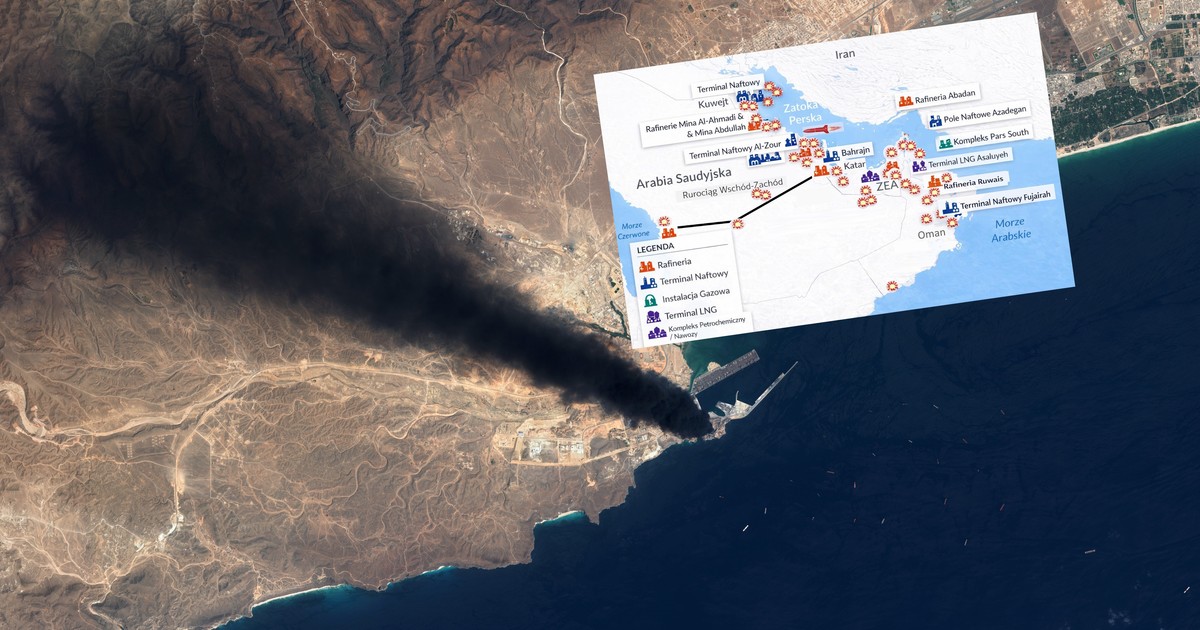
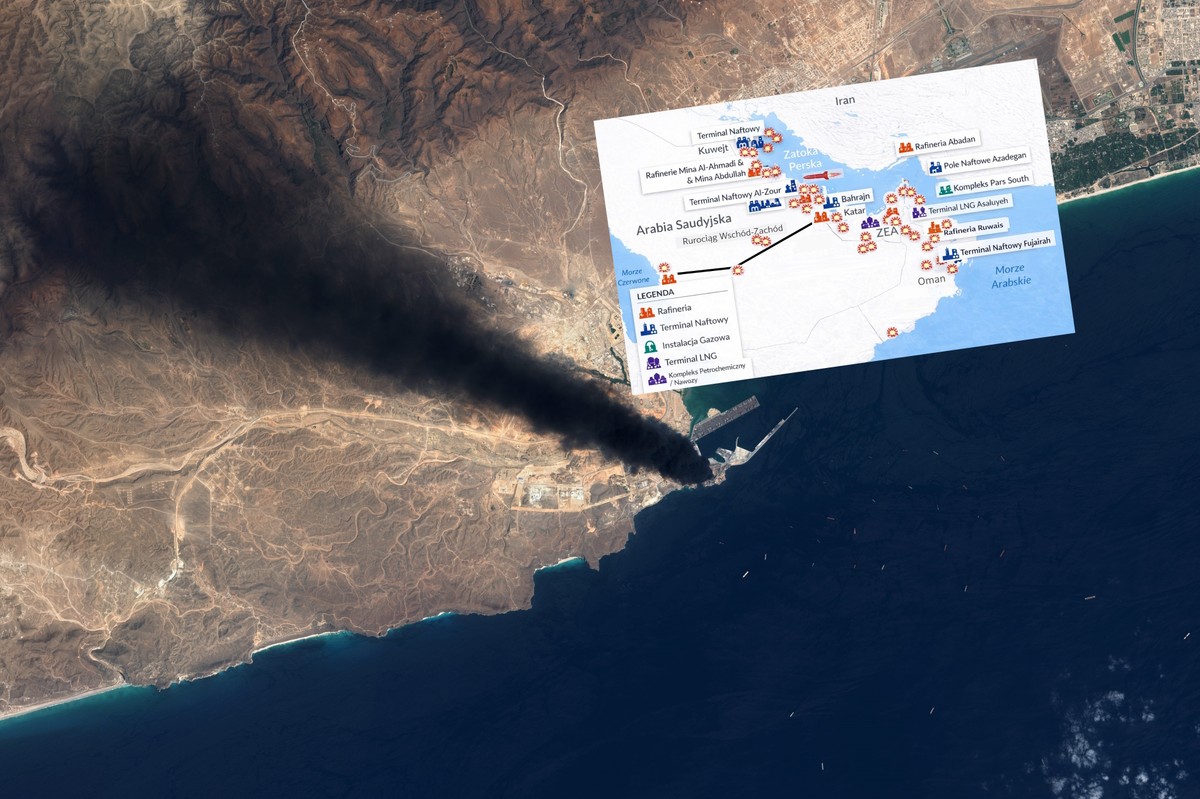
Deliveries via alternative routes have already started and their number is constantly growing, indicates the IEA. Saudi Arabia is rapidly increasing oil flows through the East-West Pipeline to the port of Yanbu on the Red Sea while UAE increases exports via Habshan-Fujairah pipelinewhich connects onshore deposits with the port of Fujairah on the Gulf of Oman.
The Saudi transhipment center in the Red Sea handles increasingly larger volumes. According to the IEA's March Oil Market Report, flows through the East-West Pipeline have skyrocketed from an average of 1.7 million barrels per day (mb/d) in 2025 to record daily exports of 5.9 mb/d from the western port of Yanbu on March 9 — and the pipeline is expected to reach full capacity of 7 mb/d within days.
However, even these remote terminals on the Red Sea are being attacked by Iran with drones to disrupt the flow of oil.
On Thursday, March 19, Iran's attacks were particularly intense. Targets in Saudi Arabia, the UAE, Kuwait, Qatar, as well as tankers at sea, were attacked mainly using drones, but also missiles.
These attacks are not always effective, but they destabilize the operation of the entire oil and gas infrastructure in the region.
Date (2026)
March 19, 2026
UAE/Qatar
Tankers in the Gulf
rockets/drones – ignition of one ship, damage to the other
March 19, 2026
Iraq
Majnoon
drones – stopping the operation
March 19, 2026
UAE
Ruwais Refinery
drones – preventive shutdown of one of the largest refineries
March 19, 2026
Rhinitis
Ras Laffan industrial city and LNG terminal
rockets – extensive destruction, fires, interruptions in LNG supplies
March 19
UAE
Habshan Gas + Bab Oil oil field
missiles – closing the operation after being hit by the remains of captured missiles
March 19
Saudi Arabia
Yanbu Port (Red Sea, but a key port for exports from the Gulf)
drones – fire, damage
March 18–19
Kuwait
Mina Abdullah Refinery
drones – fire and damage
March 18–19
Kuwait
Mina Al-Ahmadi Refinery
drones – limited fire
March 18
Rhinitis
Ras Laffan industrial city and LNG terminal
ballistic missiles – widespread destruction, fires, suspension of LNG production
March 15
UAE
Al Dhafra (energy)
drones – collateral damage to infrastructure
March 14–17
UAE
Shah/Al Hosn gas field
drones/rockets – fires, partial damage
March 10–17
UAE
Fujairah oil industry zone and port
Multiple drone attacks – fires, suspension of bunkering and refueling of ships
March 9–10
UAE (Abu Dhabi)
Ruwais Refinery/Industrial Complex (ADNOC)
drones – fire in the refinery complex
March 9
Bahrain
Bapco Refinery
drones – damage to the complex, declaration of force majeure
March 7–10
Saudi Arabia
Shaybah oil field
Multiple drone attacks – fires, targeted for 3 days in a row
March 3–4
UAE/Qatar
Tankers in the Hormuz area
missile attacks – suspension of navigation through Hormuz
March 3–4
UAE (Abu Dhabi)
Fujairah oil industry zone and port
drones – fire from the remains of a captured drone
March 2
Rhinitis
Qatar's Ras Laffan and Mesaieed LNG plants
drones – production suspended.
March 2
Saudi Arabia
Ras Tanura Refinery (Aramco)
drones – fire
Maintaining Iran's ability to control the entire region translates into increases in oil prices. Oil prices approached as much as $120 on Thursday. per barrel.