While the world fears disruptions to oil supplies due to the war in Iran, the real showdown may be over chemical fertilizers. And China, not the Gulf states, holds some of the most powerful leverage.
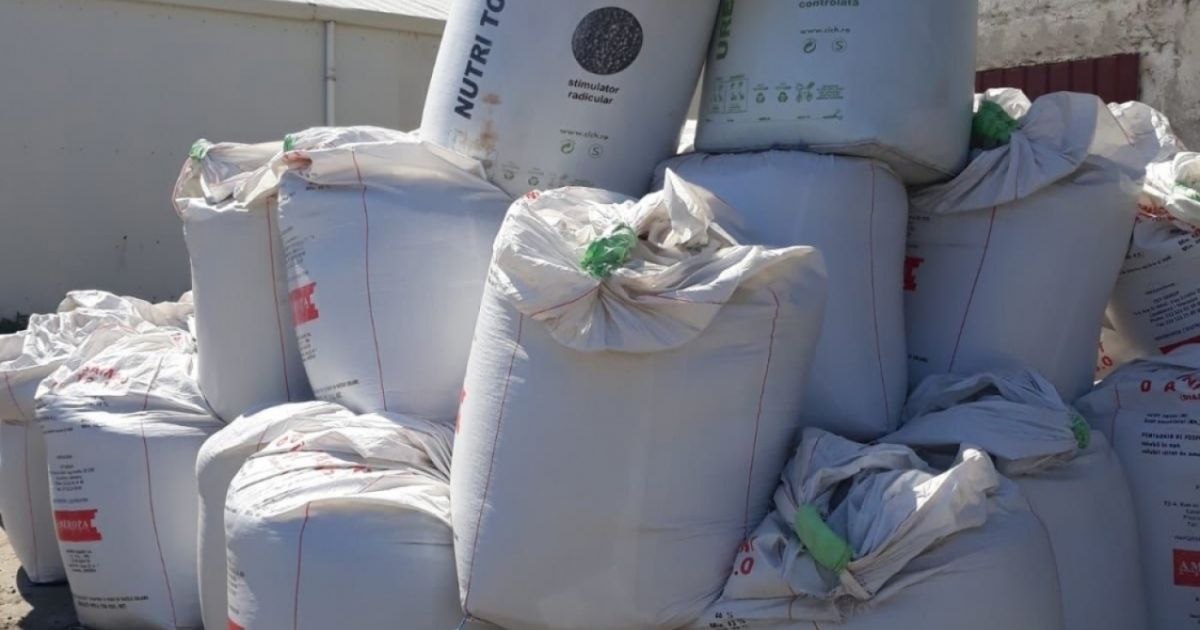
Chemical fertilizers/PHOTO: Archive
Escalating tensions in the Strait of Hormuz — the strategic maritime corridor between Iran and the Arabian Peninsula through which about 20 percent of the world's oil has passed — have fueled concerns about global food security. Although fears of a mass famine are considered exaggerated, there is a significant risk: the Iranian crisis is accelerating China's position as a dominant player in the global fertilizer market, according to Bloomberg.
Beyond oil
Gulf Cooperation Council member states, including Saudi Arabia, Qatar and Oman, are key suppliers of two of the three essential plant nutrients. First, they account for about a quarter of the world's exports of urea, a nitrogen-based fertilizer that stimulates leaf and stem growth. Second, it plays an important role in the production of phosphate fertilizers, which depend on sulfur — a product derived from oil and gas — and a third of this sulfur globally comes from the Middle East.
Phosphorus is one of the three essential nutrients for plants, along with nitrogen and potassium. Without these elements in the soil, agricultural productions of grains, vegetables and fruits are seriously affected. Disruption of phosphate fertilizer supply chains therefore directly impacts agricultural yields, particularly in developing countries in Asia and Africa.
Diversification with amortization role
Despite the important role of the Persian Gulf, the global fertilizer trade is more diversified than the oil market. Examples include:
-The European Union, as a whole, exports more fertilizers than all the Gulf States combined.
-Canada is a dominant player in the global potash market.
-Morocco controls a significant part of the world's phosphate reserves.
-Russia remains the largest global fertilizer exporter, despite sanctions.
Fears of global hunger after 2022 have not materialized, with the overall level of hunger falling slightly.
Therefore, the current crisis is serious, but not catastrophic in the short term, and the agricultural sector has supply alternatives.
The dominant actor
Bloomberg analysis highlights China's major role in the global fertilizer industry. At the production level, China occupies leading positions:
-44% of global phosphate production
-30% of nitrogen fertilizer production
-23% of sulfur production
-13% of potassium production
By comparison, Saudi Arabia accounts for about 12% of global OPEC oil production. In some segments, China's share of fertilizer is much larger, meaning that any strategic use of this sector could have major consequences for global food security—potentially comparable to or even greater than an oil embargo.
China is sending emergency humanitarian aid to Iran and other conflict-affected Middle Eastern states
China currently provides about half of Southeast Asian countries' nitrogen fertilizer imports, as well as about a quarter of Brazil's and Pakistan's imports. For these economies, the dependence on the Chinese supplier is significant.
A latent instrument of influence
Although China has the ability to exert considerable influence, until recently its fertilizer sector has not been used as a geopolitical tool. The main priority was to ensure domestic supply, including by limiting exports in periods of high domestic demand.
However, signs of change are emerging. In August, as part of negotiations between China and India on tensions on the Himalayan border, the opening of trade in fertilizers was included in the agreements discussed, along with other strategic areas. This suggests that Beijing is beginning to treat fertilizer as a potential diplomatic tool.
India's Vulnerability
India is considered one of the most exposed actors in the current context. With a population of around 1.4 billion, the country has tried to diversify its sources of supply, keeping the share of imports from China below 5%. In contrast, dependence on the Gulf states remains high.
With the monsoon sowing season approaching, Indian authorities have stepped up imports of urea and requested additional support from China to cover the shortfall. Beijing's response could indicate whether the decision will be a purely commercial one or will also have a geopolitical dimension.
China is analyzing the US war with Iran for strategic lessons. Parallels with Taiwan
Long-term changes
In the long term, the dynamics can change significantly. China's population is shrinking and the pressure on domestic agricultural production is gradually easing. In parallel, the memory of the Great Famine of 1959–1961 becomes more distant with the change of generations.
In such a scenario, China could evolve from a net importer of food security into a major exporter, similar to the United States, Brazil, Canada or Australia. In this context, the fertilizer industry could become a strategic asset with high geopolitical value.
Combined with the influence on other critical resources, such as rare metals, control over fertilizers could amplify global vulnerabilities. And in certain scenarios, the discussion would no longer be just about energy or industry, but about food security on a global scale — a level of risk considered significantly higher.
Germany's foreign minister, Johann Wadephul, recently warned of the risk of a “dangerous spiral of unpredictable consequences” if tensions in the Middle East continue to escalate, stressing that some of the risks associated with the conflict, including a possible food crisis, have not been fully assessed.