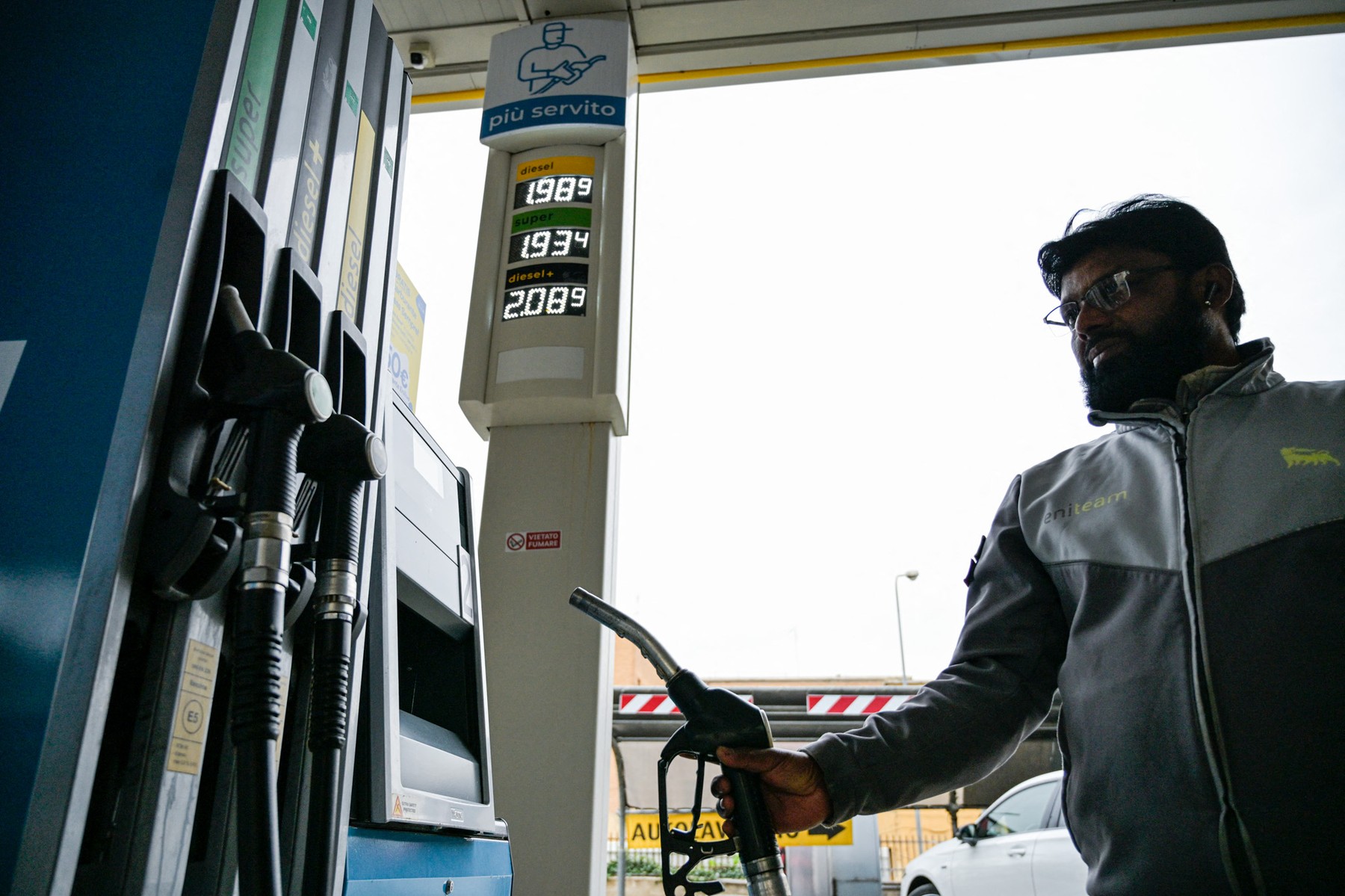
Italy has set aside about 417.4 million euros to cushion the impact of fuel excise cuts until April 7, a government decree approved late on Wednesday showed, as Rome scrambles to find solutions to help families and businesses cope with rising prices.
Published in the Official Gazette, the decree reduced excise duties on gasoline and diesel from 672.9 euros per 1,000 liters to 472.90 euros.
The government intends to cover the cost of the excise duty reduction through spending cuts, the decree also states.
However, the move has drawn criticism from analysts and the opposition, who say the measure was taken not because of rising prices as a result of the war in the Middle East, but because the government led by Giorgia Meloni wants to mobilize support ahead of a key referendum next week. It targets a highly controversial government plan to reform the judiciary.
“A political gesture paid for by taxpayers. Nothing else,” wrote Wolfango Piccoli of the London-based political risk consultancy Teneo in a message published on the “X” network.
Austria announced on Wednesday the reduction of excise duties on fuels
The move by Meloni's government comes a day after Austria's executive announced it would temporarily cut taxes on gasoline and diesel and cap profits for fuel retailers such as OMV (which owns about half of the country's gas stations) to protect consumers from skyrocketing oil prices caused by the conflict with Iran.
“The objective is clear: we want, on the one hand, to keep inflation under control, stabilize fuel prices and ensure competitiveness,” Chancellor Christian Stocker said at a press conference convened by the leaders of the three ruling center parties.
Austria will return the extra tax revenue from higher fuel prices to consumers by cutting petrol tax, starting with a cut of 5 cents per litre, coalition leaders said.
Legislation on the measures requires parliamentary approval, expected by April 1, and will be in place until the end of the year, the government in Vienna said.
“We are reducing oil taxes and introducing measures to limit profit margins along the entire value chain. These specific measures will reduce the price of diesel and petrol by around 10 cents per litre,” Stocker said in a statement.
It is not yet clear how the earnings cap will work, but Foreign Minister Beate Meinl-Reisinger said it would apply once profits exceed 50% of those “before the (Iranian) crisis”.