Russian espionage intercepts from the rooftops of diplomatic buildings in Vienna. The antennas, oriented to the West


Four years after the invasion of Ukraine, the rooftops of Russian diplomatic buildings in Vienna have returned to what they were during the Cold War: platforms for intercepting signals on a continental scale.

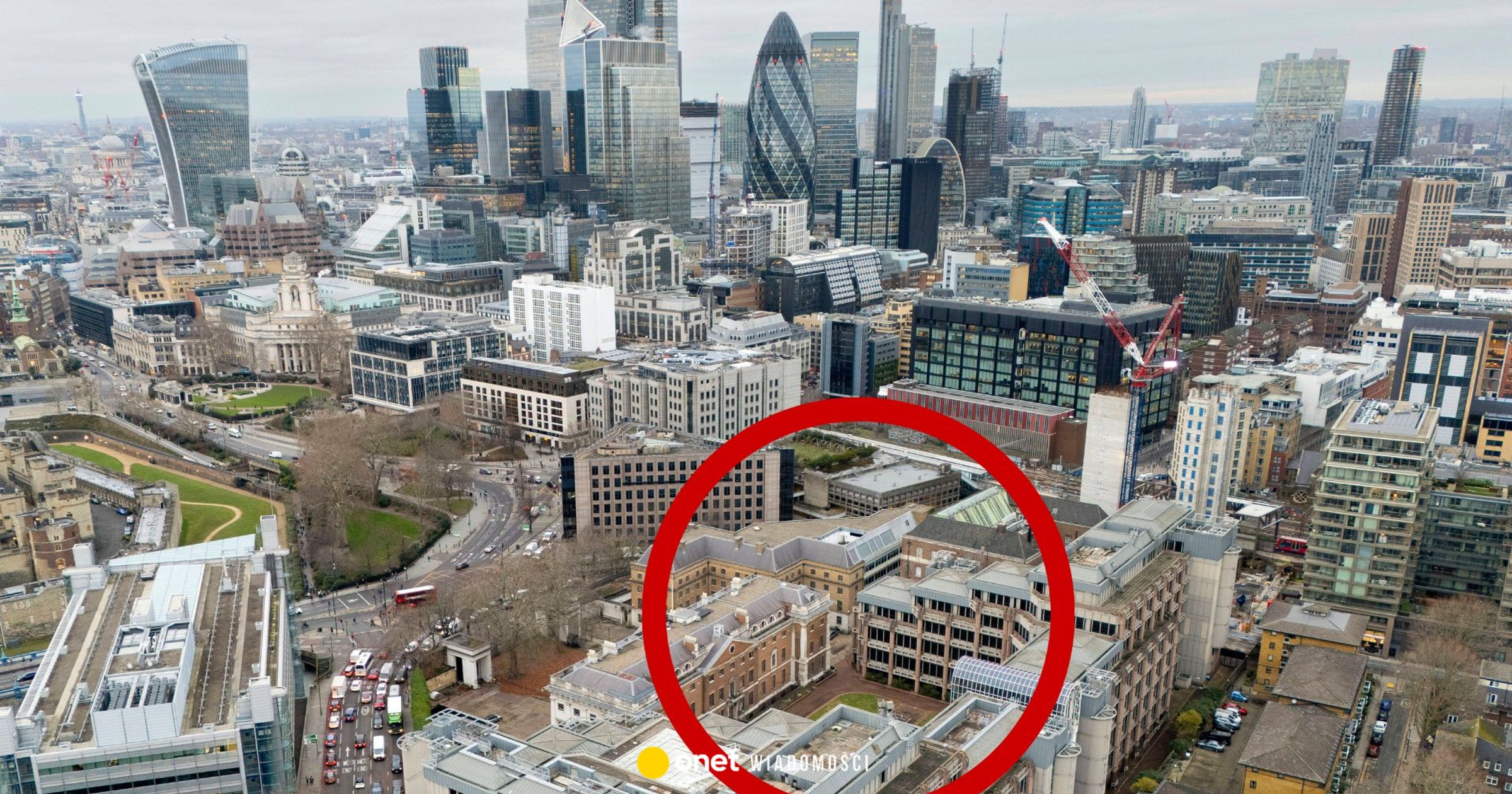
View of Vienna PHOTO Shutterstock
From the upper floors of the former Imperial Riding School in Vienna, a cluster of satellite dishes can be seen behind the gilded domes of the Russian Orthodox cathedral. All embassies must communicate securely with their capitals. But these antennas, located on the roof of the Russian embassy in central Vienna, have a different purpose, according to Western security experts and officials cited by the Financial Times, which is dedicating an extensive investigation to this topic, writes the Financial Times.
They are not oriented to the East. What does this mean?
First, they are not oriented to the East, towards Moscow, as would normally be the case for diplomatic communications. They look the other way, to the West, to Africa, to the Middle East.
This simple technical observation opens up a whole architecture of interpretation, Russia does not just communicate, it listens. And he doesn't do it punctually, but in a systematic, organized way. Four years after the start of the war in Ukraine, the rooftops of Russia's vast diplomatic headquarters in the Austrian capital have quietly revived one of their most important Cold War-era functions: that of the Kremlin's largest secret signal-interception platform in the West.
“It's one of our main concerns about Russian activity here. We know they have targeted NATO government and military communications with the means at their disposal” said a senior European diplomat based in Vienna. “Vienna has acquired special importance for them… it is their center in Europe”.
What they are spying on from Vienna
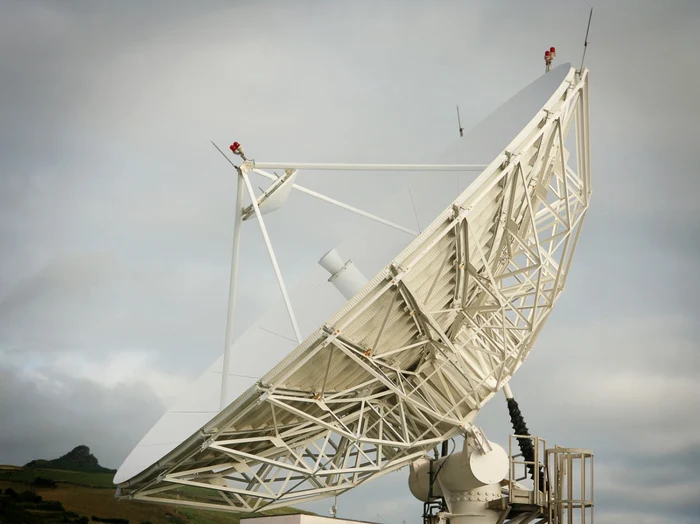
Parabolic antenna PHOTO: Shutterstock
From Vienna, Russia is not only spying on satellite and electronic communications in Europe, but also in the Middle East and Africa, the officials and experts cited said. While the 2022 invasion of Ukraine prompted a wave of Russian diplomatic expulsions from most European countries, neutral Austria took a more permissive approach to Moscow's outposts.
Even Austria's domestic intelligence agency (DSN) recently warned that “the technical capabilities and adaptive alignment of the Russian Federation's SIGINT stations in Vienna pose a significant counterintelligence security risk.”
A Western intelligence official in Vienna said they had monitored the installation of several new antennas and other unusual rooftop installations over the past two years. Also of interest was the frequency with which some of the Russian antennas are repositioned, the official said. This indicates that they are being used very actively to target multiple satellites, the official added, stressing that antennas used for embassy communications to Moscow should not be moved.
Direct hit to Munich. The interest? MSc
On the eve of the Munich Security Conference last month, for example, one of the largest antennas on the roof was reoriented. It reverted to its previous position the day after the conference ended. The MSC is Europe's most important annual global meeting of security and defense officials and politicians.
Tracking the repositioning of these antennas can provide rare insight into Russian SIGINT interests. While Western intelligence agencies are reluctant to talk about Russia's technical capabilities, open source analysis can fill in the gaps.
Hundreds of high-resolution images of rooftop equipment, seen by the FT and analyzed by experts, offer some clues as to what Russian spies are up to.
“Russencity” and the engineers at NomenNescio
The photos were taken over the past two years by NomenNescio (Latin for “I don't know the name”) — a Vienna-based group of electronics engineers and communications enthusiasts documenting the roof of Vienna's largest Russian compound, jokingly nicknamed “Russencity.”
Located on the eastern bank of the Danube, Russencity is a complex surrounded by high-security fences and comprising several residential buildings and a school for the children of Russian diplomats. At its center is a six-story octagonal building that houses the Russian mission to the UN, its roof covered in satellite dishes.
Erich Moechel, a spokesman for NomenNescio, said the group took high-resolution images of that roof and aerial photographs to learn which satellites the Russians were interested in at any given time.
Most of the antennas in Russencity are facing West
Most of Russencity's antennas point west, Moechel said, toward some of the 18 geostationary satellites between the prime meridian and 15th longitude. Images from satellite receivers (known as low-noise converters, or LNCs) mounted in front of the antennas reveal the frequencies they receive. “We identified four satellites,” Moechel said: Eutelsat 3B and 10B, SES5 and Rascom QAF1.
Germany: “Espionage like during the Cold War”
All four serve to ensure communications between Africa and Europe. The NomenNescio images also show that Russian experts have installed special devices in front of their LNCs that allow them to “watch” satellite signals over a much wider range than a regular setup would allow, Moechel said.
Vienna is “optimally positioned” for this, Moechel said, noting that just over 100 km southeast, in Aflenz, is one of Europe's main satellite communications stations. The Austrian capital is also of interest as a base for many international organizations, such as UN agencies, the OSCE, the IAEA and OPEC — all of which have their own satellite terminals. Russencity, whose construction began in 1983, was most likely designed from the start for signal interception activities, said Thomas Riegler, an Austrian spy historian.
“That intention was probably built into the design.” The complex was commanded by Yuri Andropov, the long-time head of the KGB who briefly ruled the Soviet Union. It was designed by the architect of the city of Moscow as “a statement of the strategic importance of Vienna”Riegler said.
Vienna, hub for Russian spies
The investment paid off. At a time when Russian agents are under enormous pressure elsewhere in Europe, Vienna is a boom town for them. Russia still has around 500 diplomatic staff in the city, with up to a third estimated to be working undercover as spies, according to Austrian intelligence assessments. Russencity is one of the few places involved in SIGINT activities. “So far we have analyzed only a small part of the activity,” Moechel said.
Photos of the Russian embassy behind the cathedral, for example, show antennas and other equipment detected at Russencity.
The Russian Cultural Center in Brahmsplatz also has significant rooftop installations. And there are at least four antennas on the roof of a former sanatorium on Sternwartestrasse—once a clinic secretly used by Stalin's NKVD chiefs for recuperation and purchased by the Russians in 1953.
Signs of recent activity
At another site located near the Danube, there are signs of recent activity. Few people know that the two low-rise apartment buildings also belong to the Russian state. For many years, the buildings sat unused.
Now there are surveillance cameras. The entry has been consolidated. A bus stops in front of the building daily. And satellite images show that a small cabin has been installed on the roof. Similar booths can be seen on the roofs of the US and British embassies. Moechel said they are built to cover sensitive equipment with low-density material. All the major intelligence powers collect SIGINT in Vienna, Riegler said. “The Russians do it very openly and often quite crudely.” This comes from a position of trust, he added.
Austrian counterintelligence can't do much
Austrian counterintelligence can't do much: Under Austrian law, espionage cannot be prosecuted unless it is directed against the national interest. Despite the DSN's recommendations, Vienna has shown little interest in expelling diplomats or taking other measures against Russian agents. The DSN has provided the government with a list of people it knows are operating Russia's secret signal intelligence stations in Vienna.
Putin's shadow in Romania. A well-known security expert explains why we became a target for Russian espionage
But officials believe that acting on this information will only provoke Russia. The Austrian Interior Ministry declined to comment beyond the conclusions of the latest DSN report. The Russian Embassy in Vienna did not respond to a request for comment.
Austria, neutral and non-NATO member
Austria is neutral and not a member of NATO, but in recent years has made sustained efforts to restore its security relations with other European countries. Part of this has been the recognition—at least behind closed doors—that Russia is a common threat.
Diplomatic expulsions are not yet on the table, but, an Austrian security official said, that doesn't mean there aren't other ways Austria can help deter and thwart Russian activities hostile to European interests. A lot of information is being shared about what is happening in Vienna, the official said. In intelligence, he added, sometimes it's better to observe than to act.