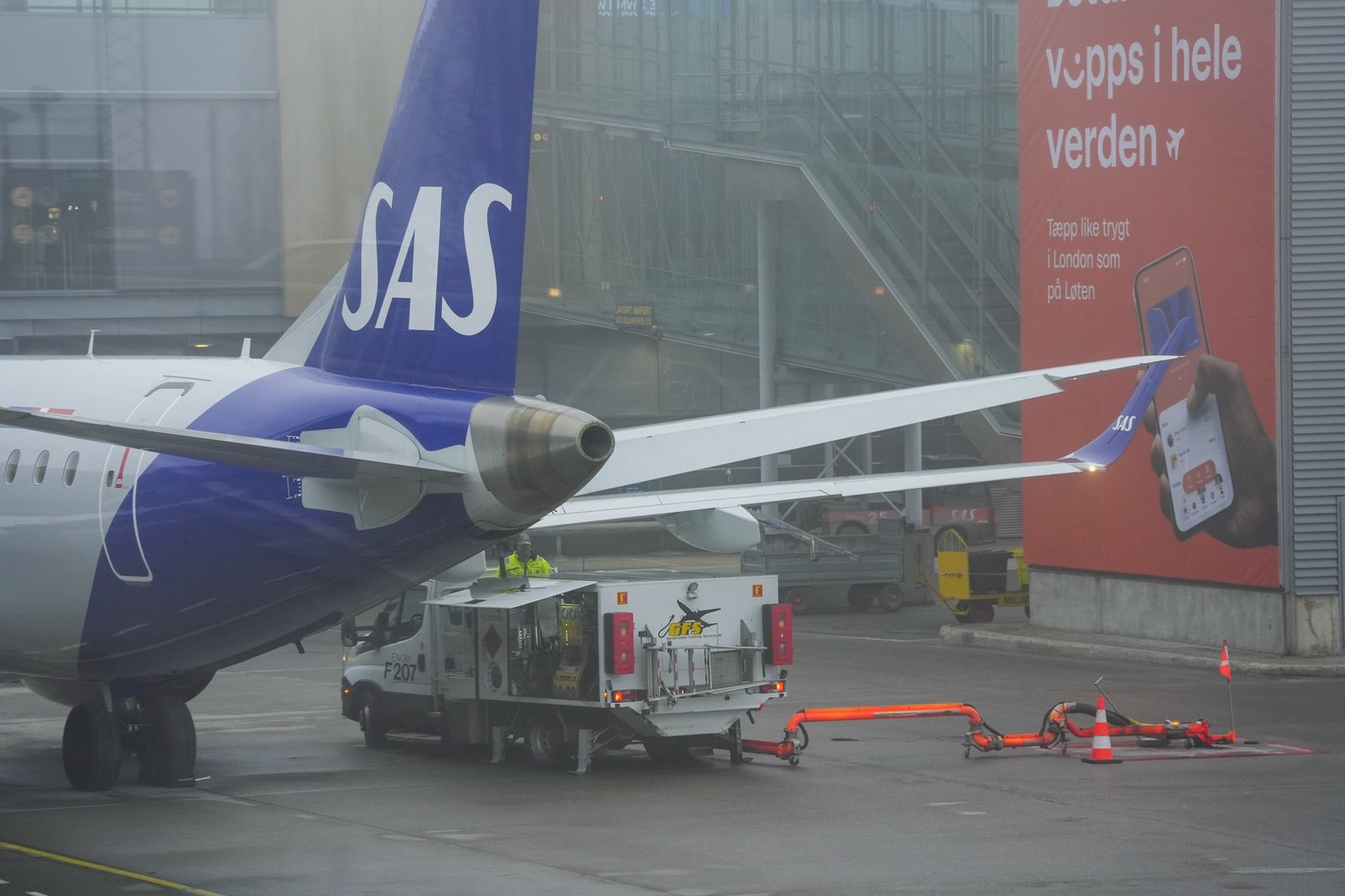
The war in Iran has claimed the first major casualty in European aviation after Scandinavian Airlines – which operates as the national carrier for Denmark, Norway and Sweden – became the first major airline on the continent to cancel flights in response to skyrocketing fuel prices.
The company announced it would cancel 1,000 flights in April due to high oil and jet fuel prices caused by the Iran war and the closure of the Strait of Hormuz, Swedish daily Dagens Industri (DI) reported.
The US-Israel war against Iran is now in its third week with no end in sight. The Strait of Hormuz remains largely closed, and US allies have rebuffed calls from US President Donald Trump to help reopen the vital waterway, which carries about 20 percent of the world's oil and liquefied natural gas.
“The price of jet fuel has doubled in ten days. Even though we try to absorb the cost increases as much as we can, this is a shock that hits the aviation industry directly,” SAS CEO Anko van der Werff told DI.
He said the firm had canceled “several hundred” flights in March, adding that the airline normally had 800 daily flights and that the measures taken were not drastic. SAS has already raised flight prices due to rising fuel costs.
SAS did not immediately respond to a request for comment.
And other big companies did the same
Air New Zealand ( AIR.NZ ) said it was cutting 5 percent of flights, or about 1,100 services, until early May as the war in Iran sends fuel prices soaring and disrupts travel even in rural areas thousands of kilometers from the conflict zone.
Air New Zealand was ahead of other airlines including Qantas Airways (QAN.AX) of Australia, SAS (Scandinavia) and Thai Airways ( THAI.BK ) of Scandinavia announced air fare hikes this week, blaming a sharp rise in the cost of fuel that has rocked the global aviation sector.
The conflict in the Middle East has forced many airlines to cancel flights to and from the region or use alternative routes due to drone and missile fire that has drastically reduced airspace and caused the biggest crisis in the aviation industry since the pandemic.
Oil prices rose on Thursday after Iraqi security officials said Iranian boats laden with explosives hit two oil tankers amid other global supply disruptions and Iran said the world should be ready for oil at $200 a barrel.
Some long-haul flights will be reduced, Ravishankar said, as US routes have become a more popular stopover en route to Europe since the widespread closure of airspace in the Middle East.
Sydney Airport chief executive Scott Charlton warned on Thursday about jet fuel supplies, raising fresh concerns about Australia's biggest aviation hub consuming almost 40 per cent of its fuel.
“We no longer refine jet fuel on a large scale. We import it,” Charlton told a conference on biofuels.
Cathay Pacific of Hong Kong became the latest company to adjust fuel surcharges on Thursday.
The Asian financial hub's airline said all routes would be affected from March 18 as jet fuel prices have doubled since early March amid the Middle East conflict.
Cathay Pacific has canceled flights to Dubai and Riyadh until the end of March, adding more services to London and Zurich instead, taking advantage of a surge in demand for Asia-Europe flights that avoid the Middle East.
Highlighting the effects of the conflict beyond the Middle East, Vietnam warned on Wednesday that domestic airlines could face fuel shortages as early as next month.