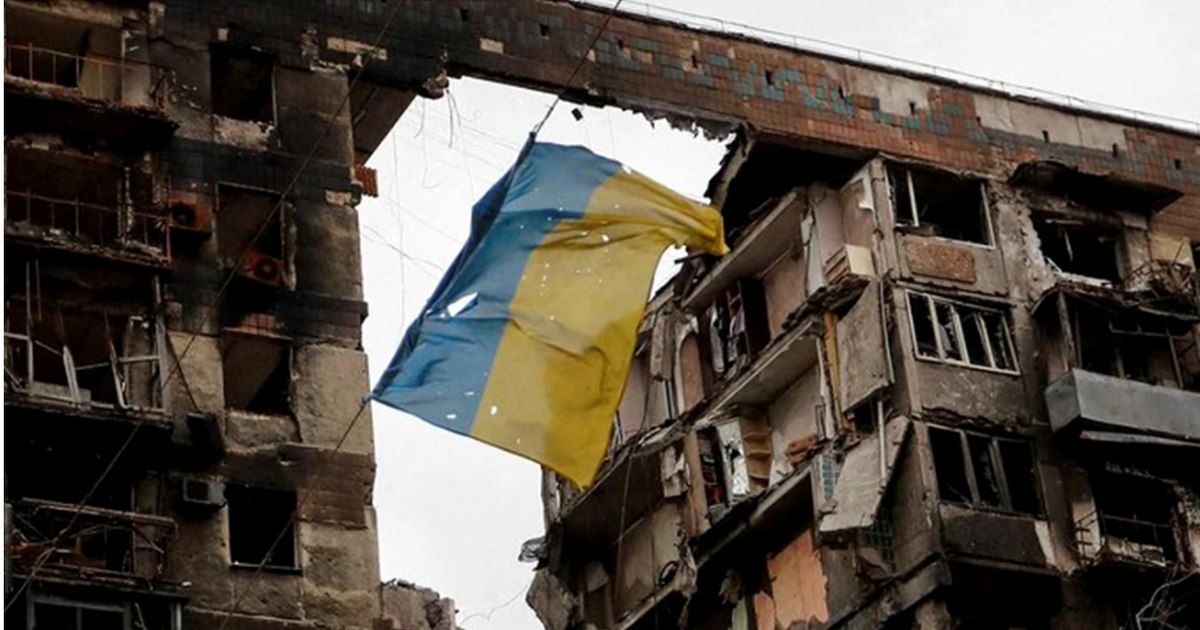
Ukraine has no good options to replace a crucial funding package from the European Union, which Hungary continues to block, leaving Kiev facing a financial problem pending a resolution to the impasse.
The loan, agreed unanimously by EU countries at a summit in December, would provide Ukraine with 90 billion euros ($103 billion) over 2026-2027, covering two-thirds of the country's financial and military needs. But Hungarian Prime Minister Viktor Orban later reversed course, apparently over a dispute over the transit of Russian oil through Ukraine.
A recent transfer of $1.5 billion from the International Monetary Fund and aid from Japan — which is front-loading more than $1 billion in funds originally due later in the year — will keep Kiev's finances afloat until late spring, according to Ukrainian officials familiar with the country's finances.
But a senior Ukrainian official, speaking to the Kyiv Independent on condition of anonymity, said there was no “reliable alternative option” after the spring unless European money started to flow – and added that domestic measures such as additional debt would be costly.
Oleksandra Mironenko, an economist at the Ukrainian think tank Center for Economic Strategy, told the Kyiv Independent that domestic debt is a “really limited resource”.
“We have a reduced capacity to attract more domestic debt”
“We have little capacity to raise more domestic debt. This year, we actually planned to repay more than borrow on the domestic debt market. The only resource we rely on is the 30 billion euros from the European Union “, she said, referring to the component of the EU loan intended for budgetary needs.
In addition, about $6 billion from the World Bank and the Ukraine Facility, an EU funding program, could be delayed as the country's parliament struggles to pass reforms needed to unlock the funds amid a parliamentary crisis.
Ukrainian officials who spoke to the Kyiv Independent said the focus remained on securing European funds, with one official telling the Kyiv Independent that Brussels and Kyiv were meeting twice a week to plan for the money to arrive in April.
“Together with EU colleagues, the Ministry of Finance is actively working to secure these funds. Ukraine has assurances from EU partners that the first tranche will be available in the second quarter of 2026,” Ukraine's Ministry of Finance said in a statement to the Kyiv Independent.
Politico reported that a consortium of Nordic and Baltic countries could offer bilateral support to Ukraine to keep the cash-strapped country's finances afloat until the €90 billion loan arrives.
However, the Kyiv Independent later learned that there are ongoing concerns within the EU that planning alternatives to the loan would mean accepting and normalizing blackmail from Hungary.
Estonia's foreign ministry also told the Kyiv Independent that it was not aware of any alternative solutions and said the focus should be on advancing the 90 billion loan.
European leaders will meet in Brussels on March 19-20, where they are likely to try to convince Hungary and Slovakia — which have also threatened to pull out of the December deal — to approve the loan.
External support is essential for Ukraine. Since the beginning of the full-scale invasion, the country has relied on colossal injections of foreign cash for both financial and military needs.
No US support
The US was a significant donor to Ukraine under former President Joe Biden, but aid has all but evaporated under the second Donald Trump administration. Kiev now relies largely on the EU, with support from other key partners such as Japan, the UK, Canada and Norway. The country has received $5.3 billion since January 2026, according to the Ministry of Finance of Ukraine.
Hungary initially delayed the loan due to a dispute over the Drujba oil pipeline, which runs from Russia through Ukraine.
Orban, trailing in the polls ahead of the April 12 election, is making opposition to Ukraine and the EU a centerpiece of his campaign strategy. He said he would not unlock the loan until oil started flowing through the Drujba pipeline, which Ukraine says was damaged in a Russian airstrike in late January.
“Support from international partners remains an important element of Ukraine's financial resilience in 2026”the Ministry of Finance of Ukraine said in a statement to the Kyiv Independent.
“In this context, the decision of the European Union on a support package of 90 billion euros for the period 2026-2027 is extremely important. It gives Ukraine confidence in terms of budgetary liquidity, especially in the current year.”