Iran is blocking the Strait of Hormuz, threatening the global economy and US interests. However, the United States lacks mine-clearing ships. The operation turns out to be not as simple as Donald Trump imagined.
The Iranians are not only attacking key points in the Persian Gulf countries with missiles and drones, but also by blockading the Strait of Hormuz they are shaking up the entire world economy – including the American one, jeopardizing key U.S. interests. Now Trump must beg the Europeans he previously insulted for help – but this also isn't as easy as he expected.
Germany and France, but also Japan, Australia, South Korea and even China are asked by the US for US help in securing the Strait of Hormuz. Trump also turned to British Prime Minister Keir Starmer, even though a few days ago he rejected his help and even ridiculed him.
After initial precision strikes against Tehran, the greatest military power suddenly fails.
Trump also threatens NATO. “If there is no reaction or if the reaction is negative, it will, in my opinion, be very bad for the future of NATO,” the US president said in an interview for the Financial Times. He mainly wants to use minesweepers, of which Europe has much more than the United States.
The article continues below the video
Klemens Fischer, an expert in international relations and security at the University of Cologne, explains why Trump's army is suddenly failing.
— The Americans and Israelis assumed a limited war lasting up to five days. They didn't expect the Iranians to react with such determination, says the expert.
The regime in Tehran has overtaken the Americans, by mining the Strait of Hormuz.
— Trump did not take this scenario into account, the Americans lack mine-clearing ships, adds Fischer.
It will take too long for the Americans to transport and program additional equipment. Other countries, especially European ones, are closer and could step in more quickly.
However, there is a problem here: in order not to have to sail around the whole of Africa, they need to sail through the Suez Canal. However, it is doubtful whether the Egyptians would consent to this. “Cairo has no interest in getting involved in a war,” Fischer says.
Three-stage blockade of the strait
The Iranians have carefully prepared for the scenario of blocking the Strait of Hormuz. As Fischer explains, when one option fails, the Iranians always have two more at their disposal. Tehran has a total of three options:
First of all – mines. Iran has various types of these weapons. Bottom mines sink to the bottom of the sea and resurface when they detect movement of the propellers. Anchor mines are anchored by a rope to the seabed in such a way that they wait for ships just below the water's surface – and are therefore invisible.
Secondly, air attacks. Iran is very efficient in building missiles and drones. In their hideouts, the Iranians apparently still have a large arsenal with which they can target ships.
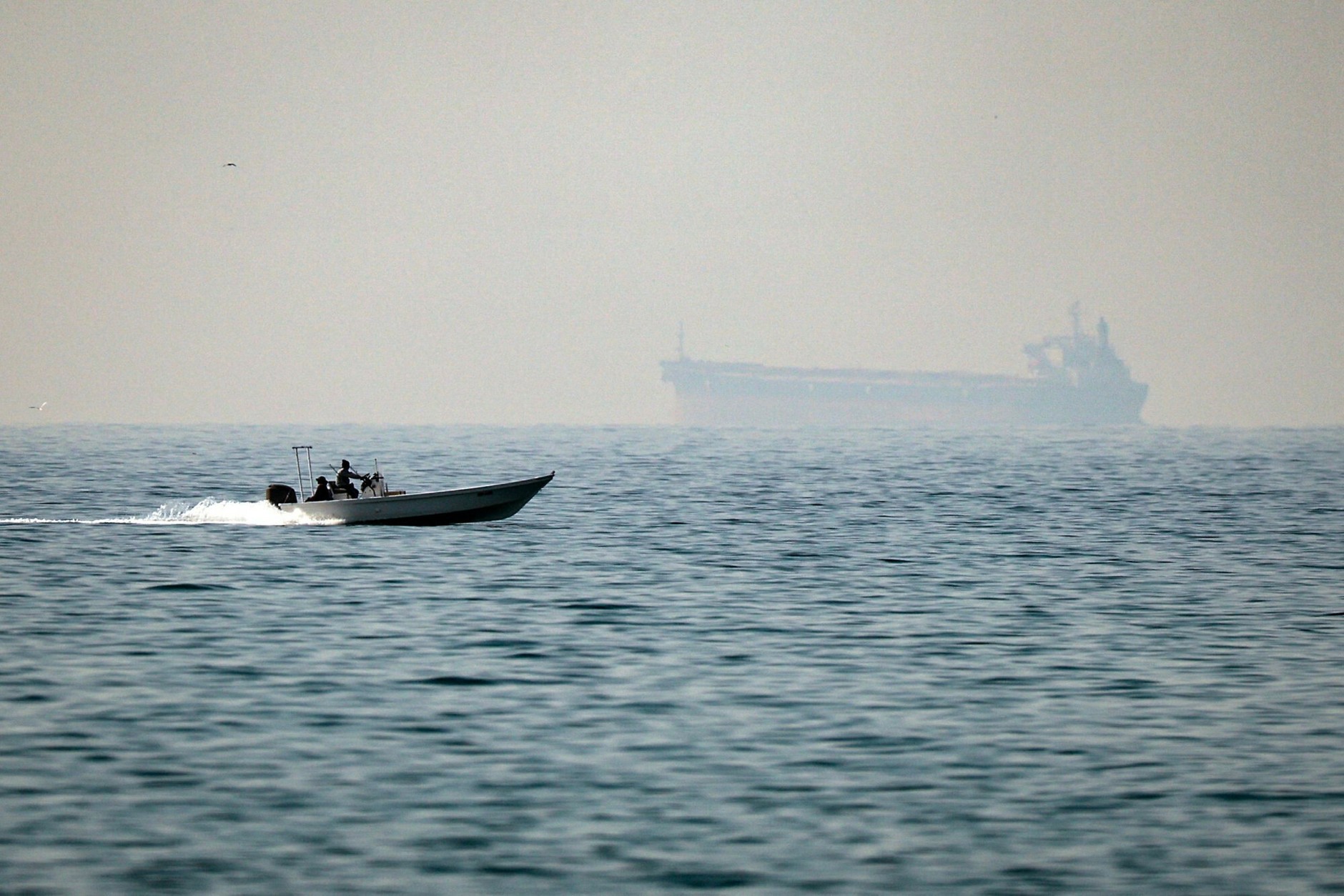
Secondly, fast boats. Iran has many caves on the coast where small vessels equipped with missiles and torpedoes are waiting. – They carry out actions quickly and retreat. It's almost impossible to find them, Fischer explains.
Motorboat and tanker in the Strait of Hormuz (illustrative photo)FADEL SENNA/AFP/East News / East News
Removing mines is extremely labor-intensive. Special mine detection boats scan the seabed using a sensitive sonar system. Often these ships are made of wood or plastics so as not to trigger the explosion of magnetic mines. Underwater drones or divers are then dispatched to identify the object and place an explosive for controlled detonation.
Mines located on or just below the water surface can also be cut off by ship-towed devices and detonated at a safe distance. Mine clearing devices are also used which produce strong magnetic fields or sounds, thus simulating a ship and activating mines.
However, modern mines are intelligent. They often have detonation delay systems, which means that sometimes they do not detonate with the first ship, but later. As a result, mine removal devices are not always able to immediately detect them and trigger an explosion. In addition, the Iranians can remotely deactivate mines in the Strait of Hormuz when they want to let a given unit pass.
The countries that Trump turned to for help do not want to put themselves at risk. Germany, Australia and Japan have already refused. There are no final answers from other countries yet.
— Trump's call for help shows how desperate the United States is. Because they don't have a plan, they embarrass themselves more and more every day, Fischer concludes.
I’m Ashley Davis as an editor, I’m committed to upholding the highest standards of integrity and accuracy in every piece we publish. My work is driven by curiosity, a passion for truth, and a belief that journalism plays a crucial role in shaping public discourse. I strive to tell stories that not only inform but also inspire action and conversation.