2026-03-16 18:29
publication
2026-03-16 18:29
US President Donald Trump said on Monday that “numerous countries” had told him they would help the US open the Strait of Hormuz. At the same time, he criticized those allies who did not show “enthusiasm” in this matter. Some European countries have announced that they will not take part in operations in Hormuz.
Trump warned in an interview with the Financial Times that if allied countries do not join in efforts to open the Strait of Hormuz, it will be “very bad for the future of NATO.” He appealed to European countries to join the American war effort in Iran. When asked what kind of help he expected, he said that the allies should send ships to remove mines, of which Europe has much more than the US. He also suggested sending European commando units to combat Iranian operations using drones and sea mines in the gulf.
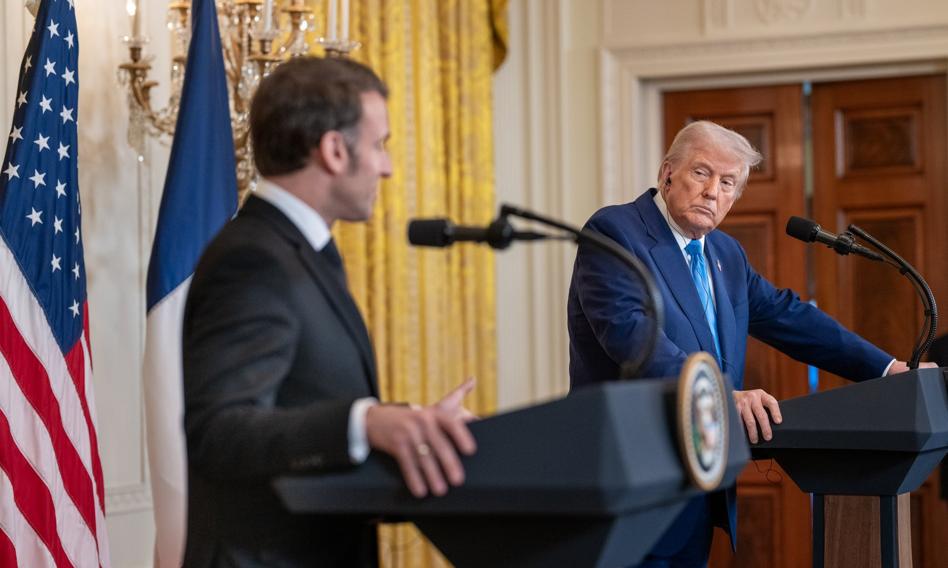
Late in the afternoon (Polish time), Trump expressed his belief that France and – possibly – Great Britain may support Washington's actions to unblock the Strait of Hormuz. Answering questions from journalists at the White House, the US leader announced that he had talked to French President Emmanuel Macron about the strait and rated his relationship with Macron as an eight on a 10-point scale. Asked if Macron would help the U.S. restore navigation through Hormuz, Trump replied: “Yes, I'm sure he will. I think he will help.”
Advertisement
He also informed that Great Britain may make a similar decision. “I think they will be engaged, maybe, but they should be enthusiastically engaged,” Trump said, referring to the authorities in London.
If the United States asks NATO to discuss the protection of the Strait of Hormuz, we will consider it, said Deputy Prime Minister and Minister of Foreign Affairs Radosław Sikorski on Monday in Brussels. He noted, however, that President Karol Nawrocki ruled out the participation of the Polish Army in such an operation.
Sikorski also stated that the EU could start a dialogue with the US on the potential use of two EU maritime missions to unblock ship traffic in the Strait of Hormuz. Earlier, EU foreign policy chief Kaja Kallas suggested that the EU could use its missions in the Middle East – changing their operating mandate – so that they could be involved in restoring traffic in Hormuz.
Prime minister Norway Jonas Gahr Stoere said on Monday that his country had no plans to send military forces to the Persian Gulf or take part in operations to maintain navigation in the Strait of Hormuz. In Athens, Greek government spokesman Pavlos Marinakis said the country would not participate in the military mission in Hormuz. Greece will only take part in the EU's Aspides maritime mission, which aims to protect ships in the Red Sea.
Representatives of the German government also announced that Germany will not take part in the military operation in the Strait of Hormuz. Members of parliament from all factions in the Bundestag spoke against the country's possible participation in such an operation. Foreign Minister Johann Wadephul expressed skepticism about the plan to expand the Aspides mission to Hormuz. As he explained, he first wants to find out from Israel and the US when they intend to achieve their military goals in Iran.
British Prime Minister Keir Starmer stressed that the country would not be drawn into a war in the Middle East. But he assured that London would work with allies to develop a “real common plan” to restore freedom of navigation.
Spokesman of the Ministry of Foreign Affairs China Lin Jian did not directly respond on Monday to Trump's demand that Beijing take part in protecting ships in the Strait of Hormuz; he called instead for a cessation of hostilities.
In retaliation for the operation by Israel and the US, Iran closed the Strait of Hormuz. In peaceful conditions, this route is crossed by, among others: about 20 percent crude oil consumed in the world. Its blockade contributed to a sharp increase in oil on world markets.
A Pakistani tanker passed through Hormuz on Monday – one of the few ships to leave the Persian Gulf since the beginning of the conflict. Iranian authorities thanked Pakistan for its attitude in the war. The government in Islamabad officially condemned Israel's attacks on Iran, without explicitly naming the United States, and expressed support for Iran's sovereignty.
Monday is the 17th day of the war between Israel and the US against Iran. Israel Defense Forces spokesman Nadaw Shoshani assured that the army has detailed operational plans for the next three weeks of the conflict. (PAP)
awl/rtt/
The publication contains affiliate links.