As described by the website zoneinwestorow.pl, the document assumes acceleration of work on this technology and launch of the first installations in the early 2030s. The goal is not only to decarbonize the economy, but also to strengthen energy security and the competitiveness of European industry.
The rest of the article is below the video:
Read also: That's how much coal there really is in Poland. Much of it will be of no use
Up to 53 GW in SMR by 2050.
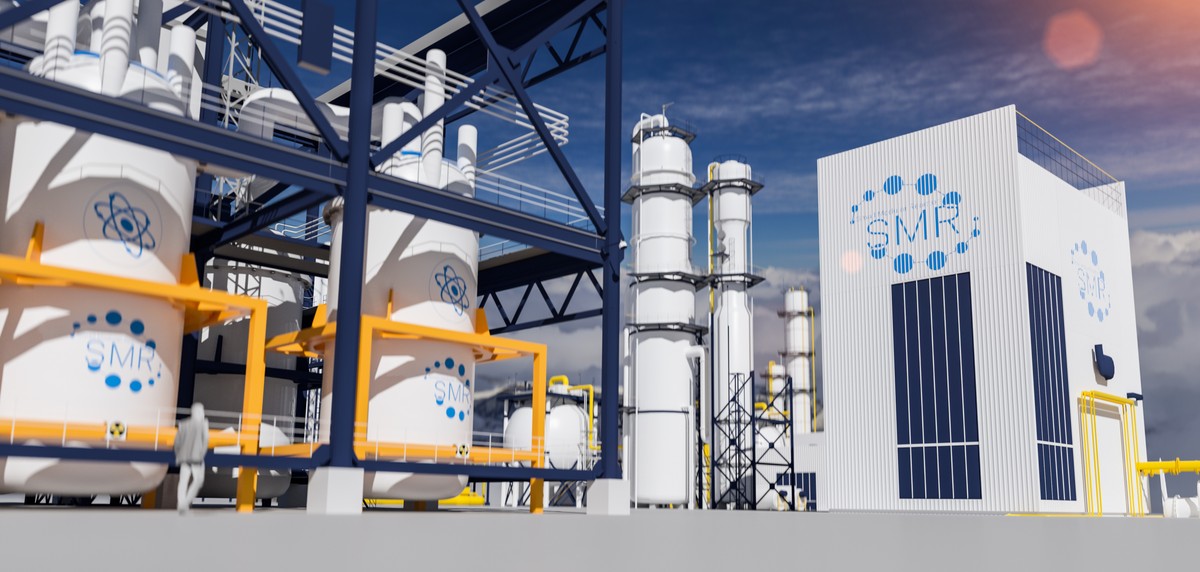
The strategy presents a vision of integrating SMR into the European energy system as one of its key components. Small modular reactors differ from classic nuclear power plants primarily in their scale and construction method – they can be manufactured in factories and assembled on site. As zoneinwestorow.pl points out, their modular design is intended to shorten the investment implementation time and reduce costs, which have so far been one of the main barriers to the development of nuclear energy.
Brussels assumes that SMR technology can simultaneously support several strategic goals: reducing emissions, increasing the security of energy supplies and developing a new industry with high added value. Preliminary forecasts quoted in the strategy indicate that by 2050 the total installed capacity of such reactors in the EU may range from 17 to even 53 GW.
Data centers will benefit from SMR
One of the most important features of SMRs is their flexibility. As the website zoneinwestorow.pl points out, according to the European Commission, these reactors can be used not only to produce electricity, but also to provide industrial heat, process steam or energy needed to produce hydrogen and synthetic fuels. Thanks to this, they could help decarbonize sectors that are particularly difficult to transform, such as the chemical industry or steel industry.
Data processing centers may also be potential recipients of energy from small reactors. The strategy indicates that their energy demand in Europe could increase from around 70 TWh today to up to 115 TWh in 2030, and stable and low-emission energy from SMRs could partially cover this growing demand, while reducing emissions associated with the digital sector.
The new Commission document is also a response to the growing competition in the nuclear technology sector. According to Streainwestorow.pl, the first small reactors are already operating in China and Russia, and intensive development programs are also carried out by the United States, Canada and Great Britain. Brussels fears a repetition of the scenario known from the photovoltaics market, where European companies lost their advantage to Asian producers.
Reducing production costs
Therefore, the strategy emphasizes the need to build a strong European supply chain and develop our own technologies. One of the elements of this approach is to focus support on a limited number of the most promising SMR projects and develop serial production of components, which would reduce the costs of subsequent investments in the future.
At the same time, the Commission indicates that the greatest barriers to the development of this technology remain high initial costs and lengthy regulatory procedures. In response, it proposes the use of financial instruments, such as guarantees under the InvestEU program, funds from the Innovation Fund or potential IPCEI projects for nuclear technologies.
The so-called “emission neutrality valleys”, i.e. special industrial zones focused on the production and implementation of clean technologies. In such regions, administrative procedures would be simplified and access to financing would be easier than in other parts of the economy.
SMR as a complement to renewable energy
At the same time, the Commission proposes closer cooperation between regulators in the Member States, which could mean, among others: unification of licensing procedures, common safety assessments and mutual recognition of some regulatory decisions.
The strategy emphasizes that SMRs are not intended to replace renewable energy sources, but rather to complement them. In an energy system increasingly based on wind and solar energy, stable power sources can play an important role in maintaining security of supply.
As Streainwestorow.pl notes, if the Commission's announcements are implemented, the first small modular reactors may appear in the EU in the early 2030s. For Member States, this means both new investment opportunities and the need to make strategic decisions regarding participation in building a European ecosystem of this technology. In the context of Poland, the importance of, among others, SMR project developed by the Orlen Group together with Synthos.