Europe's missed chances to become a great military power. How western Europe became dependent on the USA


After the Second World War the leaders of Western Europe tried to build their own European collective defense mechanisms and even to constitute a standing European joint army. And this in order not to depend on great powers like the US for security.
Earlier this year, at the “Folk och Forsvar” defense conference in Salen, Sweden, European Defense Commissioner Andrius Kubliius stated that Europe would need to strengthen its defense capability, without relying on anyone else. Especially in the context of the war in Ukraine, but also the uncertainties regarding the United States and their commitment to the European Union. “The European Union should consider creating a permanent military force of around 100,000 soldiers, which could, over time, replace US troops stationed in Europe”specified Kubilius.
However, the proposals of the European Commissioner are a belated déjà vu for Europe. Specialists and historical data show that in fact Europe missed the best moment to become militarily strong and independent from the military force of the United States or NATO. In fact, it could be said that he missed twice, this chance in less than a decade. And the geopolitical context was similar.
The “Cold War” and the fears of a war-torn Europe
Europe in 1945 was a devastated continent. Material losses after World War II were devastating, far exceeding the destruction of World War I and estimated at hundreds of billions of dollars. The continent was left in ruins, with infrastructure, cities and industry paralyzed. No less than 60 million Europeans lost their lives. Tens of millions more suffered terrible trauma, were left homeless or in poverty.
After the war, two superpowers set the tone and divided the world into spheres of influence. We are talking about the USA and the USSR. Europe was just a sick person rising due to economic recovery plans (Marshall Plan). Furthermore, in the 1950s, Western Europe was deeply dependent on US security guarantees to protect itself from Soviet influence and potential aggression. NATO, established in 1949, became the main mechanism by which the Americans extended their security guarantees over Western Europe, becoming the guardian of democracy at the gates of the Iron Curtain. Moreover, the US was asserting its American presence, stationing hundreds of thousands of soldiers and establishing the command structure (SHAPE), with General Dwight Eisenhower as supreme commander.
It wasn't long before the USSR and the US began to clash in their desire to expand their dominance. It was not an open war, but through spheres of influence, the famous “cold war”. This conflict and the sense of dependency, compounded by the trauma of the conflict, made Europeans think of solutions. Namely, to common, European defense mechanisms, without depending so much on American aid and representing a rapid response force against a potential Soviet aggression or a remilitarization of Germany. In this climate of insecurity, the states of Western Europe began to look for forms of cooperation that would ensure collective defense and regional stability.
The idea of a European army. The first big chance missed by the states of Europe
Thus arose the idea of a European body (Western European because the rest of Europe was under the Soviet sphere of influence) called the European Defense Community (EDC). This was an ambitious project of European military integration proposed in the early 1950s, in the context of the tensions caused by the “Cold War”. The main idea was to create a common European army, which would include the military forces of several Western European states under a supranational command. The proposal came from the French Prime Minister René Pleven in 1950. The French were most afraid of a rearmament of Germany. Pleven proposed the creation of an integrated European army and this initiative became known as the “Pleven Plan”.
For the early 1950s, this level of integration was even deeper than many of the institutions existing in the European Union today. The CEA proposed unprecedented things like a common European army, not separate national armies, supranational institutions to control the military, a European parliament to oversee military decisions and a European Defense Minister. Obviously, all member states had to contribute to the common “piggy bank”.
“The project would have created a political and military Europe long before economic integration became dominant”said historian Tony Judt. It was a generous project, therefore, that would have transformed Europe into an emerging military power, capable of defending itself and no longer dependent on US aid. Paradoxically, the project was rejected by the very country that proposed it. More precisely, by France. In 1954, the French parliament voted against ratifying the treaty and the project was suffocated. Why did the French make this decision? The explanations are multiple.
For example, many French politicians considered the military to be a central element of the nation state. Full integration into a European army would have meant giving up an important part of sovereignty. At the same time, the idea of rearmament of West Germany gave chills to many French people. A part of French public opinion feared the return of German military power.
Putin announces that he is monitoring the “militarization of Europe” and promises “a very convincing response to threats”
Last but not least, the French political parties were deeply divided. The Gaullists (supporters of Charles de Gaulle), the Communists and a section of the Socialists opposed the project, each for different reasons. “The vote to reject this project was one of the most dramatic parliamentary decisions in the history of European integration”said historian Anne Deighton.
In fact, many historians consider the “European Defense Community” as one of the biggest “missed moments” of European integration because, if it had been adopted, Europe could have had a common army and a unified defense policy since the 50s. The rejection of the project in 1954 profoundly changed the evolution of European security and made it dependent on US security guarantees.
The second time was with luck
However, the rejection of the project to found the European Defense Community did not make many European leaders abandon the idea of establishing a European army and especially a united European military body, which would offer them security against Soviet expansion but also independence from American security guarantees. “We need to build a kind of United States of Europe”said the great British politician, Winston Churchill.
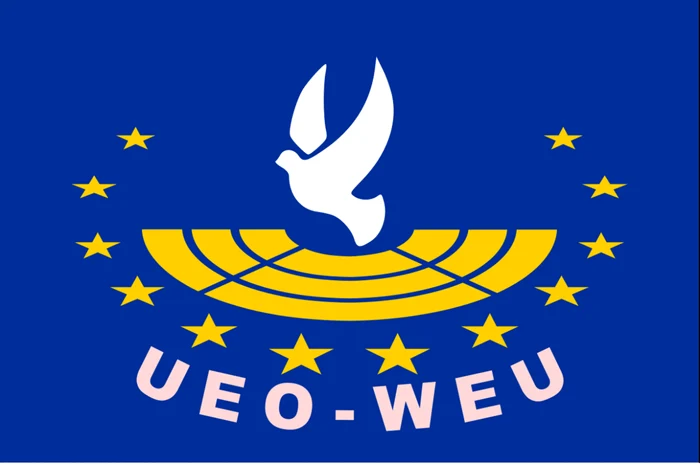
Basically, a project with repetition appeared. Another body of European military cooperation was founded on the basis of the idea of a European Defense Community, with a common European army. This time, this organism has become a reality. It was called the Western European Union (WEU) and was established after 1954. An important first step was the signing of the Treaty of Brussels in 1948 by Belgium, France, Luxembourg, the Netherlands and the United Kingdom. The treaty provided for military, political and economic cooperation and established a mechanism for mutual defense in the event of an attack.
One of the most sensitive issues of post-war Europe was the status of Germany. After the defeat of the Nazi regime, Germany had been demilitarized and divided into occupation zones. As the tensions between the geopolitical blocs intensified, Western states began to consider it necessary to integrate West Germany into a defensive system. This perspective, however, caused serious concerns, especially in France, where there was a memory of the trauma, regarding relations with Germany. The solution proposed in the early 1950s was the creation of a supranational European army through the European Defense Community. The plan aimed to integrate the military forces of the European states into a common structure that would also control the rearmament of Germany. However, the project failed in 1954, when the French parliament refused to ratify the treaty, as stated above, causing a political crisis. The solution was found in negotiations held in London and Paris in 1954.
The result of these discussions was to amend the Brussels Treaty and transform the existing alliance into a new organization called the Western European Union (WEU). “It was the last piece of an extremely complex diplomatic puzzle that forced Western states to find an alternative solution for Germany's integration into the European security system,” stated Anne Deighton. Later, through the Paris agreement, Italy and the Federal Republic of Germany also joined the organization. At the same time, West Germany was given the right to rearm and become a member of NATO, which strengthened the Western defense system in Europe.
The new organization had several goals. Among other things, guaranteeing the collective security of the member states and trying to found common European military structures to strengthen the continent against any aggression. Obviously, when there was talk of aggression, everyone turned their eyes to the USSR. Especially in the 1950s. The revised treaty emphasized that member states were determined to create “a solid basis for European economic recovery and common defense against aggression”.
A country repeatedly criticized by Donald Trump urges the European Union to create a joint army. “It would be more effective than 27 separate national armies”
Second chance missed
Although this European body had become a reality, in practice the military role of the Western European Union was limited from the beginning. The strategic dominance of NATO, supported by the military power of the United States, has meant that the main defense responsibilities of Western Europe are exercised within the Atlantic alliance. Basically, it was the second missed chance to establish a pan-European military body that would lead to a continent-wide security independence.
Over time, many of the powers of the WEU have been integrated into the structures of the European Union, especially within the framework of the Common Security and Defense Policy, ending its activity in 2011. However, there are enough specialists who believe that, despite its limited role and then its “swallowing” along the lines of powers by NATO and the EU, the WEU had a significant political importance. First of all, it represented a political and strategic experiment that demonstrated that European states can cooperate in the field of defense, an idea that we observe persists even today. “The Western European Union provided Europe with a political framework for defense cooperation, even if NATO remained the main military guarantor”said Mark Gilbert.