The spring tourist season in 2026, which was supposed to be a time of final recovery for the Russian travel agency industry after years of market turmoil, turned into one of the most dramatic logistics crises of the last decade. The sudden escalation of the armed conflict in the Middle East, which at the end of February led to an almost complete paralysis of the skies over the Persian Gulf, hit the most sensitive point of the Russian luxury holiday sector.
The United Arab Emirates, which has been building its position as the safest and most prestigious haven for Russians for years, in just a few hours became a high-risk zone in which – according to estimates of the Association of Tour Operators in Russia – over fifty thousand people were trapped. This situation forced aviation authorities and the largest market players to take evacuation actions, which completely redefined the concept of “safe rest.”
Missiles into luxury and the Matrix on Instagram. Is this the end of Dubai as we knew it?
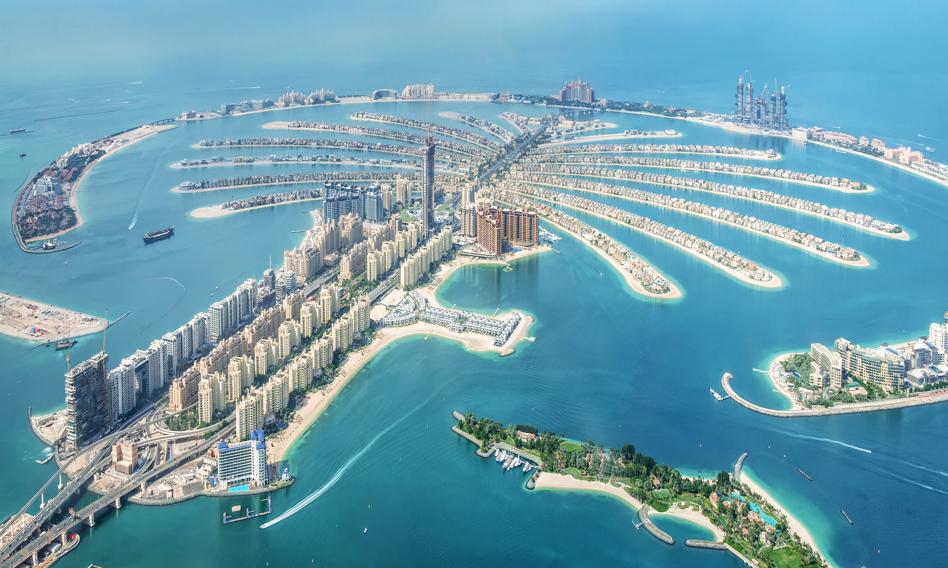
In March 2026, the image of Dubai – a global symbol of luxury, security and carefree life – falls to pieces under the influence of Iranian missiles and drones. The city that built its power on roller skates and videos on social networking sites is today facing an existential question: has the mecca of influencers just ceased to exist?
Sky paralysis and new air corridors
The logistical chaos that occurred after February 28 exposed the fragility of the reservation and transport systems on which the mass movement to Dubai, Abu Dhabi and Muscat was based. The decision to close the airspace by the key monarchies of the region came to carriers at the worst possible moment, when planes were filled to the brim with passengers enjoying the high season. In response to these threats, Rosaviats was forced to designate new, extremely complex air corridors. Flights that previously lasted just over five hours suddenly became almost twice as long.
Airplanes forced to avoid zones of potential missile fire now have to make detours through Central Asian territories, which not only exhausts the patience of passengers but, above all, drastically increases the operating costs of airlines. Each additional hour in the air means tons of burned fuel, the price of which has skyrocketed on global markets in response to reports of attacks on transmission infrastructure, including pipelines that are strategic for the region.
Financial shocks and the search for alternatives
In parallel to the technical problems, the tourism industry has faced an unprecedented financial challenge, which may prove to be a death sentence for many smaller intermediaries. The sharp decline in the value of the ruble, which in March 2026 exceeded the barrier of eighty units per dollar, resulted in the need for mass refunds for canceled trips.
Although the Ministry of Economic Development officially recommends refraining from traveling to the Persian Gulf region, it has created a legal situation in which tour operators are obliged to offer alternatives or full refunds. The problem, however, is that a huge part of the capital is already frozen in foreign hotels and GDS systems, which in the face of the global crisis are not willing to provide quick cash refunds. This makes Russian travel agencies desperately trying to convince customers to change their direction to Southeast Asia, which, however, has the effect of “overheating” prices in countries such as Thailand and Vietnam. The local hotel base, although absorbent, is not able to uncritically accommodate thousands of tourists redirected from Dubai without a radical increase in rates.
Tourism in the shadow of big politics
In a political context, the current tourism crisis is becoming part of a broader geopolitical puzzle. Reports about meetings between high-ranking Kremlin envoys and representatives of the American administration in Florida suggest that the issue of energy security and freedom of trade flows is inextricably linked to the situation in the Middle East.
For the average tourist, however, this mainly means uncertainty. Holidays are no longer planned six months in advance; the market has moved into “last minute” mode, but in its most stressful form, where the decision to fly depends on the latest information on the state of air defense systems over a given country. Experts note that for the first time in decades, it is not the price or standard of the hotel, but the “geopolitical purity of the sky” that has become the main criterion for choosing a vacation destination.
The social perception of this crisis is equally severe. The Russian middle class, which treated the United Arab Emirates as a substitute for previously lost European resorts, now feels beleaguered from another side. Attempts to evacuate trapped tourists, although carried out in stages, arouse a lot of emotions, especially among families with children who are stuck at airports waiting for free seats on planes flying circular routes.
Some travelers, instead of returning to their home country, decide to wait out the hottest period in third countries, which creates a new category of “forced tourists”. Industry organizations, such as the Russian Union of the Tourism Industry, are calling on people to remain calm and not to make hasty decisions about canceling trips planned for the May holidays. They argue that the market is in a state of high volatility and any sudden de-escalation of the conflict could restore the old orders as quickly as they were destroyed.
In a world of increasing global tensions, the concept of a “safe port” is very relative and can change overnight. The coming months will be a test of endurance for business models based on a narrow group of popular directions. Outbound tourism will likely survive this shock, but it will be a much more expensive, more cautious industry and much more dependent on political decisions made thousands of kilometers away from travel agencies. The new map of Russian tourists' dreams is currently drawn not by catalogs with beautiful photos of beaches, but by maps of the range of missile systems and air corridors, which will forever change the way we think about carefree recreation.
JM