Putin's Russia hinders access to the Internet. “As if we were digging our own sovereign grave”

— All military work is done via Telegram. All communication, Anton (name changed for security reasons) said in voice messages sent to the editorial office of Die Welt. — It's like shooting the entire Russian army in the head.
Telegram thus joins the growing list of foreign platforms that have been blocked or restricted in Russia: WhatsApp, Facebook, Instagram or YouTube.
“It's partisan”
These decisions increasingly cut off Russians from the world and from each other. They also make it difficult to coordinate activities at the front and disrupt the activities of online volunteer groups, collections and debates about the war. The deepening digital isolation may, according to Alexander Gabuyev – director of the Berlin think tank Carnegie Russia Eurasia Center – make Russia more similar to “large, nuclear-armed North Korea and junior partner of China”.
In April, the Kremlin will most likely intensify pressure on Telegram – one of the most popular Russian applications, which, due to the lack of other social networks, has become the main field for information, business and entertainment. A total ban is possible. This may further intensify the conflict between state censorship and the tools that allow it to be circumvented.
“It has become a war,” says Mikhail Klimarev, director of the Association for Internet Protection, which monitors Russia's censorship infrastructure. – It's a guerrilla fighter. They hunt down VPNs they see, block them, and the “guerrillas” escape, build new hideouts and return.
No more Telegram, the era of Max is coming
On February 4, SpaceX tightened the authentication system that allows Starlink terminals to connect to the satellite network, introducing more stringent device controls. This change actually blocked many terminals used by Russian units for unauthorized connections. As a result, Starlink traffic in Ukraine decreased by approximately 75%. – according to data from the Kentik analytical company.
This move disrupted Russian operations and allowed Ukraine to regain some territory. Russia then resorted to older solutions: optical fibers from the rear to the front line.
On February 10, Russian telecommunications regulator Roskomnadzor began slowing down Telegram for users across the country. Russian business daily RBK reported that authorities plan to completely shut down Telegram in April — except on the front line. In mid-February, Minister of Digital Affairs Maksut Shadayev assured that the government does not currently intend to limit Telegram on the front, but hopes that soldiers will gradually move to other platforms. Kremlin spokesman Dmitry Peskov said this week that Telegram could avoid a full ban as long as it complies with Russian law and maintains what he called “flexibility” in contact with authorities.
Roskomnadzor accuses Telegram of insufficiently protecting personal datadoes not fight fraud and does not prevent the application from being used by criminals and terrorists. In turn, in 2022, a Russian court recognized the Meta company as an “extremist organization”, and Facebook and Instagram were blocked.
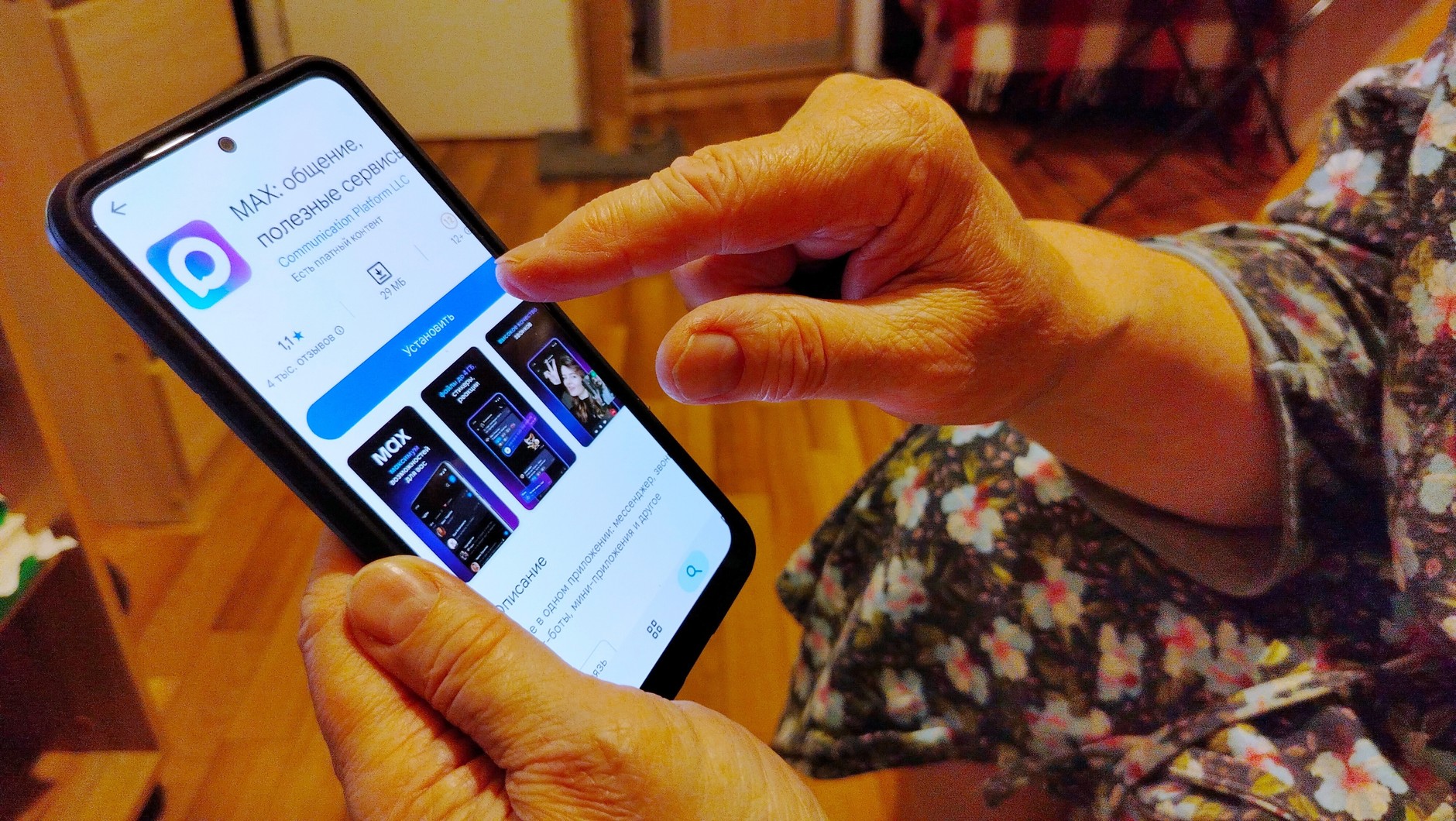
The Russian senior downloads the Max application on her smartphone. Illustrative photophoto952 / Shutterstock
Yelena, a 38-year-old resident of Yekaterinburg, whose name is also not being disclosed for security reasons, says that her daughter's primary school moved official communication from WhatsApp to Max without consulting her parents. She installed Max separately on a tablet that usually sits in a drawer – a variant of what some Russians call “Maxophone”: a device used exclusively for this application, without storing any other data on itfor fear of state surveillance.
“It's not a wall. It's thousands of fences”
Unlike China's centralized “Great Firewall,” which filters traffic at the country's digital borders, the Russian system operates within its own network. Operators are obliged to use state filters. “It's not a wall,” says Klimarev. – These are thousands of fences. You'll go through one, and then another.
In September, Russia banned advertising VPN services that allow citizens to bypass state internet blocks. According to Klimarev's estimates today, half of Russians know what a VPN is, and millions pay for this type of service. But data from the independent Levada Center from last year show that significantly fewer people use VPNs regularly: about a quarter of Russians admitted that they used VPNs to bypass blocks.
Surveys show that many Russians – especially older ones – support stricter internet regulations, most often citing fraud, extremism and online security. This stance gives authorities political space to further tighten restrictions, even if they are unpopular with more technically savvy users.
Still, even in unexpected places, criticism of Telegram's slowdown has emerged — for example from Sergei Mironov, a longtime Kremlin ally and leader of the A Just Russia party. In a statement on his Telegram channel on February 11, he called the authors of these actions “idiots” and accused them of harming soldiers at the front. Troops use the app to contact families and organize collections for the war, so restricting Telegram could cost them their lives. Although he praised the state-owned Max application, he emphasized that Russians should have the right to choose the platform themselves.
Pro-war Telegram channels increasingly portray state lockdowns as sabotaging their own war efforts. Ivan Filipov, a follower of Russian military bloggers, says the reaction to the news about Telegram in the community was full of “pure rage.”
Unlike Starlink, whose shutdown can be blamed on a foreign company, Telegram's limitations are considered an internal problem. Bloggers accuse the authorities of sabotaging their own actions in the war.
Telegram is not only used for front-line coordination, but also to organize collections through volunteer networkswhich supply the army with equipment that the state does not provide reliably. Telegram is the main collection and reporting center for supporters. — If you destroy Telegram in Russia, you will destroy fundraising, says Filipov. — And without this money, many branches simply do not operate.
Few in this community trust the Max app. They indicate technical problems and lack of data security. Since Max is subject to Russian data localization laws and is closely linked to state services, many assume that the services have access to their conversations.
Activists tried to organize demonstrations in several Russian cities in defense of Telegram, but authorities blocked most such gatherings.
“I feel like we're isolating ourselves. Like we're digging our own sovereign grave.”
Retailers are seeing growing interest in older communications devices – walkie-talkies, pagers and landline phones — and paper maps, as mobile networks become less and less reliable.
— I feel as if we are isolating ourselves, says Dmitry, a 35-year-old who travels between Moscow and Dubai, whose surname we also do not give. — As if we were digging our own sovereign grave.
Observers say this pattern is already known: first irritation, then habit. When Instagram and YouTube were blocked or slowed down in previous years, the number of their users in Russia plummeted as many switched to other sites instead of protesting.
For now, Russia's digital isolation resembles a controlled escalation rather than a complete cut-off. The authorities officially deny plans to completely shut down the Internet. Even critics admit that a complete cutoff would paralyze banks, logistics and foreign trade. “It's possible,” says Klimarev. — But if they do that, the Internet won't be the biggest problem anymore.