Jan Markos is a Slovak chess grandmaster who regularly comments on political events for the Respekt website.
There is no more glorious task for a ruler than to introduce new orders and laws and to root them generously and permanently. At least that's what Machiavelli wrote in his book “The Prince” from 1513.
Today, many modern rulers would laugh at him and call him a failure. Bush league. Today's powerful are much more willing to rule not by laws but by exceptions.
Changing the law to suit authoritarian goalsit is quite complicated. And it catches the eye. Many people notice this: the opposition, the media, the European Union. But if you do not change democratic laws, but just quietly suspend them, you will create a special one double systemwhere democracy still exists on paper, but at the same time you can rule regardless of legal norms.
For your opponents, such a hybrid system is much more difficult to read.
But how can we justify the suspension of the regulations to the public? Just convince her that she is at risk. It is possible to exaggerate the real danger. But you can also easily come up with a threat.
How Orban suspended democracy in Hungary
Viktor Orban loves exceptions. Hungary has been in something of an unusual state since 2016. First due to mass migration, then due to the pandemic. From 2022 due to Russian aggression against Ukraine. Currently, there are even two such strange states in force at the same time: due to mass migration and war. And if Orban continues to rule after the April elections, you can safely bet that his cabinet will extend both of these states of crisis again at the appropriate time.
An exceptional period imperceptibly turned into a permanent condition. The exception became the law.
Why is Orban doing this? Officially declared states of crisis and emergency allow him rule like an autocrat but pretend to be a democrat. It can issue government decrees that have the force of law – this is how, for example, it introduced a special tax for banks.
In February 2026, he even intervened in a legal dispute between the state and Budapest over the division of money – by government decree he ordered the court to end the case, which critics consider an unprecedented interference of the executive in the judiciary.
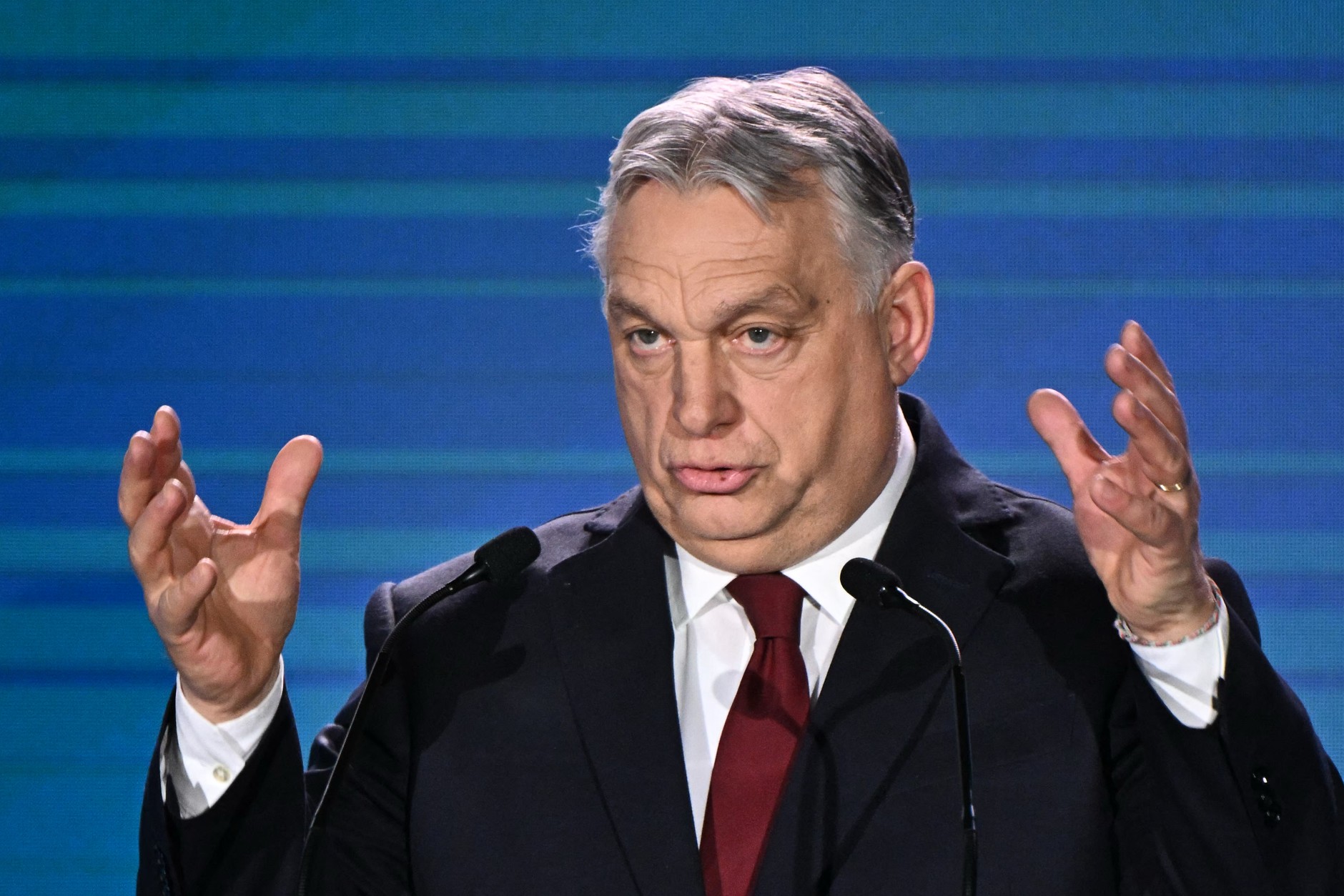
Prime Minister of Hungary Viktor Orban, March 5, 2026Attila Kisbendek / AFP
Permanent state of emergency
Of course, the Hungarian Prime Minister did not invent this method of governing through exceptions. He had somewhere to draw inspiration from. For example, the Nazi Third Reich was in a similar state for virtually its entire existence. Let us give the floor to the Italian philosopher Giorgio Agamben. In his book “Stato di eccezione” (State of Emergency) he writes:
“As soon as Hitler took power (or more precisely, as soon as it was transferred to him), on February 28, 1933, he announced a decree for the protection of the people and the state, suspending the articles of the Weimar Constitution regarding personal freedoms. This decree was never repealed, so from a legal point of view, the entire Third Reich can be considered a state of emergency that lasted 12 years. In this sense, modern totalitarianism can be defined as the introduction – through a state of emergency – of a legal civil war, which makes physical liquidation not possible only political opponents, but also entire groups of citizens who, for some reason, cannot be included in the political system. Since then, the voluntary creation of a permanent state of emergency (even if it is not declared in the technical sense) has become one of the key practices of modern states, including the so-called
The article continues below the video
Agamben also gives many other, more contemporary examples. Let us recall at least one of them. In response to the terrorist attack on the New York Twin Towers, US President George W. Bush issued a presidential military decree on November 13, 2001, in which he authorized the detention of foreigners accused of terrorism for an practically indefinite period of time and without the victims being able to defend themselves against such proceedings in civilian courts.
The legal order in the US still existed, but not for everyone. Those detained at Guantanamo were an exception. In the legal vacuum of this exception, they were tortured.
The Slovak case
In Slovakia we also have experience with abuse of exceptions, which are justified by more or less fictitious threats. One striking example is the abuse of a shortened legislative procedure when passing laws. Since Robert Fico came to power, as many as 58 acts have been passed in parliament this way. They concerned everything: salaries of public officials, targeted energy aid, the education act, but also, for example, subsidies in civil aviation.
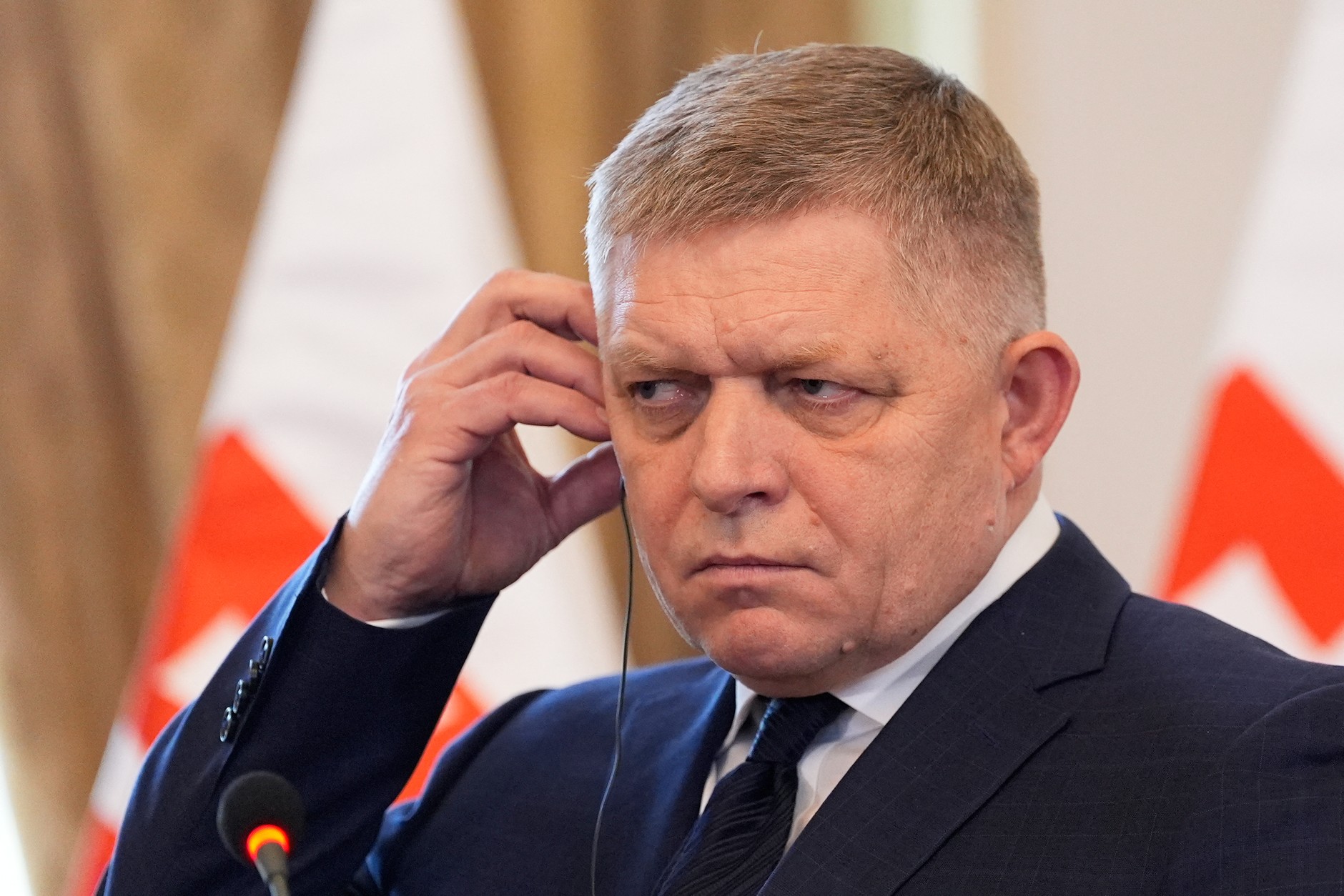
Prime Minister of Slovakia Robert Fico, February 15, 2026Alex Brandon / AFP
Let us recall that the summary legislative procedure is a unique tool that can only be used when the security or fundamental rights and freedoms of citizens are at risk, or when there is a risk of significant economic damage. There are therefore only two possibilities. Either Slovakia is a country in a state of permanent decline, or under the leadership of the Prime Minister the exception becomes the rule, and thus a double situation occurs in which the state looks like a democracy, but it is partly managed by undemocratic methods.
Fico's circus with the convening of the State Security Council should be interpreted in the same way. In 2018, he called it because of paving stones in the bushes. In 2025, he again used the services of President Petro Pellegrini. He called it due to the alleged threat of a coup in which the Georgian National Legion was to participate.
In both cases, it was about calling out feeling threatenedwhich entitles those in power to reach for exceptions. Fortunately, both of Robert Fico's scripts soon fell apart in his hands. So when Defense Minister Robert Kalinak (again with the helping hand of President Petro Pellegrini) reminds us that it would be good to legally establish a new form of “exception for the powerful”, the so-called a state of emergency that would allow armed forces armed with “live ammunition” (Pellegrini's words, not mine) to also intervene in civilian areas, we must be very careful.
It is possible that this bill will actually serve primarily to protect Slovakia against new types of threats. However, it is also possible that the Smer party decided to create a party (following the example of Hungary). a new tool that will allow this party to rule autocratically in a country that will still give the impression of a democratic state from the outside.
The details of the proposed constitutional change will be decisive. We must closely follow its creation. And if there's a devil in those details, speak up about it.
Slovaks don't want to wake up one day in Hungary. And certainly not in Guantanamo.
I’m Ashley Davis as an editor, I’m committed to upholding the highest standards of integrity and accuracy in every piece we publish. My work is driven by curiosity, a passion for truth, and a belief that journalism plays a crucial role in shaping public discourse. I strive to tell stories that not only inform but also inspire action and conversation.