Does putty really help?
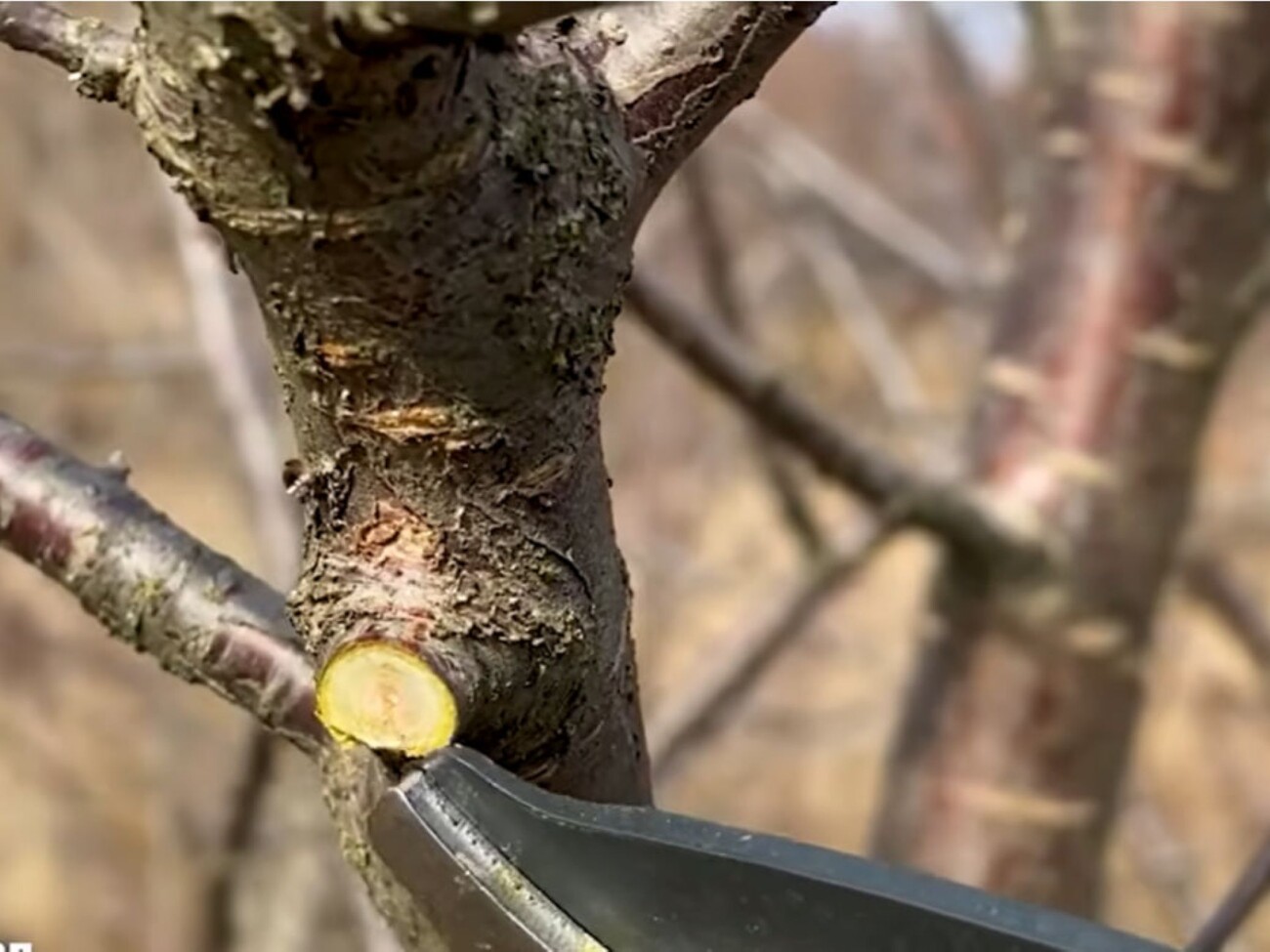
According to the gardener, putty should be used, but it is important to choose the right composition – the right putty should work as an antiseptic without blocking the access of oxygen to the tissues.
The gardener advised using ordinary lime for this, adding copper sulfate. This solution acts as an antiseptic, protecting against pathogens and ultraviolet radiation, but does not create an airtight film. The cut “breathes”, and the cambium and callus (tissues responsible for wood growth) continue to actively divide, quickly healing the wound.
What should you absolutely not smear on trees?
Using the wrong products can not only slow down the healing process, but also destroy the tree.
- Garden pitch creates a dense film under which condensation accumulates. As a result, the wound does not heal, but rots. Over time, the varnish peels off, and pests and fungi get into the resulting voids.
- Solvent-based paints, as they are toxic to living wood tissue.
- Oil paints. Modern formulations often contain chemicals that destroy the cambium.
Important Tips
If it is not possible to make the correct lime-based mixture, it is better to leave the cut as is. Without treatment, the wound will heal more slowly, but the tree will remain healthy, unlike the situation with the use of garden varnish.
If there are a lot of trees, it will take a long time to cover each cut by hand. The most effective method is to treat the entire garden with Bordeaux mixture immediately after pruning. It disinfects all wounds well and protects the tree from diseases without harming the future harvest.