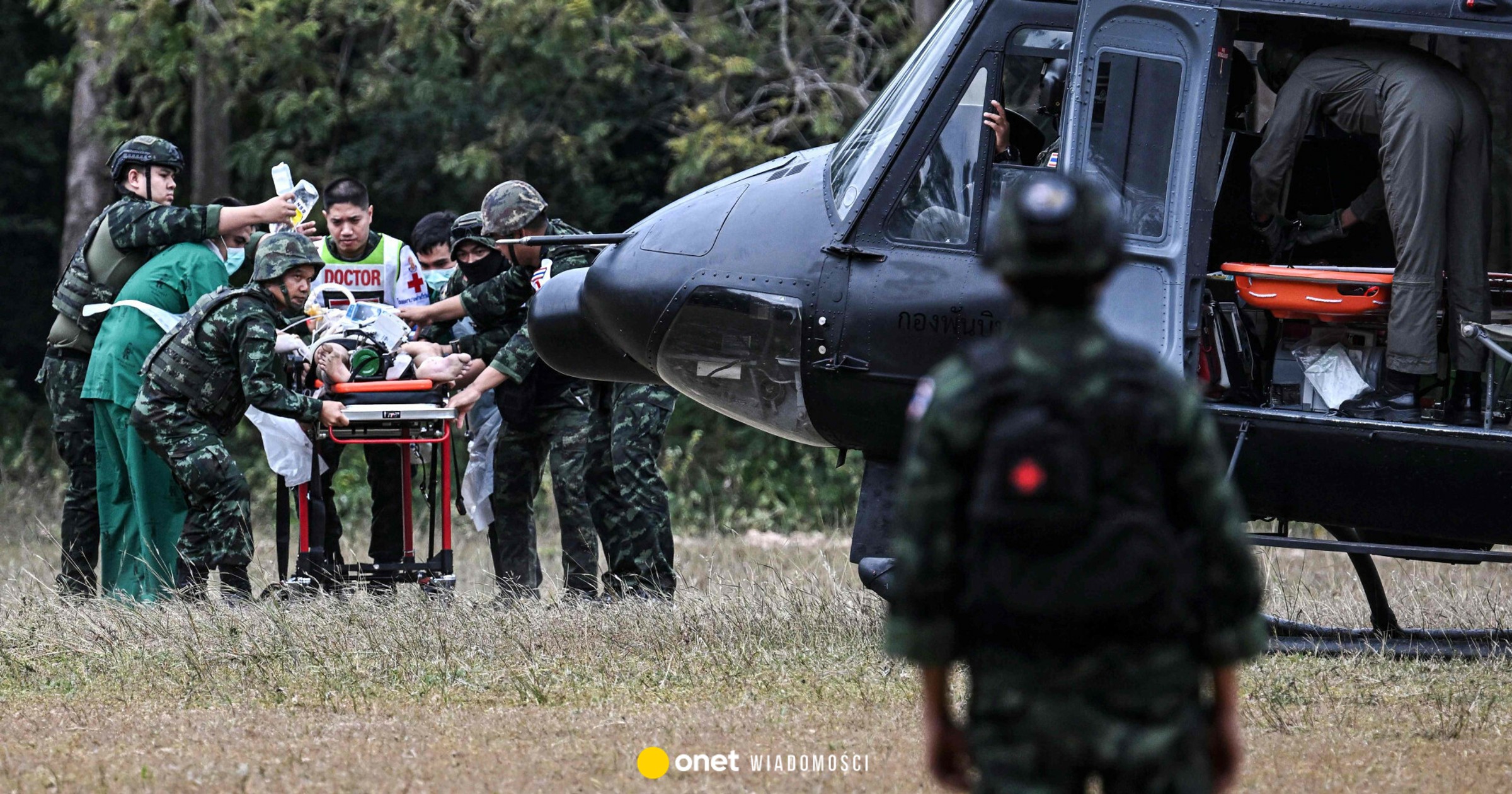
The secret to a successful attack on Iran. The US and Israel took advantage of one advantage


The display of U.S. and Israeli firepower in Iran was faster and more overwhelming than in the first two Gulf Wars. The two allies conducted more offensive airstrikes on February 28 than the U.S. carried out on the first day of major fighting in 1991 or 2003 (with significantly larger military forces).
The US and Israel are able to conduct large numbers of airstrikes and fire multiple missiles because they can Identify targets more accurately and faster than ever before. They do this through greatly increased use of software – including, to a limited extent so far, artificial intelligence.
The armed forces of both countries generate and attack targets on an industrial scale.
The choice of targets has been under intense scrutiny from the first hours of the war. On February 28, 175 people—most of them children—were killed in an attack on a girls' school in Minab, southern Iran. The civilian object was probably hit by an American Tomahawk missile.
The modernized targeting systems used by the US and Israel are much better at locating targets and minimizing civilian casualties than previous versions. In the United States, the process of attacking Iran is led by people in Tampa, Florida, at the headquarters of Central Command (CENTCOM), which is responsible for Pentagon operations in the Middle East.
Behind the scenes
The “Weaponeer” (the person who prepares the weapon for firing) decides what weapons are needed for each target, e.g. bunker-busting missiles for underground facilities or GPS-guided missiles (known as JDAM) for buildings. Lawyers check targets, but their role is limited. As a former US commander says, a lawyer checking targets “doesn't say 'you can't do it', he says 'you can do it, but here are the consequences'.” Ultimately it is the commander who is the supreme lawyer.
The command's “J5” (Strategy and Plans Directorate) brings all these elements together into a coherent war plan and forwards it to “J3” (Operations), which ultimately breaks down the strategy into “air orders,” usually two days in advance.
Software has been used for this purpose for a long time. It assesses the probability of destruction of a target, taking into account its location and design, and the likely damage to civilians by simulating the range of blast, heat and shrapnel. All of this can be overlaid on maps as a jagged-edged image, sometimes called a “splat.” However, in recent years this technology has developed significantly and become more advanced.
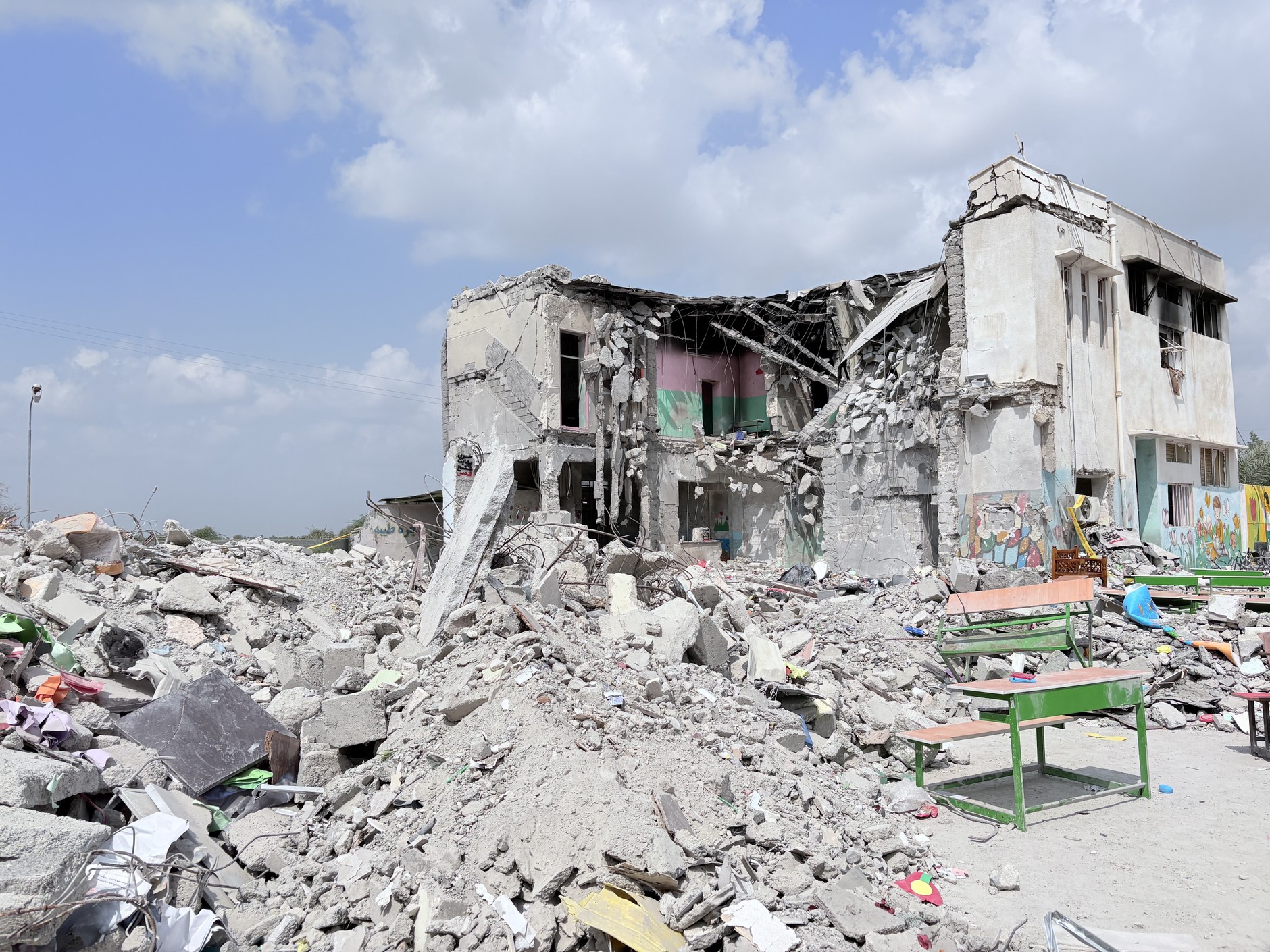
Destruction of a school in Minaba, March 5, 2026.Stringer/Getty Images
The ace in the American hole
The US armed forces, including CENTCOM and NATO, currently use the Maven Smart System, created largely by US company Palantir, to streamline the entire process. Maven is known as decision support tool. It takes information from open sources, such as social media, and classified sources, such as satellites, and combines it all together.
If an Iranian mentions on Telegram (Iran's favorite app for such conversations) that he saw a missile launcher pass by his house, Maven can link that fragment to data from radio satellites that detect electronic emissions from Iranian military radios. It can then generate targets, determine which weapon is best suited to hit each one, and assess the damage done.
Maven also serves as a “digital twin” of the real world, writes Arnel David, the NATO officer in charge of the program, which enables commanders simulating effects making a specific decision. The goal, the expert says, is to transform military command into “science based on predictions and supported by machines.”
All this means that data can be transformed into goals at a much faster pace. Joe O'Callaghan, a retired colonel who led the development of Maven in the U.S. Army's XVIII Airborne Corps, recently said on a podcast that one secret study showed how the Palantir system allowed military personnel to plan an operation on the scale of the Iraq War using one-tenth the manpower. He added that the situation had improved since then.
What previously took tens of hours for dozens of people, as a former NATO general involved in the project explains, “can now be reduced to two minutes.”. A European general describes what he witnessed as “alchemy”. — We pass from 10 to 300 targets a day. Our goal is 3,000. a day, he says.

US President Donald Trump monitors the attack on Iran, March 2, 2026.The White House/Getty Images
Israeli Target Bank
Israel uses different software, but has also “industrialized” the process, as one officer puts it. American planners were astonished when, in preparation for war, their Israeli counterparts arrived with a “target bank” containing thousands of Iranian locations (and the ammunition needed for each of them): headquarters and houses of Iranian leaders, military and militia bases, missile launchers and factories, civilian infrastructure and much more.
Israel gave decision support systems more autonomy in generating goals than I could ever receive
says the European general.
Amos Yadlin, then commander of military intelligence, adapted the methods used against SAM missiles and extended them to all potential targets. The Chief of Staff of the Israel Defense Forces (IDF) finally had a bound copy of Hamas' goals ready. Every time a rocket was fired from Gaza, he could choose a place to retaliate within minutes.
All this may seem like black magic. But commanders say the target databases created by Maven and other tools, which have been tested for nearly a decade, are reliable. They apply a confidence level to each goal, depending on the underlying data. According to one officer, they are also better at identifying civilian objects than stressed analysts.
The biggest flaw and operator error
In both the US and Israeli armed forces people approve every goalexcept in extreme situations such as air defense systems that are designed to combat large numbers of incoming missiles. But some experts admit that the increasing scale and pace of attacks has created incentives to give computers more freedom to actually fire at the targets they generate.
Concerns about autonomous strikes are at the heart of the dispute between Anthropic, maker of the Claude AI model, and the Pentagon, though it remains a hypothetical concern for now. Claude is used to some extent within Maven, but not for geospatial tasks such as feature identification.
Some NATO countries “are concerned loss of human control“, as one of the sources claims. – Changes are taking place at a pace that I wouldn't even understand four years ago – reveals the interlocutor.
In many cases, the problem with computerized target databases comes less from the computers themselves than from the people who operate them. — Artificial intelligence can improve the work of a good intelligence officer and help reduce collateral damage, says an Israeli source.
However, if an intelligence officer is just trying to find more targets and doesn't care who gets hurt, AI will help him generate those targets.
Failure to re-verify targets may have been a factor in the attack on the Minaba girls' school. As humans become inundated with more and more computer-generated targets – allowing many more attacks to be carried out per day – minimizing risks of such disasters will be an increasing challenge.
CENTCOM's civil claims team now has a third of its pre-Hegseth staff. The greatest losses were suffered by people involved in planning and working in the so-called shock cells. Such workers can help understand how changes across Iran are making goals like the Minab school obsolete.
“The more we do on the planning side, the less we have to worry about places like Minab,” one official said. On March 8, U.S. Central Command said Iranians should stay home to avoid death and accused Iran's leaders of endangering civilians by placing weapons in built-up areas. The regime, CENTCOM says, has “a blatant disregard for the safety of innocent people.”
© The Economist Newspaper Limited, March 11, 2026