Peter Magyar has his first big tests ahead of him. “Not individual skeletons fall out of the closet, but entire cemeteries”

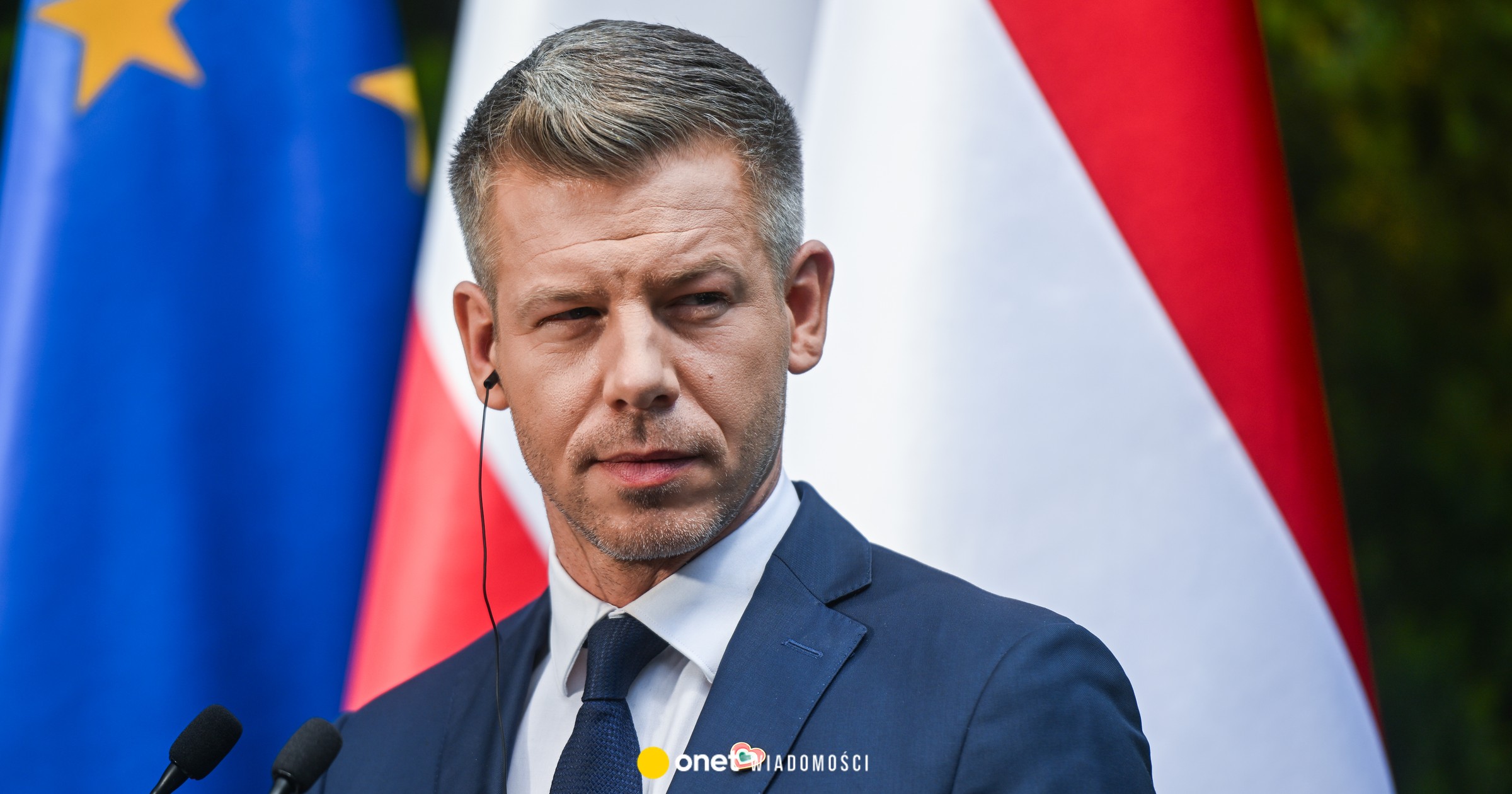
On his first foreign trip, Magyar did not go to Brussels, Paris or Berlin, but to Poland – to a historical friend of the Hungarians who serves as a model for the new prime minister of a successful and self-confident Central European country. He laid a wreath at the Krakow Holy Cross. Jadwiga and visited Lech Wałęsa in Gdańsk.
Magyar's next trip, to Brussels, may not go so smoothly. Talks in Belgium on restoring subsidies at the end of the week will be difficult for Hungarians, regardless of the fact that the local elite openly rejoiced at the end of Orban's rule.
Magyar will travel to Brussels at the end of this week. There he will negotiate one of his main election promises, namely that he will bring back EU subsidies to the country, suspended during Orban's government due to justified suspicions of their theft and violation of the rule of law.
The new Minister of Foreign Affairs, Anita Orban (the only thing she has in common with the former prime minister) has promised to restore standard diplomatic relations with Ukraine, which have so far been extremely hostile. When the Russians recently shelled Uzhhorod, the center of the Hungarian minority near the border with Hungary, they summoned the Russian ambassador. Yevgeny Stanislavov, after years of pampering by Orban's government, is not used to such treatment.
Some things don't change. Hungary continues to claim that any talks on Ukraine's accession to the European Union will only begin when Ukraine allows wider use of the Hungarian language (e.g. in schools and offices) by the Hungarian minority in the south-west of the country, in accordance with international agreements. Magyar maintains the ban on imports of Ukrainian agricultural products introduced by Orban.
The Hungarian authorities adopted it in 2023 to protect their own farmers against cheaper Ukrainian production. The ban is contrary to EU law, but Hungary is not alone in this – it also applies to Slovakia and Poland. Donald Tusk's government also inherited it and left it in force. The European Commission officially disagrees, but is not taking any action against these bans.
Magyar also does not want to quickly give up Russian oil and gas. His government has committed to abandoning them by 2035, eight years after the rest of the EU. He argues that it is difficult for him to maneuver after Orban, instead of reducing it, increased Hungary's dependence on Russia during the war – but also that Russian raw materials are simply cheaper than others.
Hungarian analyst Andras Biro-Nagy comments that the new Hungarian prime minister cannot make any significant turn towards pro-Ukraine because a significant part of his voters would not accept it. — But he probably doesn't want it either. He is not hostile towards Ukraine like Orban, but he will keep his distance, says Boro-Nagy.
“People like to be on the winning side”
For Hungary not to lose money, it must meet several conditions by the end of August.
For example, join the office of EU prosecutor or introduce stricter controls when awarding grants. Some of these decisions have a large practical impact – the EU is demanding a change to the pension reform, which will allegedly increase the Hungarian budget deficit so much that it will make it impossible to grant a loan under EU rules.
Magyar will try to convince Commission officials to give Hungary some relief – on the one hand, it cannot afford not to increase pensions, even at the expense of the deficit, because inflation in the country has been high for several years, and on the other hand, it needs EU money. Their lack is, among other things, why Hungary is doing so badly.
Magyar argues that his country and government, taking over from Orban, are in a unique situation. As he told Hungarian journalists, “sometimes what falls out of the closet are not individual skeletons, but entire cemeteries.” How understanding will they be towards Magyar in Brussels? This is an open question.
In the country, Magyar did not have time for big changes yet. He confirmed some things, such as Orban's generous financial support for families and retirees, which before the elections was the last and only thing for which voters in polls largely appreciated the prime minister.
State television and radio, one of the main propaganda tools of Viktor Orban's government, are still operational. Although there have been no systemic or major personnel changes so far, the change was felt by Orban's media employees themselves, and pouring sulfur on the previous opposition replaced careful and conflict-free reporting of events.
After the electoral victory, Tisza (thanks to the specific electoral system that Orban's Fidesz created for itself to help it achieve crushing victories) has a comfortable constitutional majority. For years, Viktor Orban and his Fidesz have filled offices with their own people and built artificial institutions that were intended to prevent their possible successors from ruling.
However, they did not take into account the constitutional majority of their opponent. Even President Sulyok can now feel the consequences of this. Tisza can do many things. For example, theoretically, abolish the office of president.
The conflict with the president probably won't be that dramatic, but Magyar could afford it. According to polls, he enjoys even greater support today than during the elections; instead of 55 percent in April, Tisza would get well over 60 percent. votes. Daniel Rona, head of the independent Hungarian agency 21 Research Center, believes that this is a natural development of the situation after the elections – people like to be on the winning side, so they join them even after the fact.
“Fidesz is still in shock after the defeat”
As Hungarians still want a symbolic farewell to the 16-year era of Orban's rule, Magyar, prime minister since May 9, shows every day that he is introducing a new order.
“Rendszervaltas”, or change of order, as Tisza's party calls its victory, demonstrates in various ways: together with his ministers, he single-handedly dismantled the fence that kept the public away from the seat of government. He quickly approved a constitutional amendment that limits the prime minister's term of office to two terms. With the act, he reduced the salaries of ministers, MPs and, of course, his own.
As for the seat of government, the former Carmelite monastery next to Budi Castle, which Orbán's government expensively restored seven years ago and then moved to, on a hill above the Danube and the entire city, is today open to the Hungarian public.
The entire 2019 move was seen by much of society as an expensive and unnecessary whim of Orban, and Magyar wants nothing to do with it. His government moves back down and across the river to Pest, to Constitution Street, near the Parliament.
Fidesz is still in shock after its defeat and is not sure who should lead it. Viktor Orban probably shouldn't do it anymore after so many years and defeat, party members tell Hungarian journalists — but at the same time, the party has no other potential leader at the moment.
“Over time, Magyar's popularity will of course decline, and there will be disillusionment with ordinary politics,” Rona says. In his opinion, however, Magyar, like Orban in the past, has a lot of support until a truly credible rival appears. For now, it is not even visible on the horizon.