Spain, the former paradise of Romanian workers. How attractive it has remained: “Salaries are rising slowly, but rent is rising quickly”


Spain remains one of the favorite destinations of Romanians who choose to work abroad, but life there is no longer as easy as it was two decades ago. Many of the migrants complain about the rising cost of living, high rents and stagnant wages.
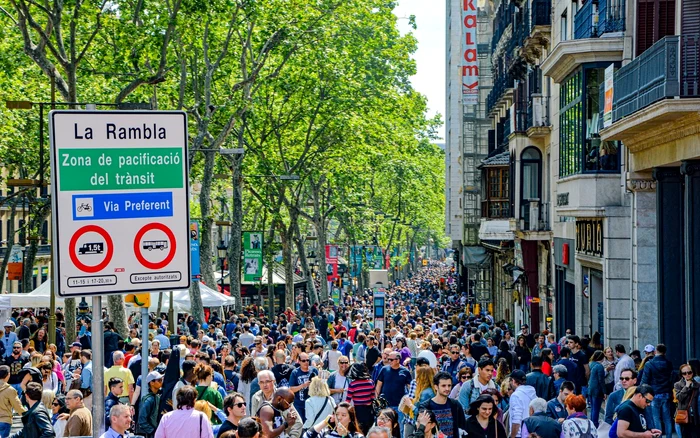
Spain remains one of the favorite destinations of Romanian migrants. Photo: Pixabay.com
More than 600,000 Romanians live in Spain, according to data published in 2025 by the National Institute of Statistics in Spain.
Why Spain has become attractive for Romanians
Spanish society has welcomed Romanians in increasing numbers since the 90s, many of them being attracted by the salaries offered in construction.
At the end of the 2000s, hundreds of thousands of Romanians arrived in Spain, encouraged by Romania's accession to the European Union and the policies that allowed them full access to the labor market in this country. In 2012, the Romanian community in Spain reached a historical maximum of almost 900,000 people, many Romanians being seasonal workers in construction and agriculture.
The Romanian community in Spain, a country of about 48 million in southwestern Europe, has been on a slight decline in recent years, official reports show, but remains the third largest foreign population, after Moroccans and Colombians.
Spain remains one of the attractive Western countries for Romanians, and many of those who settled here explain why they chose to stay in Spain and how they feel in Spanish society.
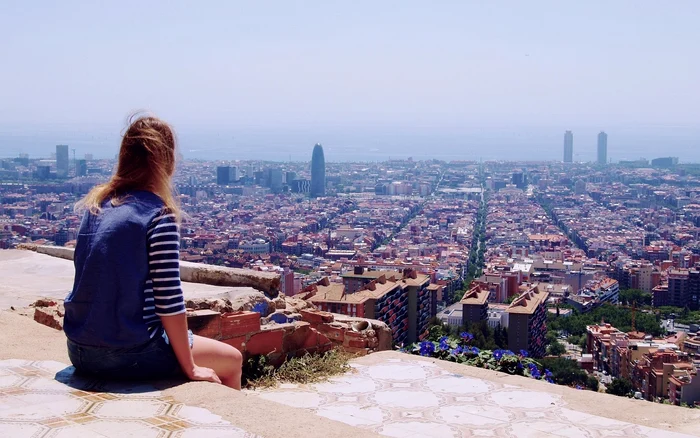
Spain, a country considered friendly by Romanians. Photo: Pixabay.com
Some see the Spanish as generally friendly, enjoying a milder climate than Romania, even if the summers are sometimes unbearable due to the heat wave, better food and quieter life around the beaches. Instead, they note that wages have grown at a slow pace, while rents and food prices have risen alarmingly.
Life in Spain, praised by young people who left Romania
For a young man who has been living in Barcelona for six years and works in the IT field, returning to Romania is out of the question.
“It's a big price to be away from family and friends for life, but I've never seen more malice and pettiness than Romanians, which is why I wouldn't return even for ten times the money I make here. Here it's a completely different lifestyle: people are relaxed, do sports, eat good food. The values promoted in Romania are different, in antithesis even”he claims, in a message published on Reddit.
The young man claims that, in 2019, he lived in Bucharest and paid a monthly rent of 200 euros, having a salary of 1,000 euros. In Spain, he pays 900 euros rent and earns almost 3,000 euros a month.
“The average salary in Spain has not increased for about 10 years. In Romania it has tripled, but every time I visit the capital I am shocked when I see how comparable the prices are. In general, purchasing power has decreased everywhere”he adds.
Another young man, also without family in Spain and with a high income, claims that, working here, he can afford three vacations a year (two weeks each), plus city breaks once a month or every two months or so.
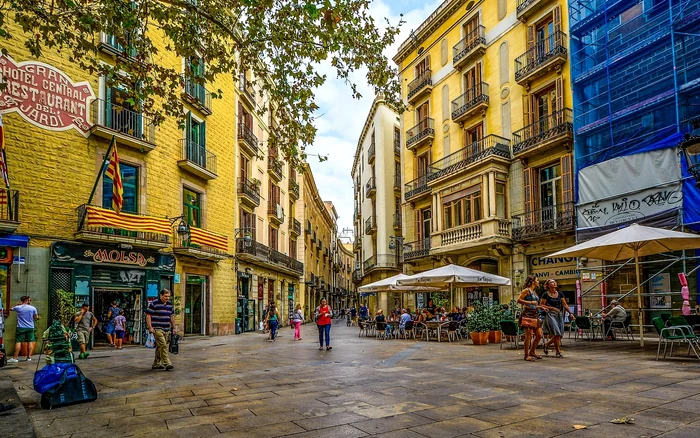
Barcelona. Photo: Pixabay.com
“I come back just to visit my friends and family. I wouldn't live in Romania anymore. I learned to be happy and live my life, not just work and carry hate in my heart”, he states.
Low salaries, high rents are problems complained about by Romanians
Salaries in Spain are quite modest, and in some fields the jobs are better paid in Bucharest, says another Romanian who works in Spain. He believes that living in Spain has become more expensive in recent years because it is an attractive country for Europeans, especially those who want to move here after retirement.
“They come from Germany, Nordic countries, British, North Americans, etc. in 'old age', and the Latins come as fast as possible”, he adds.
And other Romanians declare themselves dissatisfied with the increase in the price of rents, in particular, but also that of food, in Spain.
“In Spain, I think 60-75 percent of employees work just to live and for one vacation a year. It's very difficult to save 200-300 euros every month. An acquaintance was very happy to find a job as a construction engineer, with a salary of 1,800 euros, and the rent is 800 euros”says one of them.
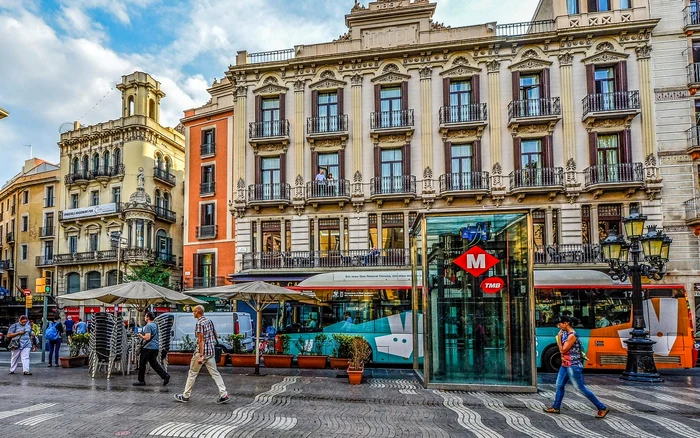
Barcelona, Spain. Photo: Pixabay.com
A Romanian settled in Spain with his family 20 years ago, then being an eight-year-old child, observes the same thing.
“Wages are rising very slowly, but rent and prices are rising very quickly,” supports it.
Another Romanian in Spain blames migrants for wages considered low in Spain, because they accept to earn less.
Another claims to have left Spain to work in Britain, where wages are higher.
“In the UK I met Romanians who lived in Spain and they all said the same thing: we were happier wasting time on the beach in poverty than on 200 pounds a day in England”. he states.
However, a Spaniard gives a piece of advice to Romanians who want to emigrate.
“In Spain you will earn about 1,200-1,400 euros and pay 1,000 euros in rent. I am Spanish and the food here is very good and it is very nice to sit in the sun. For everything else, look for another country. If I had the chance, I would run away from here. All my childhood friends left in search of opportunities. This country is only good for visitors and criminals, who live like kings.” he states.
Romanians with seniority in Spain, less attracted to Romania
Although they are sometimes dissatisfied with their salaries, many Romanians settled in Spain believe that they would not adapt in Romania, because of the society they left in the past.
“I left with 1,200 lei and vouchers. Now, in Spain, I manage to make some savings, but I'm lucky that I don't have arrears at all. It seems to be getting harder, but I don't know where it's not. I'm not going back to Romania, because I have a stable life here. I don't like the badness of the Romanians.” says a Romanian who emigrated 14 years ago.
Another Romanian from Spain claims that he is not sorry for leaving Romania, but he misses his family. However, he believes that he has easily integrated into Spain.
“I didn't speak Spanish when I came, but I managed somehow. If you're sociable and have hobbies, you'll find friends. It's harder to find rent or a job, but it's not impossible”he says.
Another Romanian claims that he came back from Spain to visit, after 19 years, and he didn't really have anything to do in Romania. The memories of the hard life before emigration came back to him.
“And now I remember the dozens of journeys I made by train between Timișoara and Suceava, overnight, and every time the train stopped you had to be awake, lest someone leave with your luggage. I have never hidden that I am Romanian (I still have an accent), but I will not return. I still have to make about 5-6 visits and that's about it”. he states.
Spain, the former paradise of the Romanians
Many Romanians first migrated to Spain in the early 1990s and successfully integrated into Spanish society, one of the reasons being the unlikely linguistic similarity between Romanian and Spanish. The Romanian language, like Spanish, is a Romance language and the only one of its kind in Eastern Europe.
“This first generation managed to establish themselves securely enough in Spain so that future Romanians could take advantage of subsequent policy changes that made migration easier,” showed the researcher Joshua Rodriguez in the study “Romanian Migration in Spain: explaining an unexpected flow of migrants” (2022).
The emigration policies of the following years and the high salaries in Spain in the 90s and 2000s, compared to those in Romania in those years, increased Romanians' interest in Spain.
“This combination of Romanians looking for new beginnings and Spain, which offered numerous jobs, significantly higher wages and a more welcoming environment than other traditional migrant destinations, led to a vast increase in migration in the late 1990s and 2000s”says researcher Joshua Rodriguez.
Another reason why Spain was an attractive destination was the largely welcoming attitude of its native population. According to opinion polls, 50 percent of the Spanish population was in favor of Romania joining the European Union in 1999, eight years before the accession, the specialist pointed out. The population of Romanians in Spain increased almost sixfold between 2002 and 2006, from less than 69,000 to more than 397,000, and a decade later it would double.
Since Romanians began migrating to Spain, Madrid, the capital and largest city, has been by far the most popular destination, hosting roughly a quarter of all Romanians in the country and being a nucleus around which migration networks have expanded over the years, the study shows.
Romanians, easily confused in Spain
Many Spaniards note that, although Romanians represent one of the largest immigrant communities in Spain, they are less visible in the public space. Some attribute this to the fact that Romanians integrate more quickly into Spanish society, a fact that makes it difficult to distinguish them from the locals.
“The Romanian language is a Romance language, and that helps them learn Spanish very quickly. Romanians have an attitude towards life very similar to that of the Spanish. They are almost like Spaniards from the other side of Europe,” says a Spaniard.
In addition, most Romanians arrived in Spain after the 2000s, coming as seasonal workers.
“The Romanians are not very rich, but they are not that culturally different either. They are European, with Latin roots, and that helps them blend very easily into Spanish society.” someone else thinks.
The return of Romanians to their native country, after spending several years in Spain, was also a topic of debate in Spain. Some migration specialists from Spain attributed the phenomenon to Romania's economic growth, recorded in the last decade.