The diplomatic conflict between Budapest and Kyiv deepens. Orban's party introduced a law to keep Ukrainian bank values frozen

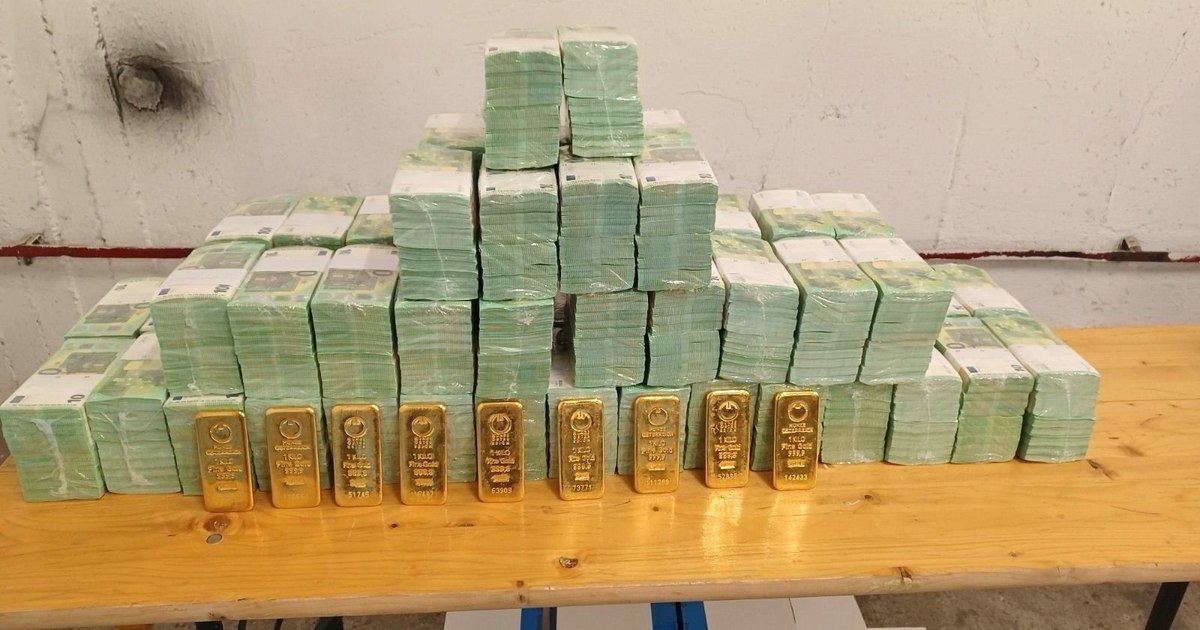
The diplomatic row between Ukraine and Hungary deepens after Hungarian authorities intercepted and seized tens of millions of dollars in cash and gold from a Ukrainian state bank convoy transiting through Hungary. Ukrainian officials have condemned the operation as illegal and abusive, while Hungary's ruling Fidesz party has proposed a law to freeze the values pending the completion of a national security investigation.
Hungary seized a convoy of valuables belonging to a Ukrainian bank PHOTO EPA-EFE
According to the Ministry of Foreign Affairs of Ukraine (MAE), on March 5 the Hungarian Counter-Terrorism Center (TEK) stopped two armored vehicles belonging to the Ukrainian state bank Oschadbank.
The convoy was carrying valuables from Vienna, Austria to Ukraine under an international contract between Raiffeisen Bank International AG and Oschadbank. Ukrainian officials say the shipment had full documentation and was cleared according to European customs procedures.
Ukraine accuses the Hungarian authorities of carrying out a military-type operation to intercept the convoy. TEK allegedly used an armored personnel carrier (APC) and the agents were armed with machine guns and grenade launchers, although the bank employees were known to be unarmed civilians.
Hungarian authorities seized the vehicles and approximately 40 million dollars, 35 million euros and 9 kilograms of gold.
Hold for 28 hours
Seven employees of Oschadbank were detained during the operation. According to the Ukrainian Ministry of Foreign Affairs, they were considered witnesses, not suspects, but were treated as if they had been arrested.
The ministry says the employees were handcuffed for 28 hours and transported blindfolded throughout the journey. They were not allowed to contact families, lawyers or consular representatives of Ukraine. They were also interrogated in Russian, not Ukrainian.
Ukrainian officials say Hungarian authorities have confiscated their personal belongings, including cellphones, and most of them have not been returned. Hungarian authorities have not publicly commented on the allegations.
Medical emergency during detention
The Ukrainian Foreign Ministry said that one of the detained employees – a person with health problems requiring a special diet and regular medication – did not receive adequate medical care during his detention.
According to Kiev, the employee lost consciousness after not receiving the necessary treatment. Only then would the Hungarian staff have intervened. Ukraine claims that he was given an injection that caused a sudden rise in blood sugar and hypertension, requiring hospitalization.
Deportation and ban on entering the Schengen area
On March 6, Hungary decided to deport all seven employees to Ukraine and banned them from entering the Schengen area for three years.
Ukrainian officials say that since authorities could not bring criminal charges against them, Hungarian authorities resorted to immigration proceedings to deport them. At the same time, Hungary kept the seized armored vehicles, cash and gold as evidence in a money-laundering investigation that would target an unidentified suspect.
The Hungarian government is trying to legalize the confiscation
Politico reported Monday that the ruling Fidesz party has meanwhile introduced a bill that would allow authorities to freeze assets seized during a national security investigation.
The bill, proposed by parliamentary leader Máté Kocsis, calls for the transported values - 35 million euros, 40 million dollars and 9 kilograms of gold – to be treated as confiscated goods pending the completion of the investigation by the Hungarian tax and customs authorities.
According to the Hungarian publication Telex, the parliament would debate the law through an accelerated procedure.
Hungarian officials say they are investigating the origin of the funds, the destination and purpose of the shipment, and whether the shipment of a huge amount of money and gold could pose a national security risk. Kocsis described the incident as the “scandalous Ukrainian gold convoy”, stressing that there are still many unanswered questions.
According to Reuters, the bill submitted to the Hungarian parliament on Monday proposes that money and gold be blocked in Hungary for a period of 60 days.
Ukraine condemns Hungary's actions
The Ukrainian government categorically rejects Budapest's accusations.
Foreign Minister Andrii Sibiha accused Hungary of trying to retroactively legitimize an illegal seizure. “Hungary is sliding into a spiral of lawlessness,” he wrote on social media, adding that the bill represents “a de facto recognition that Hungary's actions have no legal basis.”
The Ukrainian Foreign Ministry claims that Hungary's actions violate several international agreements, including the European Convention on Human Rights, the Vienna Convention on Consular Relations and the consular convention between Ukraine and Hungary.
Kiev is demanding the immediate return of all seized assets, as well as the accountability of the officials involved.
“We want to know what Ukrainians are doing with this huge amount of money,” Hungarian Prime Minister Viktor Orban said at a campaign rally for April 12 parliamentary elections.
An international legal battle ensues
Oschadbank announced that it had initiated two parallel legal actions. The bank is contesting Schengen travel bans imposed on its employees and is trying to recover seized assets. It also commissioned an international independent audit of all contracts related to the transportation of valuables.
The bank's lawyers told Euronews that the EU ban could become grounds for a case at the European Court of Human Rights.
The incident comes amid already strained relations between Kyiv and Budapest.
Hungarian Prime Minister Viktor Orbán has repeatedly clashed with Kiev since Russia's 2022 invasion. His government has criticized Ukraine's accession to the European Union, blocked or delayed EU financial aid packages for Kiev, and contested certain sanctions against Russia. More recently, the two countries have engaged in disputes over energy transit through the war-damaged Drujba pipeline.