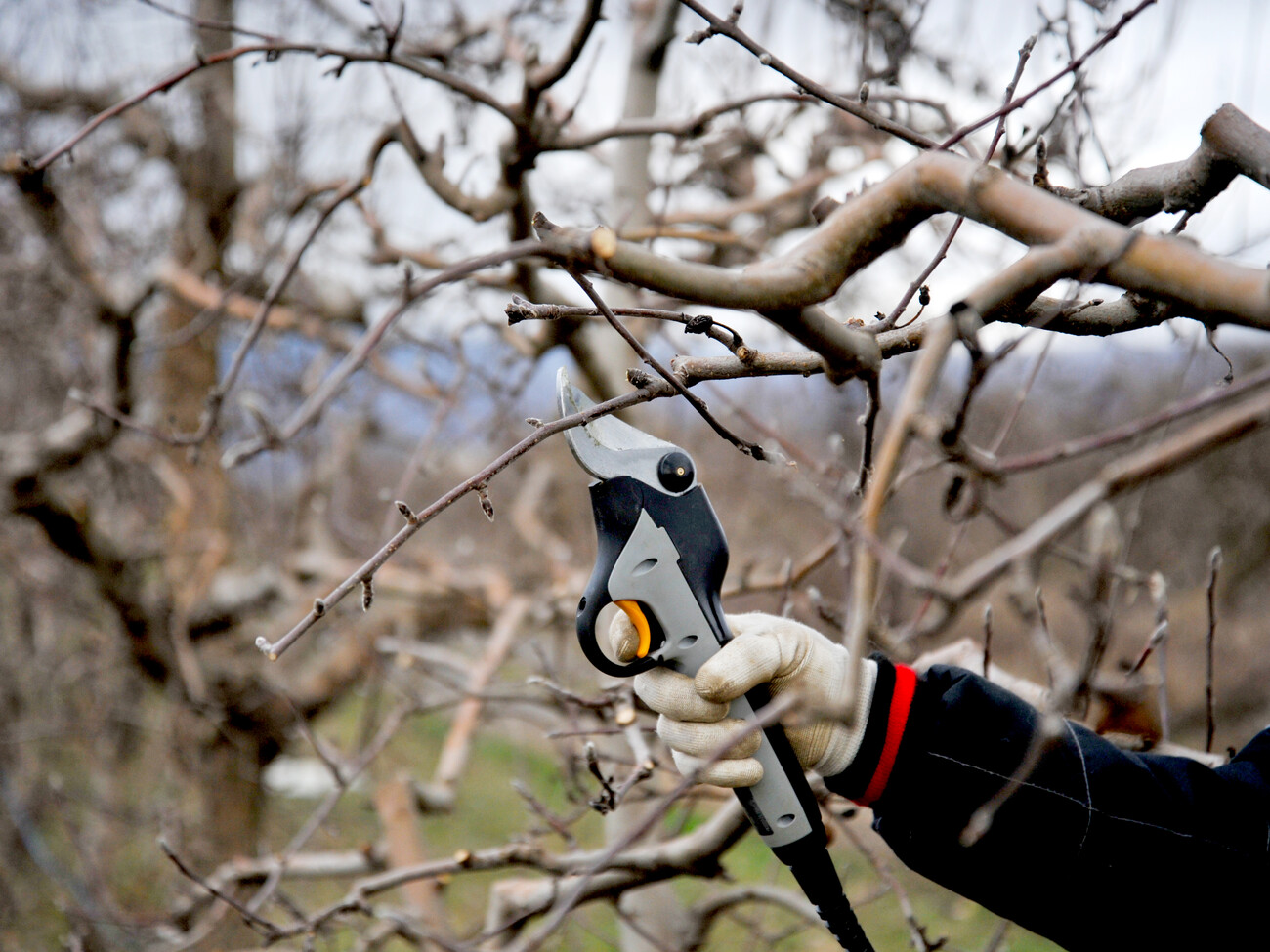
In March, experienced gardeners carry out formative pruning of apple trees, the purpose of which is stimulation of the formation of fruit buds and inhibition of upward growth of branches. A simple and understandable scheme for pruning branches, after which the apple tree begins to bear fruit generously, was described by the author of the Ukrainian YouTube channel “Blagosad” on March 8.
Basic principles of formation
- The apple tree should not have a central leader (top) to open the center to the sun.
- All side branches must obey the skeletal branch. In no case can they be thicker or longer than the main conductor.
- To prevent the tree from wasting energy on empty growth shoots, the “stump” technique is used. By leaving small cuts, gardeners provoke the awakening of dormant buds.
Step-by-step trimming process
- Pruning begins with working with the lower tier and side branches. If the branch is too long and interferes with the passage, it must be shortened or transferred to a side branch.
- The branches growing inside the crown are shortened so that they do not create unnecessary shadow, but still produce fruit.
- It is better not to touch thin branches that are already well loaded with fruit buds – they will bear fruit.
- After this, work begins with the top. To prevent the tree from growing too high, you need to remove the “doubling” at the top, and the top itself needs to be completely cut out, transferring growth to weaker side branches. This allows you to keep the tree in the required dimensions.
- Remove branches that begin to compete with the main skeletal parts.
- If the old branch stops actively bearing fruit, it can be completely removed by transferring growth to a young replacement branch.
It is important to maintain balance – the branches should be approximately the same size and not stretch in one direction so that the crown is uniform.
Important nuances for gardeners
Annual shoots should not be shortened too much.