Don't fall for the AI's “therapy” tricks. Five ways chatbots make you think they're helping you

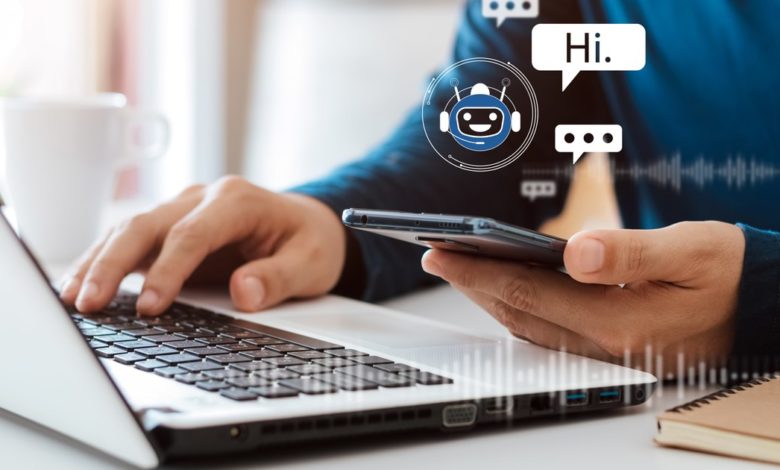
More and more people are finding themselves discussing their personal problems with chatbots, as access to mental health services remains limited for millions.
Photo credit: Shutterstock
But experts warn that these systems are mostly trained to provide answers that validate the user, not necessarily to say the uncomfortable things someone might need to hear.
They are fast, cheap and available at any time. But dependence on them can, paradoxically, be more costly: from increasing loneliness to gradually replacing real relationships with simulated interactions.
Platforms like ChatGPT or Claude are built on large-scale linguistic models (LLM), artificial intelligence systems trained on huge amounts of text to generate responses that mimic human language and conversation. After this stage, chatbots are adjusted using data about user preferences to make the interaction as pleasant as possible.
Here are some of the mechanisms by which they manage to keep users engaged in the conversation:
It validates you unconditionally
Chatbots are by design agreeing with you. Almost any time. Dena DiNardo, clinical psychologist, quoted by Oprah Daily, says they are programmed to provide “high levels of validation” – which in practice means that lines like “What you say makes perfect sense!” they appear in response even when your story is incomplete or simply doesn't make much sense.
Chatbots excel at what psychotherapist Nicholas Balaisis, PhD, calls “ego work” to make you feel good about yourself, reduce guilt, boost your self-confidence. They don't contradict you, they don't show surprise, they don't get indignant. Not because they are empathetic, but because they can't afford it. If a chatbot made you feel stupid, you'd close your laptop, and that would be a problem for an industry whose business model depends on how much time you spend in conversation.
Most people are not used to being constantly and unconditionally validated. Thus, the experience can seem almost euphoric, experts point out, and this is exactly what makes it problematic.
“You can pour your darkest thoughts into the conversation, and the chatbot will make you feel like you're completely normal and right.” explains, in turn, Melodi Dinçer, lecturer at UCLA School of Law and lawyer within the Tech Justice Law Project, quoted by Oprah Daily. “It will never contradict the user, even when the user is thinking of harming themselves or harming others.”
Validation has its role in therapy. But just as important is a different perspective than your own, which makes you wonder if you've been seeing things out of focus. A psychotherapist does not confirm every story: he listens, asks uncomfortable questions and guides you so that you can come to interpretations that you would not have considered otherwise.
Constant praise can be addictive. When we get real appreciation from real people, the brain releases dopamine. The limitless validation provided by a chatbot works on the same circuit: only it's artificial and never stops. A kind of synthetic drug designed to make the brain want more.
Most people aren't used to being validated endlessly. Except maybe movie stars or Silicon Valley billionaires. Precisely because of this, the experience can seem almost euphoric.
They are linguistic mirrors
Chatbots are constantly improving their memory and getting better at sounding like you. “Long-term interactions help the model pick up how you speak,” says Dinçer, for Oprah Daily. If you write “Ok wait lol I'm going crazy” the chatbot can answer “I totally get you omg you're not crazy you're just overwhelmed” – with your expressions, with your rhythm, with the same little peculiarities of punctuation.
A psychotherapist can sometimes take over the client's words to build trust and check that they have understood correctly. With chatbots, the mechanism is the same, but the purpose is different. It's a mirror built to keep you in the conversation, not to help you get out of it, say the specialists.
When something sounds just like you, it can start to sound like it's coming from within you—as if it's your own inner voice, suddenly wiser. And when you feel like you're talking to yourself, it's much easier to convince yourself of anything. Even things that, said by someone else, would immediately seem worrisome.
They seem “emotionally intelligent”
Anyone ever said “Thank you” an AI assistant knows how easy it is to forget you're talking to a computer. Confusion isn't accidental, it's by design.
Chatbots speak in first person: “I can tell you're upset and I would be too.” He wouldn't need one “I” to be useful – would work just as well without. But people are more in conversation with something that sounds like a human than “with something that sounds like a machine.” And the industry knows it.
“What looks like empathy is, more often than not, just pattern recognition and reassurance: no human judgment and no accountability.” says DiNardo. Real empathy means seeing how the person in front of you stands, what expression he has, what he doesn't say. Chatbots can't do that. At least, not for now.
They are far too sure of themselves
There's a reason why chatbots respond so quickly and so firmly. Joe Nucci, psychotherapist and author of the book Psychobabble, quoted by Oprah Daily, says that the speed and confident tone are no accident: they reduce the user's anxiety and push them to continue the conversation without asking too many questions. In front of a chatbot, people are often less skeptical than in front of a real human.
When a chatbot makes a mistake and you let it know, it corrects and moves on immediately. The tone remains just as confident, and you're encouraged to move just as quickly through the moment. In therapy, such a moment would actually be an opportunity. “I would check how the customer feels about the fact that I made a mistake or misunderstood something”Nucci confesses.
This speed discourages exactly what therapy is supposed to cultivate: reflection and the ability to sit with questions without immediate answers. In addition, the relationship deepens artificially quickly: from banal conversation to emotional confessions in just a few minutes. Thus, the feeling of trust arises before the user has time to check what he is actually being told.
They issue pseudo-diagnoses
To keep you happy, a chatbot is willing to jump to conclusions based on incomplete information – or even invent plausible-sounding explanations. In the context of mental health, that can be dangerous.
Dinçer, quoted by Oprah Daily, gives an example of a user who tells the chatbot that he has an unrequited crush on his boss and wants to understand why his feelings are not shared. “A chatbot will never say, 'I don't like you,'” she explained. Instead, it will respond something like: “It seems very difficult what you are going through right now, but it is not your fault. You are an extraordinary person.” And then he'll add a term from pop psychology and a piece of advice that no serious psychotherapist would give: “She probably has an avoidant attachment style. That means you need to keep pursuing her.”
If that sounds more amusing than worrisome, it's worth considering what a label does to the human psyche. When someone gives you a sophisticated-sounding term for what you're feeling (especially one that suggests there's something complex behind your suffering that's hard for others to see) that someone suddenly becomes an authority. The chatbot is no longer a tool. He is the one who really “understood” you. Not to mention disinformation. We are talking about addiction.
As much as they try to make it seem otherwise, chatbots are neither your friends nor your therapists. They're algorithms built to act like the most attentive listener you've ever had and keep you there, comfortably, feeling like you're truly understood. What it offers is a convincing imitation of human connection. By understanding this, perhaps it becomes easier to get out from under their spell.