Czech debt Poland has still not regained 368 hectares of land. Borderland residents want peace

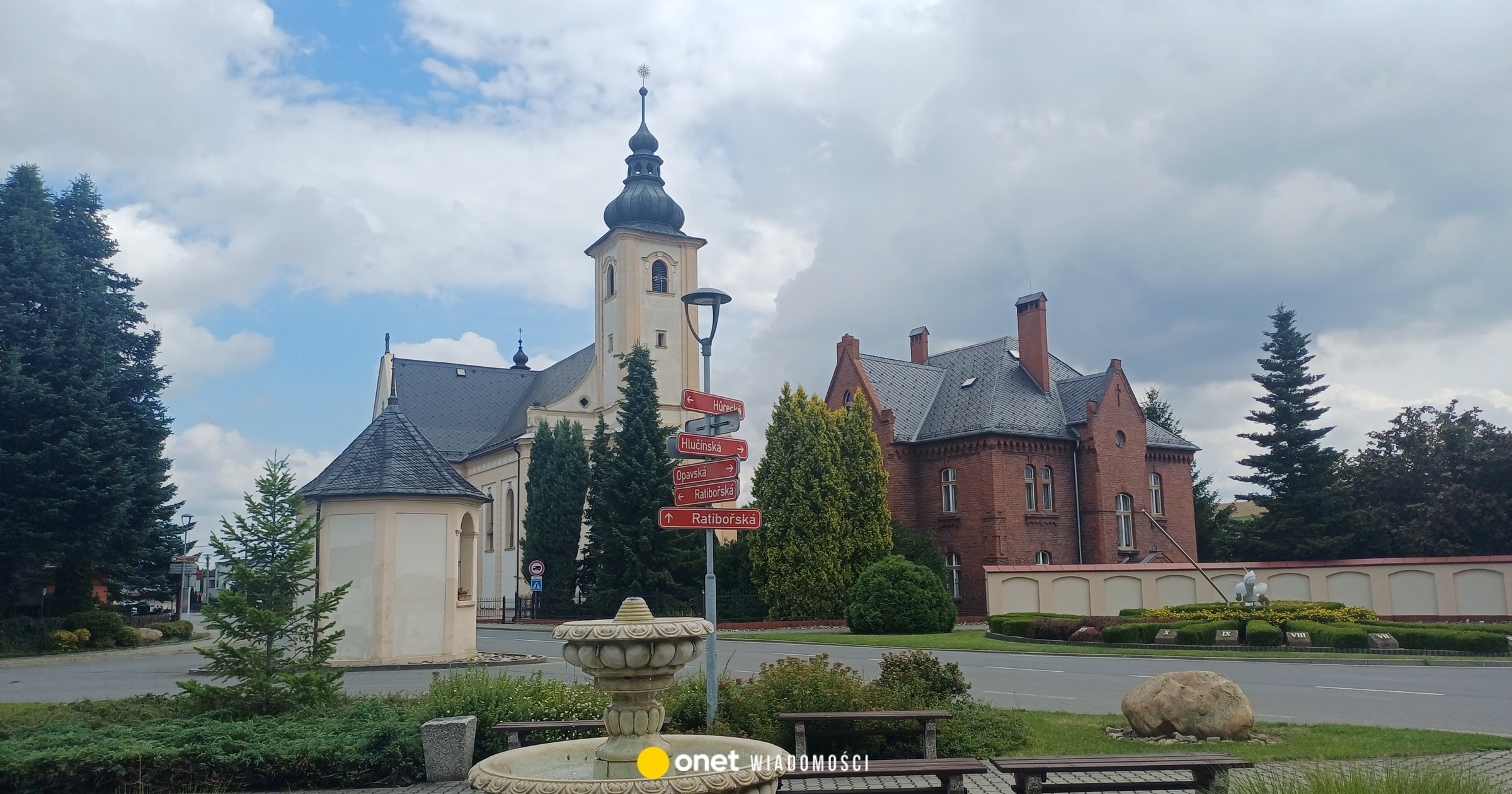
The year was 1958. After decades of Poland making claims to parts of Zaolzie, Orava and Spiš, the people's authorities signed a treaty on the border with Czechoslovakia. The line dividing the two countries is to be as short and straight as possible. As part of this border straightening, the Czechs receive 1,205 hectares of land from Poland, and the Poles receive 837 hectares from the Czechs. This is how a 368-hectare debt is created, the repayment of which for decades Poland has not been able to ask its southern neighbor to repay.
The Czech authorities indicated the border areas in the Liberec, Hradec Kralove, Pardubice, Olomouc and Moravian-Silesian regions as potential compensation. The Polish Ministry of Foreign Affairs plans to resume negotiations with its southern neighbors.
The radio broadcasts the latest news on the hour. From the stream of words, I pick out single entries: hranice, Thajsko, Kambodža, smrtelné oběti. The border conflict that has been going on for over half a century has been revived between Asian countries. Thailand does not recognize the border lines drawn at the beginning of the 20th century, constantly initiating armed actions against its neighbor. This time, over 30 people died in the clashes.
– Have you heard? – asks Jana, finishing arranging the bouquet of gerbera daisies and carnations. – They are arguing about the border… This land is not worth the lives of all these people. — The Czech woman nods and disappears for a moment into the back room, where the radio is already playing an American hit. Miley Cyrus encourages us to pretend that it's not the end of the world yet.
Jana returns with a vase and puts the flowers in the water. He makes sure that their end does not come quickly.
— Flowers teach patience. If you want something too much and too fast, it will wither, he says to me and smiles broadly.
The scent of flowers mixes with the aroma of coffee. Jana placed two tables and chairs in front of the two-story building of her flower shop. You can sit down and drink an Americano or a cappuccino. The tables are located right next to the road running through Píšť. It's noisy. Passenger cars and trucks full of goods pass through the village from Chuchelna in the Czech Republic towards Krzyżanowice in Poland. Or tractors with grain trailers. The lawnmower that Jana's neighbor is using to shave the lawn is humming. From time to time, a siren from the fire station opposite the flower shop will also sound. Or guests returning from a meeting at a nearby inn.
Apart from her two daughters, who are approaching 40, the flower shop is the biggest constant in Jana's life. She was born in Opava. Even before the divorce, she lived with her husband in Poruba near Ostrava. Three decades ago, she started her business in Píšta, where her parents lived. He has been living in his father's homeland for six years.
— Do you feel connected to this place? – I'm asking.
“I feel good here, but I'm also happy when I can close my business and go somewhere,” he replies.
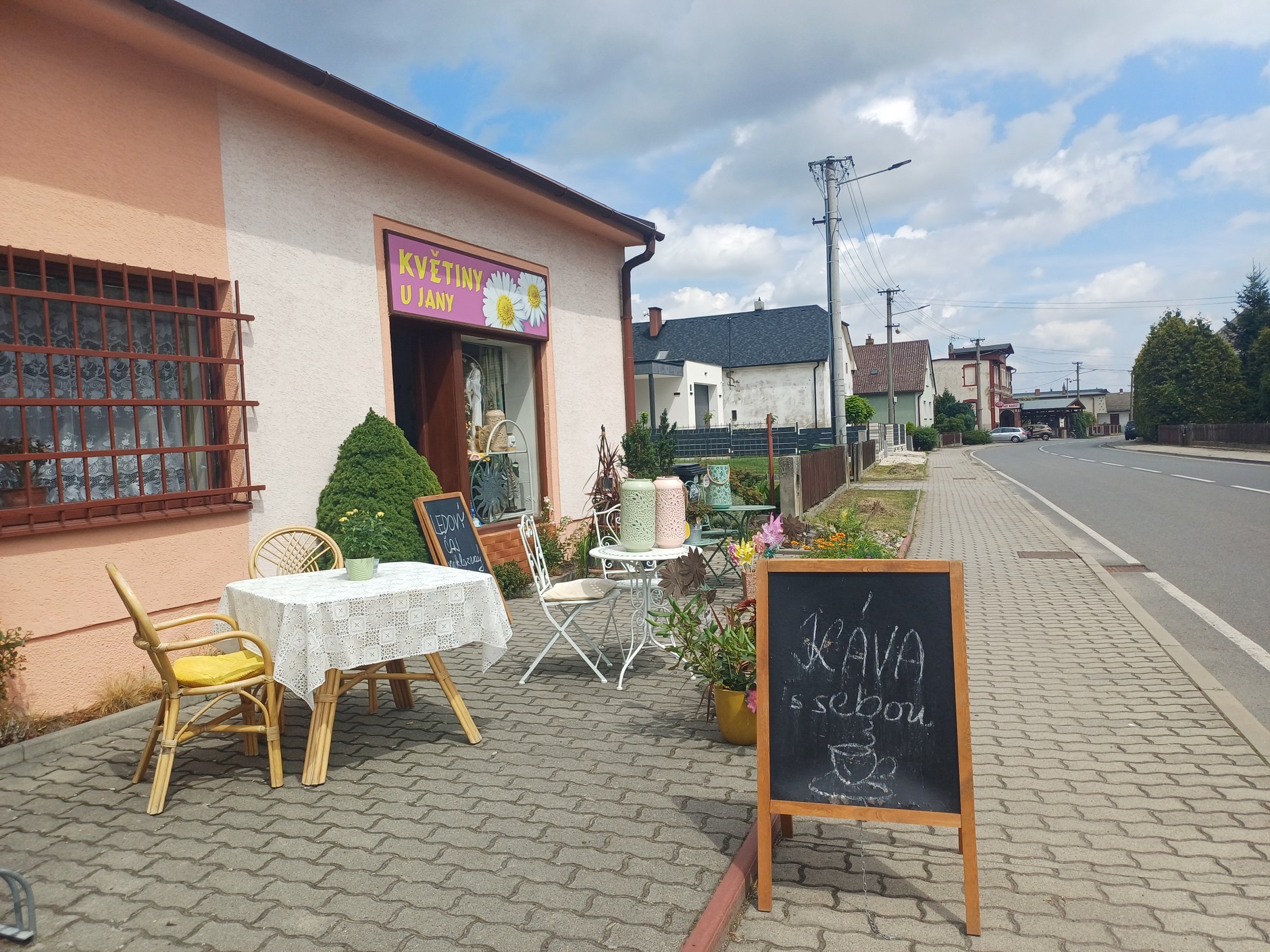
Jana's flower shopMonika Waluś / Onet
Píšť is located right on the Polish-Czech border, adjacent to the Racibórz district. Jana has a friend in Poland whom she likes to visit. He doesn't speak Polish, but he understands a lot.
– We communicate with people from Poland, sometimes with our hands, sometimes with our feet, but there is no problem – the Czech woman smiles.
She also goes to Poland to buy fuel. She says that her car prefers Polish gasoline, even now when it is more expensive than at a Czech station.
“And my grandmother was from Krzanowice,” he recalls when we talk about the Polish-Czech border.
My grandfather's family did not want to accept my grandmother because she was Polish
She is Polish, he is Czech. They fell in love with each other when the world was not yet ravaged by war. She has a full house, a lot of mouths to feed, it's good that she will marry a Czech. That's what Babička's parents thought. He has a large farm, an extra pair of hands would be useful, thought a man in love with a Polish girl.
— It took a long time for them to get married. I know there were problems, my grandfather's family didn't want to accept my grandmother because she was Polish. They didn't want her, recalls Jana.
Love turned out to be stronger. The children were still small when their Czech grandfather went to war, and Babička from Krzanowice was left to run the farm alone.
“She was a stranger here, but she managed.
Jana tells the story of her grandparents and emphasizes that today it makes no difference to her whether someone is Czech, Polish or Egyptian. And what is his skin color? She points out that maybe living near the border taught her that differences between people do not come from where someone was born. That they are born in the head.
— Thank God for open borders. We are all human. Why lock it all up and deal with some papers? – he asks.
She adds that before the Schengen Treaty brought her homeland and Poland closer together, some work had to be done. She wrapped parcels in curtains to smuggle them from Poland to the Czech Republic or vice versa. The memory makes him laugh.
Jana says she wouldn't change anything in her life, but the village where she lives and works has changed a lot. The old died, the young went away in search of work or love. To Opava and Ostrava or abroad. The aliens chose Píšť as a new place on earth to become “their own”. Because here – say the residents – they have everything they need: a church, an office, a school, a sports club and hospoda. Having fun at a festival, a summer cinema behind the office building, and being surrounded by nature. Composure.
— So far, I haven't heard of anyone not being found here, says Jana.
He emphasizes that sometimes the new ones are more willing to help than those who have been living here for generations.
“They don't start a fight over just any chicken. They try to live in harmony, the florist notes.
— What if someone said that these lands should be given back to Poland? – I ask, and Jana's eyes widen in surprise.
She admits that she did not know that the Czechs owed any debt to the Poles. And that now we would have to bargain for Píšť, for example. The woman emphasizes that today she sees no difference between the Czech Republic and Poland. He says that even our houses and the area around them are equally well-kept. But she can't imagine suddenly having to deal with matters in a Polish office instead of a Czech one. What about old people? How would they move to the new reality now? Jana doesn't know.
– Pro mě je it as it je ideální stav – he emphasizes.
He reaches for a small white piece of paper and a pen. He draws three lines. Her house is attached to two lines, i.e. the neighbor's house. A thick line – a wall between them.
— His garage encroaches on my plot by exactly 70 centimeters.
Jana presses the pen harder against the paper. But there is no anger in her. He says that his neighbor is old and sick, so he won't bother with lawyers. She doesn't start an argument because, she says, she doesn't need a conflict over a piece of a brick wall.
— On paper it's mine, but physically there's a neighbor's wall there. He'd have to tear down the garage for me to get that piece back. It's not worth it.
And he adds that She would like no one to worry about boundaries anymore. Neither its neighbors, nor Poland with the Czechs, nor Thai militias with those from Cambodia.