Maksym Beznosiuk is a strategic policy expert and director of UAinFocus, an independent platform connecting Ukrainian and international experts on key issues related to Ukraine.
William Dixon is a senior fellow at the Royal United Service Institute, specializing in cybersecurity and international security.
Four years after launching a full-scale invasion of Ukraine, Russian President Vladimir Putin still maintains a firm grip on his country. In the fourth year of the war, the Kremlin is focusing not only on the battlefield, but also on the durability of the regime.
In February 2026, Vladimir Putin signed a decree restructuring the Russian National Guard, Rosgvardiya. The reform transformed the Rosgvardiya's internal command into a force with its own “general staff”, assigning it autonomous responsibility for operational planning, intelligence coordination and military threat assessment.
The new structure reports directly to the Security Council, chaired by Putin. Viktor Zolotov, a longtime associate who previously served as Putin's personal bodyguard during his first two presidential terms and during his time as prime minister from 2010 to 2013, was appointed overseer of the reorganized command while remaining head of the Rosgvardiya.
This restructuring represents a change in the internal security architecture of the Putin regime. It reflects a change in the distribution of repressive power in Russia as the Kremlin prepares for potential internal instability. The Rosgvardiya, established in 2016 to control unrest, has evolved into a heavily armed parallel formation.
What began as a consolidation of internal security forces gradually turned into construction forces loyal to the government – praetorians (the bodyguard of Roman emperors) – intended to operate beyond traditional police functions. The February 2026 reform formalizes this evolution, strengthening the position of the Rosgvardiya in the presidential command structure and strengthening its role as a guarantor of regime continuityand not just public policy.
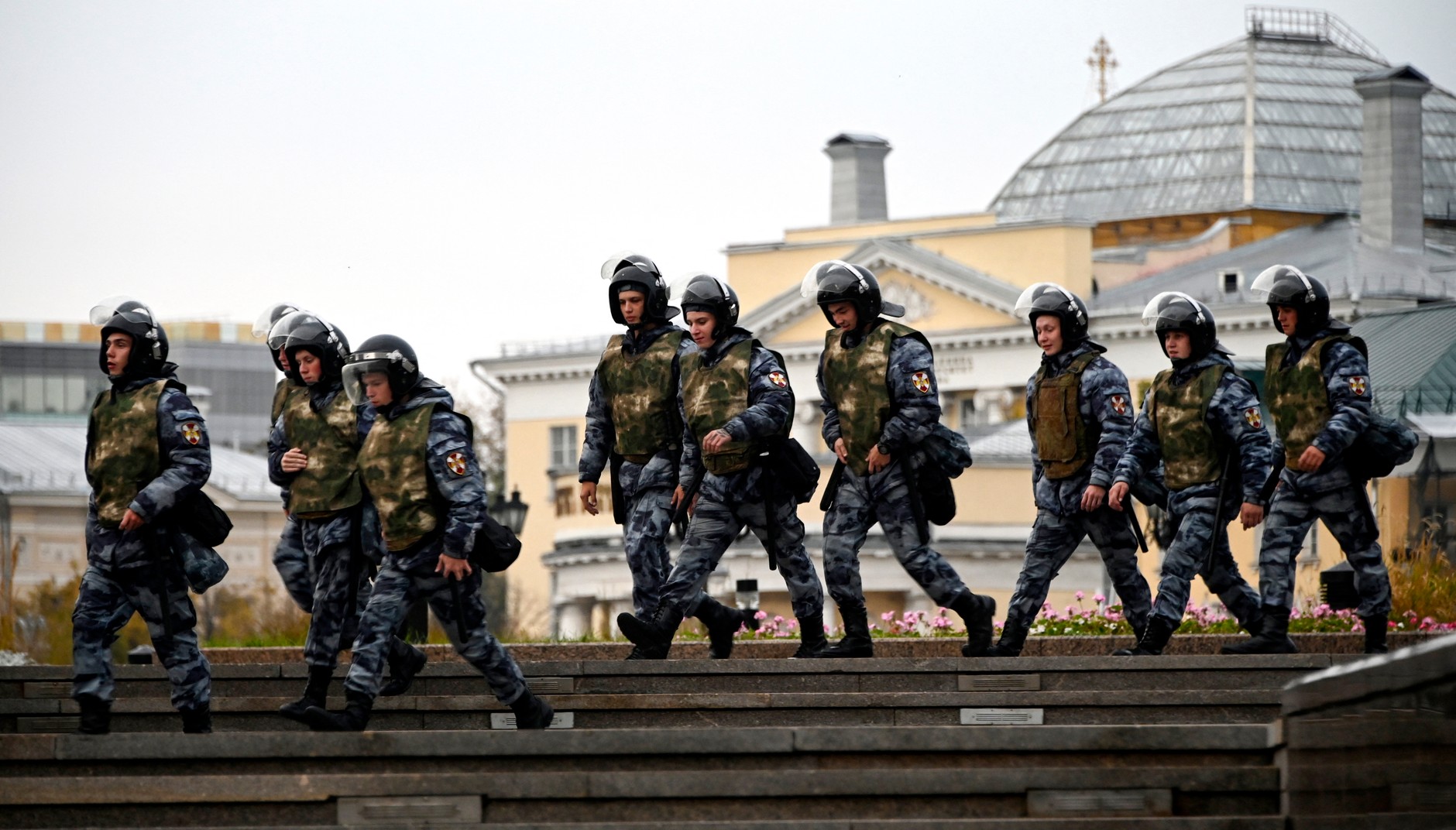
Soldiers of the Russian National Guard (Rosgvardiya) heading to a rally and concert to mark the annexation of four Ukrainian oblasts of Ukraine occupied by Russian troops, Moscow, Russia, September 30, 2022.ALEXANDER NEMENOV / AFP POOL / AFP / AFP
Rosgvardiya's evolution accelerated following Russia's full-scale invasion of Ukraine in February 2022. Its troops entered Ukrainian territory alongside regular forces, reflecting Moscow's expectations to quickly gain territorial control and the need for occupation forces capable of suppressing resistance.
The Kremlin intensified its militarization of the Rosgvardiya after the Wagnerite revolt in June 2023. In August 2023, Putin signed a law formally allowing the Rosgvardiya to receive heavy weapons, including artillery systems and other advanced equipment. This decision reflected an institutional response to internal security vulnerabilities revealed during the rebellion and marked a further elevation of the Rosgvardiya's profile in the hierarchy of the repressive structures of Putin's regime.
Following legislative changes in 2023 and subsequent force expansion, Zolotov confirmed in September 2025 that the service had included tanks, anti-tank artillery, self-propelled systems and multiple-launch rocket systems in its arsenal. It has approximately 370,000 inhabitants. people, and its further expansion is planned.
Rosgvardia as Guardians of the Islamic Revolution
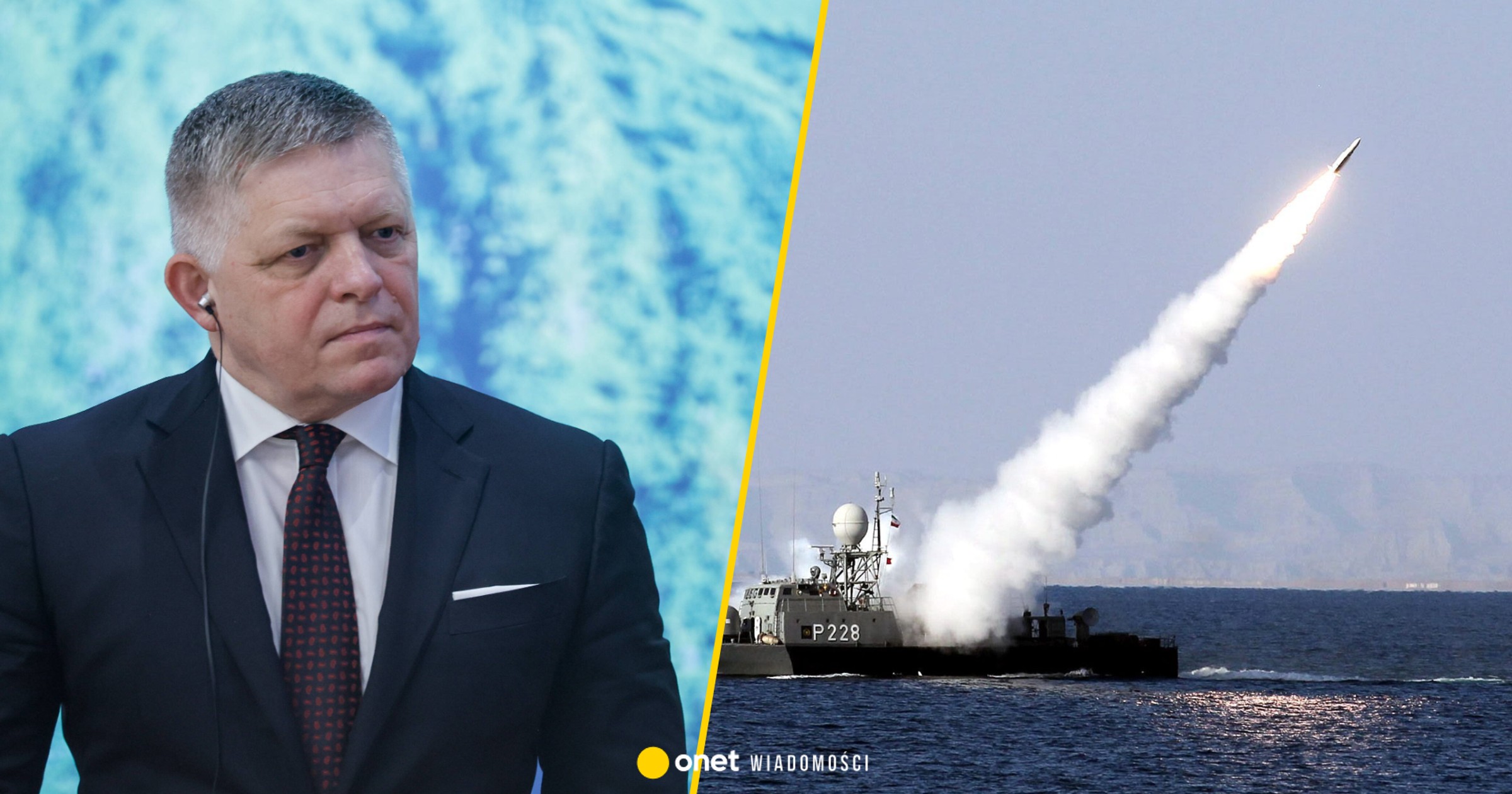
These forces are currently capable of operating both in Russia and in the occupied territories of Ukraine. Structurally, the Rosgvardiya increasingly resembles Iran's Islamic Revolutionary Guard Corps (IRGC), whose task is not only internal stabilization, but also protection of the regime.
Like the IRGC, Rosgvardiya currently operates as a hybrid structure, combining the ability to quell domestic unrest with the ability to operate in high-intensity conflict environments abroad. In both cases, these forces are institutionally isolated from the regular armed forces and report directly to the highest political authority to ensure regime durability.
Recent events in Iran show how such parallel formations function during internal unrest. During large waves of protests and social unrest, the IRGC acted not only as a force to suppress unrest, but also as a guarantor of elite cohesion and regime survival. While regular army units were tasked with guarding strategic infrastructure and maintaining defensive positions in the territory, the IRGC took primary responsibility for stabilizing the internal situation, citing the pretext of defending the state against externally induced destabilization. In this sense, the institutional strengthening of the Rosgvardiya reflects a similar anticipation of internal instability and a deliberate preference for an isolated, repressive power.
The article continues below the video
By strengthening this parallel command structure, Putin has created a counterweight within the repressive apparatus that can operate independently of other military institutions and, if necessary, restrict them. The prioritization of regime isolation over operational consolidation suggests a clear emphasis on coup-proofing. In a future crisis, the Kremlin will likely rely on politically loyal forces whose command structure remains embedded in the vertical presidential structure and operates through a command structure directly reporting to the Russian president.
Rosgvardiya's expanded mandate is also visible in the occupied territories of Ukraine. Since 2022, Moscow has been relying on Rosgvardiya units to conduct operations against guerrillas and resistance movements, filtering measures and pseudo-elections. According to Ukrainian estimates, at the beginning of 2024, over 35,000 were deployed in the occupied regions. Rosgvardiya officers, organized into brigade-level formations and tactical groups equipped with armored vehicles and artillery systems.
In addition, the Kremlin continues to increase its presence in the occupied territories. For example, in February 2026, it deployed additional Rosgvardiya units near administrative facilities and along key routes to strengthen security and infrastructure in occupied parts of the Zaporizhia Oblast.
The growing influence of Rosgvardiya should therefore be understood as Putin's attempt to isolate his regime from potential opposition in the country and in the occupied territories of Ukraine. By institutionalizing a parallel command structure, expanding military capabilities and integrating forces directly into the presidential command structure, the Kremlin is strengthening the isolation of its coercive system in conditions of prolonged war.
The transformation of Rosgvardiya signals not only the Putin regime's anticipation of potential domestic instability, but also its recognition that a prolonged war increases structural risks within its own system of coercion. From a Western perspective, Putin's restructuring of the Rosgvardiya may minimize the likelihood of a sudden split among the elites and indicates that the Kremlin is actively insulating its regime from internal instability. This is not a sign of Putin's weakness, but rather evidence of his determination to strengthen mechanisms to prevent all forms of internal dissent.
I’m Ashley Davis as an editor, I’m committed to upholding the highest standards of integrity and accuracy in every piece we publish. My work is driven by curiosity, a passion for truth, and a belief that journalism plays a crucial role in shaping public discourse. I strive to tell stories that not only inform but also inspire action and conversation.