European countries, which are struggling to rebuild their arsenals after sending weapons to Ukraine, fear they will not be able to fend off Russia's attack. Asian allies, surprised by America's pace, wonder whether it might embolden China and North Korea. Even Middle Eastern countries are not sure whether they will receive air defense systems from the US for their future needs.
More than a dozen officials from allied countries in Asia and Europe do not hide their anger. The Trump administration is putting enormous political pressure on them to increase their defense budgets and buy American weapons – from missile interceptors to guided bombs – only to quickly use up these funds in their own war.
— It should be no secret to anyone that the ammunition that has been and will be fired is the one that everyone must purchase in large quantities, says one official from northern Europe.
Weapons production is a complex process that requires years of planning and depends on a supply chain full of bottlenecks. Trump's assurances that the United States has a “virtually unlimited supply” of ammunition to fight Iran, did not calm the allies' fears.
“It's very frustrating that words don't match actions,” admits an official from Eastern Europe who, like other interlocutors, asked to remain anonymous. — It is quite obvious to everyone that the United States puts its priorities, the priorities of Taiwan, Israel and the Western Hemisphere, above the priorities of Europe.
Officials warn that it is a joint war between the United States and Israel could accelerate America's distancing itself from its allies on defense issues. The European Union has already approved regulations favoring its own arms manufacturers over American contractors.
The article continues below the video
This signals some change in thinking. Allies in Europe and Asia once took Pentagon arms sales for granted.
— Europeans still live in a dream world where… The United States is a giant Walmartwhere you buy the goods and receive them immediately, and that is simply not true, says Camille Grand, a former senior NATO official who now heads the Brussels-based European Aerospace, Defense and Security Industries Association.
Allies in the Pacific — where China has built the world's largest navy and now has missiles that can attack U.S. troops in Guam — fear the Pentagon will run out of ammunition in Iran and won't have enough to stop a war in Asia.
— It is natural that the longer the conflict, the more urgent the delivery of ammunition is, and it is inevitable that the United States will mobilize its foreign resources to maintain the operation, says an Asian diplomat from Washington, who warned that this would affect “readiness” in the region.
Military 'not prepared'
Fears of running out of weapons supplies extend to the United States. According to information provided by a congressional aide and people familiar with the situation, some Pentagon officials warn about the state of military ammunition stocks.
Two people familiar with the talks say Defense Department officials warned Congress this week that the U.S. military is using “tremendous amounts” of munitions in the conflict.
A congressional assistant briefed by the Pentagon emphasizes that the United States uses precision strike missiles and cutting-edge interceptor missiles in a “frighteningly large” amountdespite the relative weakness of the Iranian military. These weapons also include land-attack Tomahawk missiles, Patriot PAC-3 missiles, and naval ship-launched air defense systems.
“The idea of a larger campaign against Iran did not enter the mathematical calculations of any of us when we analyzed the consequences of ammunition consumption,” the former defense official emphasizes.
The Pentagon refers questions to the White House.
Anna Kelly, deputy White House spokeswoman, said Iran's retaliatory ballistic missile attacks have dropped by 90 percent. because of American air raids. “President Trump remains in close contact with our partners in Europe and the Middle East, and the terrorist regime of Iran's attacks on its neighbors demonstrate how important it was for President Trump to eliminate this threat to our country and our allies,” she said.
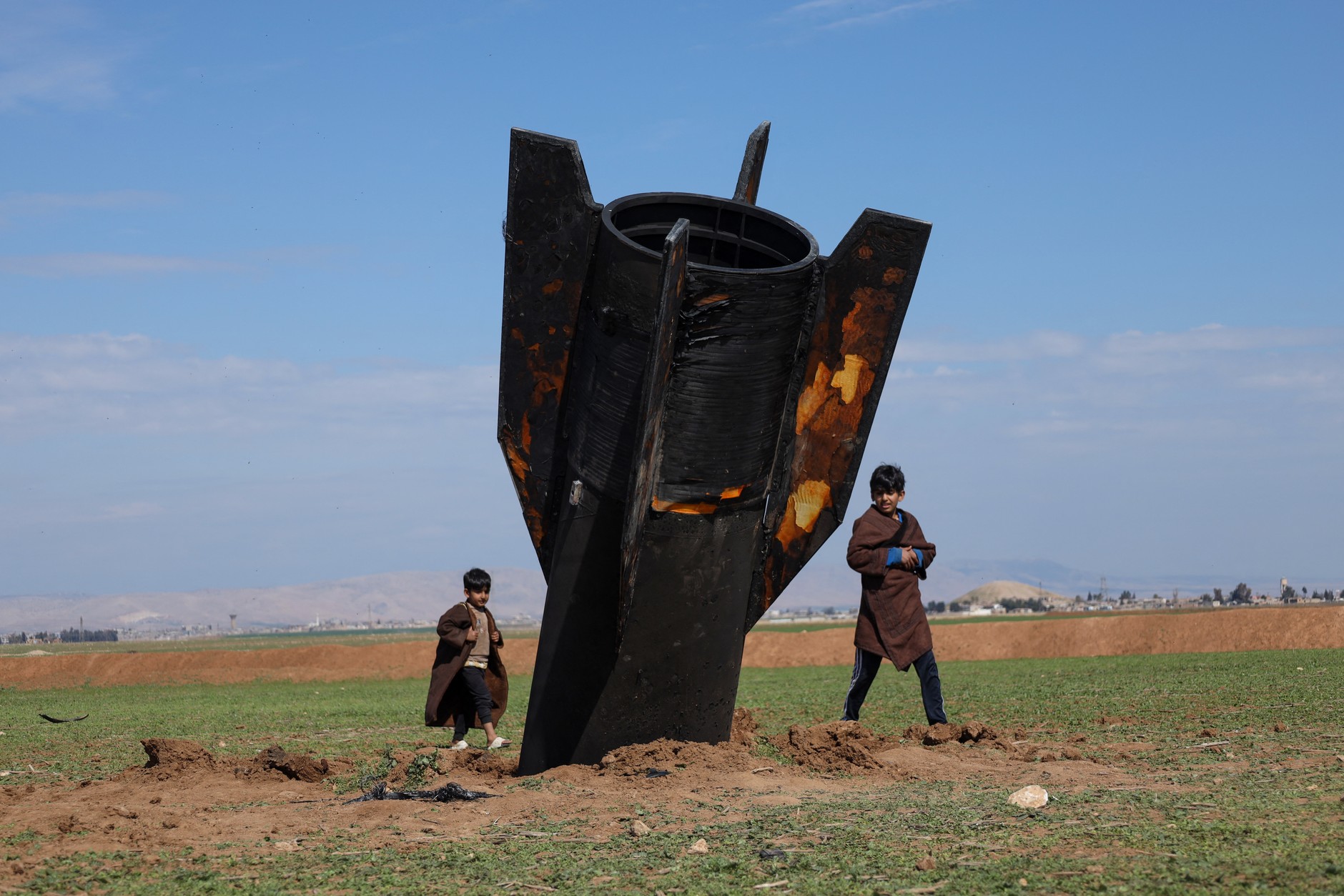
Children walk around an Iranian missile that landed near Qamishli International Airport, near the Turkish border in Syria's Hasakah province, March 4, 2026.AMJAD KURDO / MIDDLE EAST IMAGES / MIDDLE EAST IMAGES VIA AFP / AFP
But some congressional hawks are concerned. Republican Senator Mitch McConnell warned on a Senate hearing Wednesday that the military is “unprepared” to stop aggression from both Russia and China simultaneously because of ammunition shortages. McConnell did not respond to a request for comment.
Trump wrote on social media that on Friday he met with representatives of defense companies including Boeing, Northrop Grumman, RTX and Lockheed, who agreed to quadruple production of Exquisite-class weapons. But he did not explain what systems that included or how the United States planned to quickly build factories, hire workers and ramp up weapons production.
Some allies concerned about weapons they hope that this is not just an empty promise.
— It seems that American defense companies are still having difficulty producing at a level that meets demand, says Giedrimas Jeglinskas, a Lithuanian member of parliament and former deputy defense minister. — We welcome all efforts of the administration to encourage arms companies to switch to war production mode.
Others warn that the defense industry cannot be flipped on to begin mass production of the advanced missiles and air defense systems that the United States and its allies so desperately need.
— There is always the belief that it is enough to simply return to the times of World War II, notes Camille Grand. — However, during World War II, the production of Sherman tanks was very similar to the production of tractor engines. The production of Patriots is not close to that of Tesla, adds a former NATO official.
I’m Ashley Davis as an editor, I’m committed to upholding the highest standards of integrity and accuracy in every piece we publish. My work is driven by curiosity, a passion for truth, and a belief that journalism plays a crucial role in shaping public discourse. I strive to tell stories that not only inform but also inspire action and conversation.