“It will probably be called World War III in 10 years.” What General Ben Hodges says about the conflict in Iran


“It's probably going to be called World War III 10 years from now,” says Gen. Ben Hodges, former commander of US Army Europe, in a podcast about the Iran war. The escalating conflict between the US and Iran raises major questions about Washington's strategic direction.
What General Ben Hodges, former US commander in Europe, says. Photo: AFP/Getty Images
In an episode of the Trump Report podcast, US General Ben Hodges warns that the world may look back on this period as the start of a much larger war.
“It will probably be called World War III 10 years from now when historians look back on it”, says General Ben Hodges, former commander of the US Army in Europe. “I think it's fair to say that this is a global conflict and we should think strategically about it,” cfill it out.
The discussion starts with spectacular images that have gone around the world: an Iranian warship sunk by an American submarine. For Hodges, the moment had a powerful symbolic impact.
“When I saw the video, it immediately reminded me of things from World War II,” spone he “I don't know if 'shocking' is the right word, but I had the reaction: wow, I've never seen anything like this in my life.”
Even though the military success is obvious, the general raises a fundamental question: what is the real purpose of war?
“It is not clear”says Hodges. “We've heard many justifications: to prevent Iran from getting nuclear weapons, to stop ballistic missiles, to block support for terrorism, or to protect protesters. These are all good things, but put together they are not an ultimate strategic goal.” this one shows.
Without clear direction, he warns, military planning becomes extremely difficult.
“If you don't have an end goal, you end up in situations you didn't anticipate or wanted to avoid, like sending troops into the field.” says the general.
A war that can quickly expand
Although Washington insists there will be no major ground intervention, Hodges believes that scenario is unlikely mainly for domestic political reasons:
“The president's political base is strongly against this.(..) This is exactly the kind of war Trump said he would never start.”
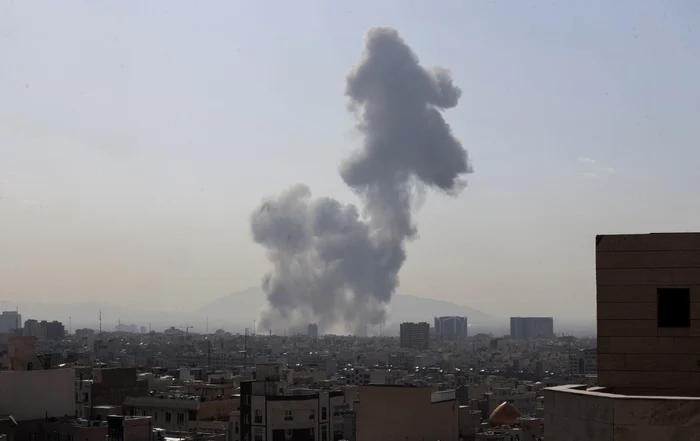
Instead, the conflict risks expanding regionally. In just a few days, explosions and attacks were reported in the United Arab Emirates, Qatar, Bahrain, Azerbaijan, Cyprus and Beirut.
“As always, the enemy has a say too”Hodges points out.
Even after the removal of Iran's supreme leader, the general does not believe that Iran's power structure has truly been destabilized:
“I'm not sure the supreme leader was actually the real leader”he says. “The Islamic Revolutionary Guard Corps is the real power in Iran.”
For the IRGC, victory could have a simple definition, survival: “If they survive, they will think they won the war because the United States and Israel failed to eliminate them.”
Strait of Hormuz – pressure point
One of Iran's most important strategic weapons remains control of the Strait of Hormuz, one of the world's most important energy routes.
“This is the ultimate pressure point against the West”says Hodges.
While the US is nearly self-sufficient in energy, other global powers are heavily dependent on Persian Gulf oil.
“China is really dependent on oil and gas coming from there”he explains. “If the flow is disrupted, it creates a strategic problem for Beijing.”
But the effects are not simple: “Rising oil prices are a boon for Russia, which is desperate for export revenue.”
Differences between the US and Israel
Hodges also sees a possible divergence between Washington's goals and Israel's:
“Israelis may see this moment as a once-in-a-generation opportunity. (..) If I were an Israeli planner, I would think that now we can completely destroy the IRGC and its networks.”
In contrast, the American strategy seems more flexible – or less clear.
“The president has not clearly identified the end goal,” says Hodges. “He talked about goals, but goals are not the same as an end goal.”
This ambiguity, however, gives Trump political freedom. “It gives him the flexibility to say, I've destroyed this and that, I declare victory and we're leaving.”
Allies, an unexpected problem
The general warns that tensions with Western allies could complicate military operations.“The administration has repeatedly shown contempt for allies“, he says. “And now they are surprised that some countries are not so keen to allow their military bases to be used.”
However, the relationship with Great Britain remains solid at the military and intelligence level.
“Relationships between nations are much more than between the Oval Office and Downing Street,” says Hodges.
A piece of a global conflict
For the former American commander, the conflict with Iran cannot be analyzed in isolation. It is part of a wider system of geopolitical rivalries. “There is already a global conflict”says Hodges.
He lists the connections between the great powers: Russia at war with Ukraine and in a hybrid conflict with Europe; Iran supporting Russia and Middle Eastern militant groups; North Korea providing ammunition and technology; China indirectly supporting Russia and cooperating with Iran.
“These things are connected“, he says. “If Ukraine were to defeat Russia, Iran would become more isolated and China would receive a clear message of deterrence.“
A war with no clear end
Finally, the general returns to the central problem: the lack of a coherent strategy. “My first question is always the same: What do we want to happen at the end?”says Hodges.
Without that answer, he warns, each new military operation risks creating more instability than solutions.
“Just creating unrest in Iran is not a strategy”concludes the general. “We need to know exactly what strategic outcome we're after.”