Drops on the line in the Stock Exchange after the attacks on Iran. Analyst Radu Puiu explains whether the economies of Romanians are in danger


The intervention of the US and Israel on the theocratic regime in Iran generated shock waves on global stock markets. In Bucharest, the decreases in the last week varied between 3 and 15 percent, depending on the company. Viewed in the context of a year in which the Bucharest Stock Exchange recorded record gains, the losses of the last few days should not scare investors. Radu Puiu, financial analyst at XTB Romania, explains for “Adevărul” the reactions on BVB following the outbreak of the conflict in Iran, but also what are the prospects of the market this year.
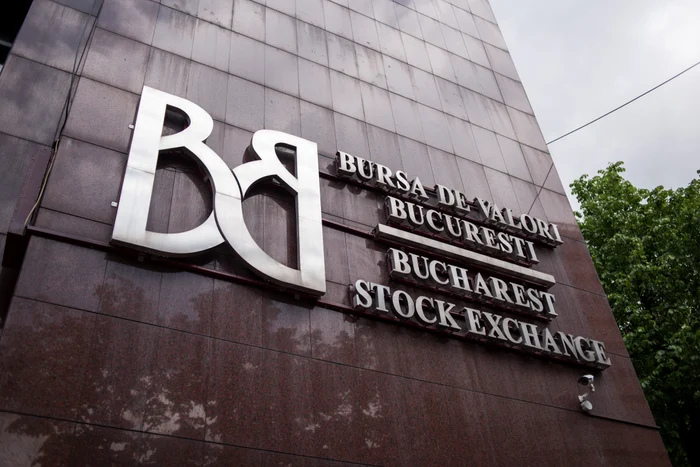
Bucharest Stock Exchange: Inquam Photos/Diana Oros
The conflict in Iran did not catch BVB in a moment of weakness, but exactly the opposite, after one of the best periods in the history of the Romanian stock market. The BET index had reached all-time highs and listed companies had accumulated substantial gains.
“The stock market had a slight downward trend, but not as pronounced as in the United States or on the major indices in Europe. We must remember that, in the case of the BET index, as well as the other indices, the Romanian market was already in a slight corrective trend even before the outbreak of the conflict. This is also because it was at historical highs, and investors wanted, somehow, to mark part of the accumulated profits. Through therefore, we could say that these corrections were rather conjunctural and not necessarily the result of a direct impact of the conflict, but of the general trend on the capital markets”, explained Radu Puiu.
In other words, the conflict acted as a trigger, not a cause. The stock market was getting ready to breathe anyway after an exceptional year.
Why Iran Matters to an Eastern European Scholarship
At first glance, a conflict in the Middle East should have limited impact on an Eastern European stock market. In reality, the connection is direct and works through two channels: the price of energy and the behavior of institutional investors. BVB has a significant exposure to energy companies (OMV Petrom, Romgaz, Transgaz, Electrica), and the volatility of gas and oil is immediately transferred to the stock market quotations. The Strait of Hormuz, through which almost a fifth of the world's crude oil trade passes, has suddenly become a matter of concern for all investors who have energy companies in their portfolio, including those from Bucharest.
“The energy sector was in the center of attention, given what is happening in the Strait of Hormuz and the uncertainty related to the evolution of oil prices, later fuel, but also the situation of natural gas prices. The European gas benchmark rose strongly in the first two sessions of the week, Monday and Tuesday, which amplified the volatility. We saw declines in most companies. I can't say that one sector was more affected than the others. And that's because many of the companies were in areas of historical highs, and the prospects for correction were, in a way, wider”, the XTB analyst pointed out.
The data confirms this dynamic: Transgaz fell by 11.05% in the last week, Electrica by 8.96%, and OMV Petrom by 1.95%. The decreases are real, but Transgaz remains 203% more than a year ago, and Electrica 103%.
Investors flee to safe-haven assets
Beyond energy, the conflict in Iran activated a classic mechanism in financial markets: the withdrawal from assets perceived as risky and the migration to more stable instruments. In this risk hierarchy, emerging markets – the category of which Romania is also a part – are among the first to be targeted. Not because they are directly exposed to the conflict, but because institutional investors reduce their exposure to everything that means perceived risk.
“A major problem, in such cases of uncertainty, for the Bucharest Stock Exchange and for the Romanian market in general, is the fact that, being an emerging market, in periods when investors turn to instruments that offer more safety, the so-called safe-haven assets, emerging markets are among the first to suffer. As a rule, the declines are more extensive than in the case of developed markets, such as those in Western Europe or the United States”, explains Radu Puiu.
According to the financial analyst, investors turned to precious metals, copper, but also somewhat surprisingly, to the US dollar.
“We saw an orientation towards classic assets, especially precious metals. Silver was already in the attention of investors since the beginning of the year, but we also noticed an orientation towards other types of metals. For example, there were also movements in copper. At the same time, we saw a strengthening of the US dollar, which is somewhat paradoxical, considering that the United States is one of the actors involved in this conflict. However, investors believed that a reorientation towards the dollar could be an inspired decision in this context of uncertainty”, shows Radu Puiu.
The outlook for the coming months: eyes on Wall Street
The evolution of the conflict in Iran remains the main variable of uncertainty. If tensions ease, markets can quickly return to growth. If it escalates, the pressure continues. The XTB analyst points out, however, that the direction of BVB in the medium term is decided on the stock exchanges in New York or Frankfurt.
“It's hard to say, given how many things change from one week to the next. What I can say is that the Bucharest Stock Exchange will most likely follow the trend of the other markets. From my point of view, we must first look at what is happening in the United States and in the European markets. If we see declines there, they will automatically be felt locally as well. One aspect that we were discussing at the very end of last week is that the weakness in the technology sector, which fueled a slight correction in the United States, has spread, with some delay, to the BVB. At such times, the movements – both down and up – tend to be larger on the BVB than in the West, and this is an element that we must take into account.” concluded analyst Radu Puiu.