“We won't kill you. We'll rape you first.” When the Internet went down in Iran, the streets turned into an execution field. Terrifying eyewitness accounts
The full scale of the horror is gradually revealed. A multi-week internet blockade cut off Iran from the outside world. Only scant information about the regime's brutal actions against demonstrators who had been taking to the streets against the government since the beginning of January reached abroad.
Currently, communication is restored periodically. More and more details about the activities of Iranian security forces are coming to light. Yet the full picture of the brutality remains unknown.
Human Rights Activists News Agency – a U.S.-based Iranian human rights organization – confirmed more than 6,000 deaths. Another 17 thousand death reports are currently being verified. Other Iranian sources say even higher numbers. Iran International station based in London reports the number as 36,000. 500 killed.
The editorial team of “Die Welt” documents eyewitness accounts from one family – transmitted through chats, voice recordings and telephone conversations with a relative living in Germany. They describe in detail what happened after the Internet was turned off on January 8.
The text contains drastic descriptions of violence. For some readers it may be emotionally burdensome.
My cousin tried to message me on Instagram many times, but each time she deleted the messages – she was afraid that what she had experienced would be too terrible for me. Eventually she did it, and immediately afterwards she called to tell everything in detail.
She was afraid that the Internet would be cut off again and wanted me to pass on the voice of our compatriots. Maybe it's because I'm outside Iran and I can make a difference.
She said that on January 11 – four days after the call for protests issued by Reza Pahlavi (the former shah's eldest son) – people were still not leaving the streets. She was in the Punak district. She was chanting slogans with the crowd when security forces suddenly attacked. She ran away and hid in an alley.
She saw a young man – tall, quite portly – running away. He was chased by five or six officers. They grabbed him from behind. When his shirt rode up, bullet holes and bruises were visible. He desperately tried to pull on his T-shirt so that it wouldn't be obvious that he had participated in earlier protests.
The officers surrounded him. When he realized there was no escape, he started screaming. One of them threw him to the ground. Another grabbed his head with both hands and slammed it against the asphalt with all his might. Another hit him in the face with the butt of a rifle – so hard that it crushed his nose. Suddenly the young man screamed loudly… and fell silent.
One of the officers said the boy was no longer moving. They started screaming with joy and cheering. Their superior approached and placed his foot on the dead man's chest. – Shhh… quieter. We will take the rest of the celebration to the police station, he said.
My cousin was crying. She said she felt ashamed and guilty because she didn't react and a compatriot was murdered in front of her. His face—every detail—was burned into her memory.
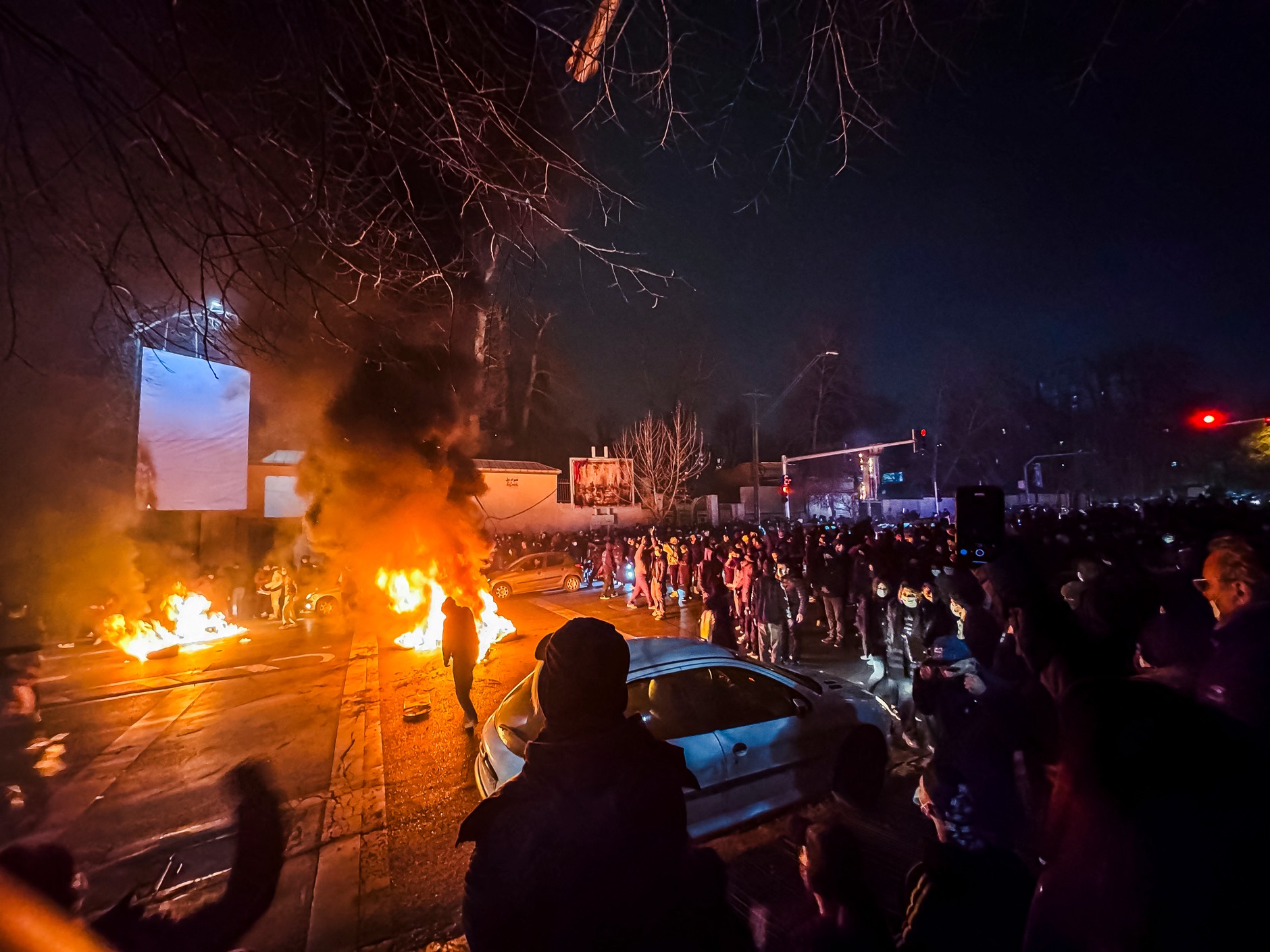
Iranians during a protest in Tehran, Iran, January 9, 2026.MAHSA / MIDDLE EAST IMAGES / MIDDLE EAST IMAGES VIA AFP / AFP
When the officers left, she started running. Residents had previously spray-painted “dead end” signs at the entrances to some streets so that demonstrators would not fall into traps and could escape through other routes.
While running, she saw a young boy a little further away who fell – straight at the officer's feet. He was happy and said “Aha!” and shot him with a military weapon. The boy's face was completely torn and he died on the spot. He doesn't know what weapon was used, but the muzzle flame reached almost a meter.
That same night, she saw several officers catch up with a young man and, like butchers, slaughter him with knives and machetes, then dump his body on the roadside.
She also saw officers throw young women – injured and unharmed – one on top of the other into a separate vehicle, shouting, “We won't kill you.” First we will rape you, then we will kill you.
The car drove away.
She said she didn't know how she survived. She doesn't know how she got home safe. She cried not because of the pain in her body – covered in baton marks – or because of the tear gas that still made her cough and feel nauseous, but because she felt as if her soul had died. She felt guilty that she was alive.
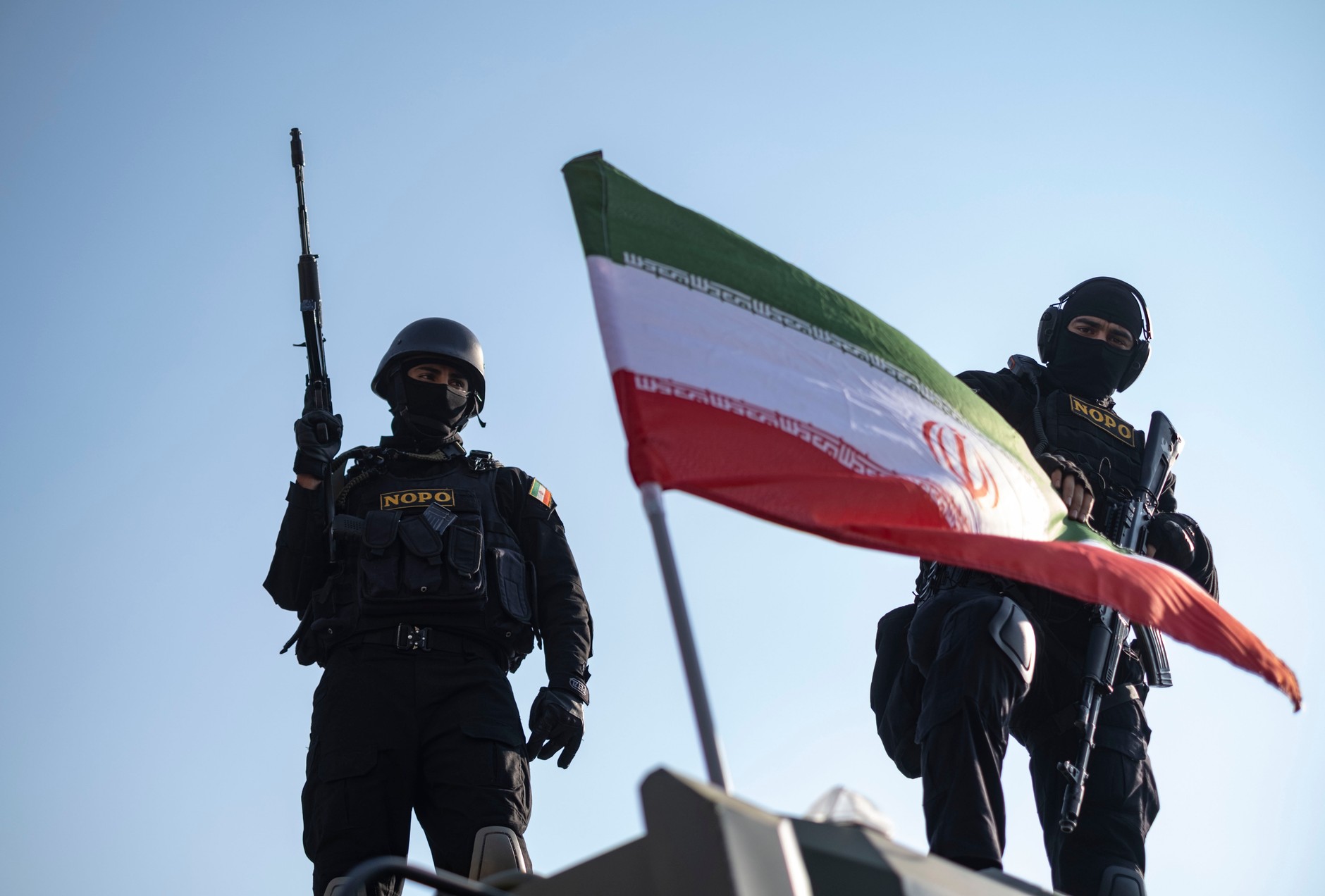
Two armed members of Iran's special police forces during a rally in support of the government in downtown Tehran, Iran, on January 12, 2026.NurPhoto / Contributor / Getty Images
The only thing that allows her to move forward is the need to give a voice to those who were on the streets not only on the day of the call to protest, but also in the days that followed, waiting for help. They left empty-handed, as peacefully as possible, to show that this government has no legitimacy and that they do not want it. The response was bullets and massacres.
The day after she returned, she learned that the neighbors' little daughter had been shot in the leg. The family didn't want to take her to the hospital – they were afraid the baby would be kidnapped. They treated her at home. The girl died. A small black piece of cloth was pinned to the garage door – and the funeral had to be a quiet, private affair.
Mother's relationship
I come from a large family – I have many brothers, sisters, nieces and nephews. Most of them were on the streets during the protests and on the following nights. Only recently have we been in touch again and can talk about this revolution.
Yesterday I called my mother. She told me her story. When the protests started, she went to my sister's house in the Ashrafi Esfahani neighborhood. Her two daughters went out to demonstrate, asking her to stay home. She replied that the stress of being alone at home would be worse for her than going out with them.
She took part in the revolution in 1979. [która doprowadziła do obalenia monarchii] and feels guilty that she may have contributed – even in a small way – to the creation of the Islamic Republic. If she was to die, she said, she would prefer now, when so many young people are dying.
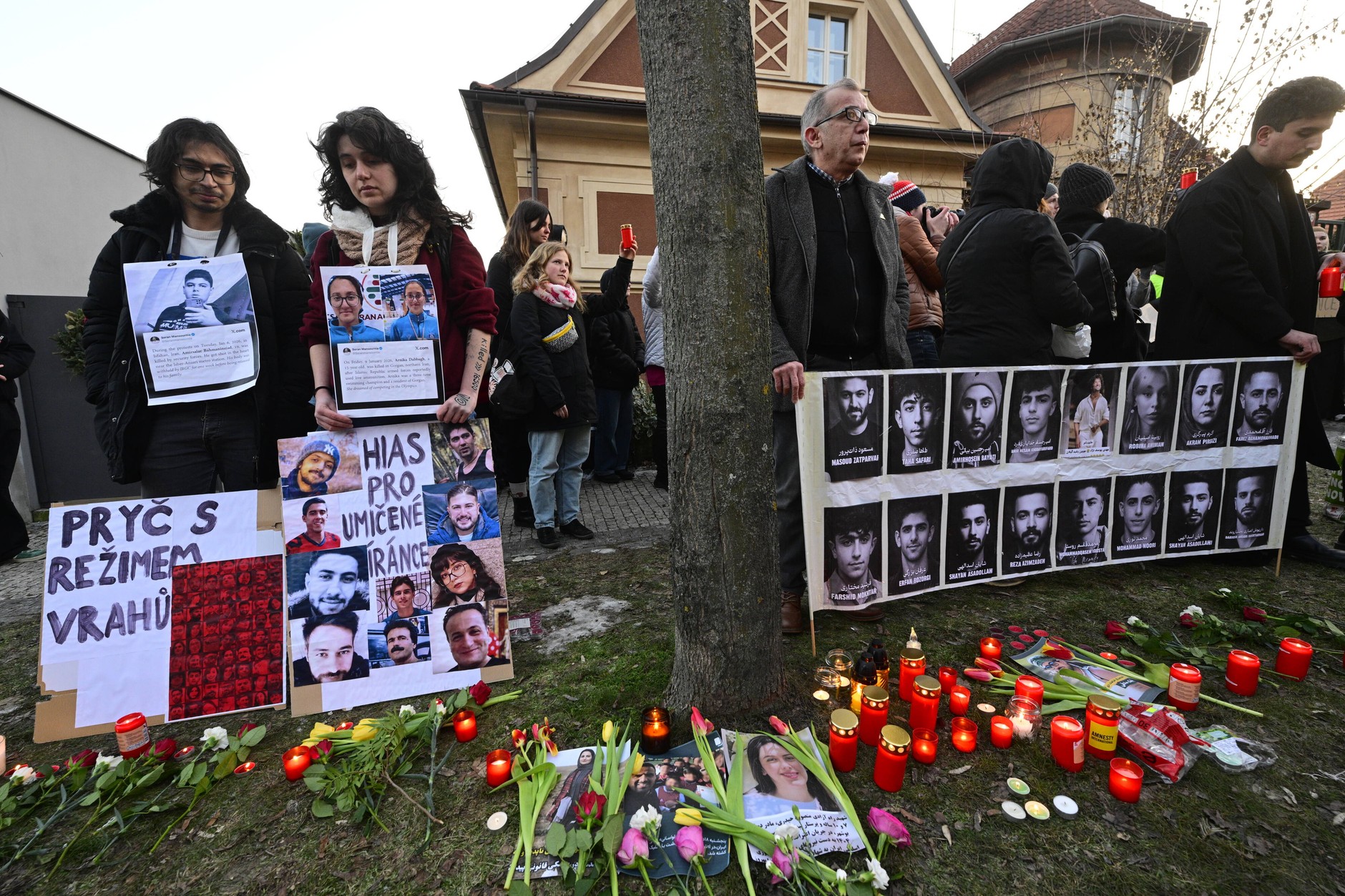
Event organized by Amnesty International to draw attention to the growing number of victims of protests in Iran and escalating violence by local security forces in front of the Iranian embassy in Prague, Czech Republic, January 20, 2026.VIT SIMANEK / PAP
The first night they were in the Shahran district. People tore down portraits of Khamenei and [kluczowej postaci aparatu militarnego reżimu] Qasem Soleimani and city banners, and in their place they hung the lion and sun flag – the former flag of Iran. They lit fires to reduce the effect of tear gas. The crowd chanted: “Long live the Shah”, “Pahlavi will return”, “Death to Khamenei”. There was a sea of them.
On the first night, security forces mainly used batons, tear gas and warning shots, often with pellet guns. On the second night, again in Shahran, she saw an officer grab a young girl by the hair and drag her along the ground.
Suddenly, motorcycles with officers arrived from above, cutting the crowd in half. A police car ran over a young man. People who weren't on the street were screaming from windows; officers responded with obscene, sexual insults and shot through windows.
As the officers approached, the door of one of the houses suddenly opened. The young man dragged my mother, my two sisters and several other people into the yard. The neighbors sent them to the roof. The heavy metal door was sturdy; when the officers failed to force their way, they left. They sat in the stairwell for two or three hours. When things got quieter, the same man came out under the pretense of taking out the trash and said they could go now. They ran. The son of one of the women found them along the way and took them home.
The next day the streets were red with dried blood. Yet people were talking about going out at night again. There was no internet, they didn't know how many died. After a few days, when my mother regained access to the Internet with difficulty and saw the videos of the dead, she cried all day.
A neighbor came to see her, completely devastated. She said that three young men from her family – protest leaders – were arrested in Gorgan. The next day, all three were executed without trial. They demanded money to hand over the bodies. Many of those who were not killed in the demonstrations are now shot.
My mother told me to be brave and pass on everything I heard. The city still smells of blood.
Nephew's account
The third account comes from our nephew who works in the operating theater at a state hospital in central Tehran. On the second night of the protests, he was on night duty.
The wounded were brought in one by one. Many died on the floor. In that one endless night, ten arms and legs were amputated – the injuries were the result of the use of military ammunition. Many patients were dead before they got to the block.
During the operation, armed officers entered the sterile room and demanded medical records. He replied that he was not responsible for her and did not know the names. They threatened him and said they would come back. A colleague from the emergency room was arrested that same night – for a week, no one knew where he was or if he was still alive. He doesn't know when they will come for him.
Cousin's account
My cousin is just over twenty years old. The first night after the call to protest, he and his friends were detained to prevent them from taking to the streets. The next day they released them. As he rode home on his motorcycle, his throat and eyes burned from the smell of blood and tear gas.
There was no one in the house – everyone was on the street. The phones didn't work, you couldn't even send a text message. Out of ten attempts, maybe one connection went through. He didn't know what to do. He decided not to return to the army and run away to be with people. He hid with friends for two days because the address of our house was in his files. He was convinced that the US would attack and the regime would fall.
But nothing happened. Then he heard that desertion was punishable by death. He had difficulty obtaining a false medical certificate about the accident. He injured himself to make it believable.
He says: If America attacks, that will be a problem – he may die. If it doesn't attack, it will be a thousand times bigger problem, because in such conditions sooner or later everyone will die.
The article continues below the video
Testimony of a German woman of Iranian origin
I have been following the news since the first days of the protests. I try to be active on the X platform. I use hashtags, sign petitions, write e-mails. I take part in demonstrations and chant slogans. Every night I fell asleep in tears, on sleeping pills, tormented by uncertainty about the fate of my family. Every day I woke up terrified and checked the news to see if Trump had kept his promise.
Over time, hopelessness joined the rage and fear. Hopelessness in the face of the policy of the country in which I live – a country that has not yet fulfilled even the smallest of our demands: the expulsion of the ambassador of the Islamic Republic and the termination of cooperation with institutions associated with the regime.
A statement from the German Foreign Ministry advised Iranian protesters abroad to take care of their safety. I ask myself: how should I take care of them?
I'm desperate. We Iranians can read the codes sent by Ali Khamenei to his supporters and the repressive apparatus outside Iran. In his first speech after the massacre, he called protesters abroad troublemakers and traitors. Two hours later, several protesters in Hamburg were attacked with knives.
Carrying all this pain, I can imagine the day when I walk through the streets of Berlin and someone stabs me in the back – because someone who supports Khamenei is angry at our solidarity with the people in Iran.
I’m Ashley Davis as an editor, I’m committed to upholding the highest standards of integrity and accuracy in every piece we publish. My work is driven by curiosity, a passion for truth, and a belief that journalism plays a crucial role in shaping public discourse. I strive to tell stories that not only inform but also inspire action and conversation.