The oil transport route through the Strait of Hormuz is blocked. Tourists stranded in Persian Gulf countries. The number of casualties on the American side increased to six and on the Israeli side to nine. In short, chaos reigned in the Middle East.
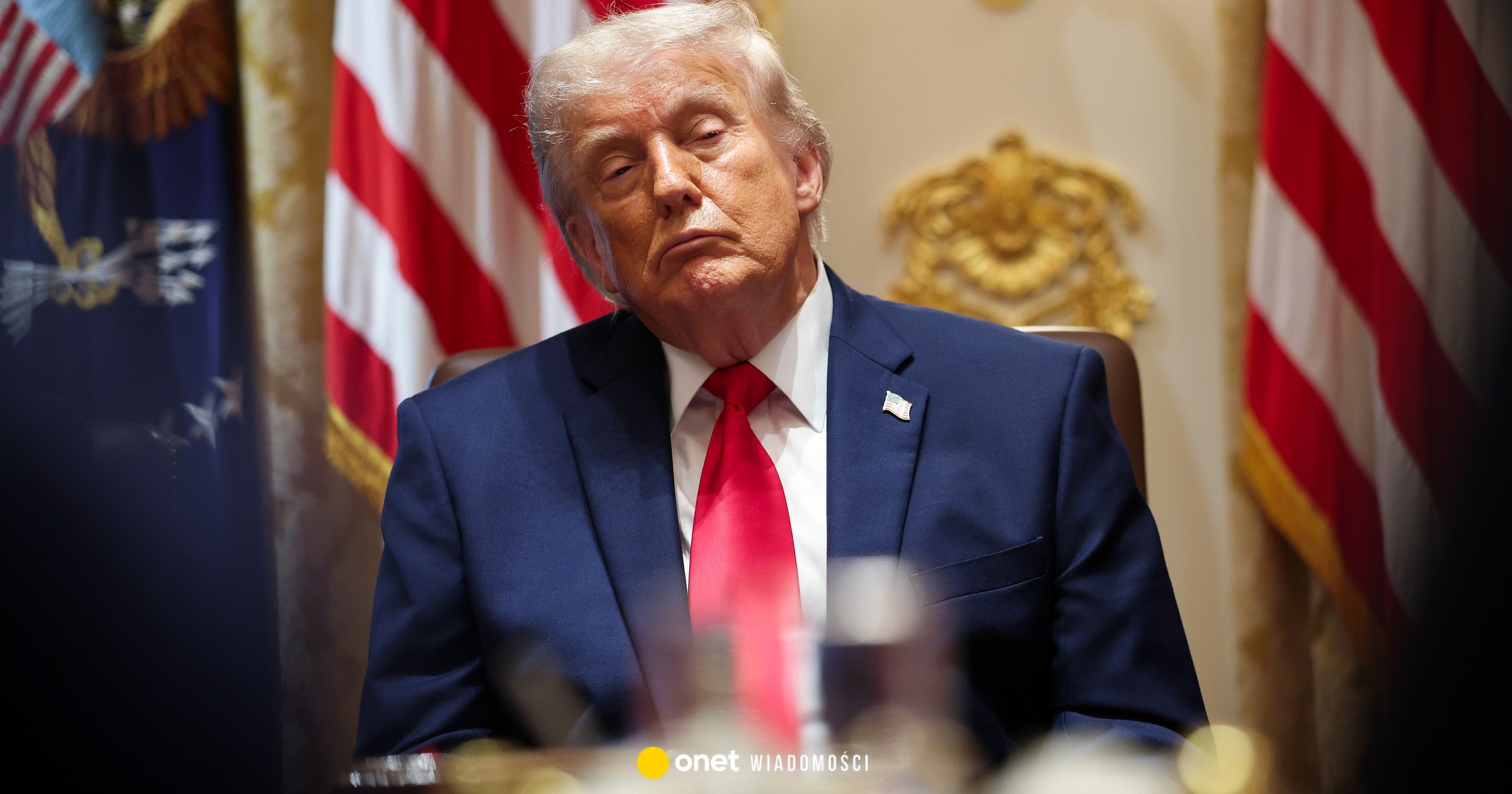
US President Donald Trump ordered military operation “Epic Fury”. The killing of Iranian leader Ali Khamenei and the country's leadership was expected to bring quick success. So far, however, there are no signs that the regime is truly faltering. Iran's retaliatory actions, in turn, are becoming more and more aggressive.
Due to the growing chaos in the United States, the pressure on Trump is growing – on several fronts:
in Congress the opposition condemns the war. Leading Democratic politician Hakeem Jeffries criticized the lack of a valid argument for war. Republicans like Thomas Massie are also seeking congressional approval [na wojnę USA z Iranem];
the majority of surveyed Americans do not support Trump's actions. According to a CNN poll, 59 percent citizens are against airstrikes on Iran. 60 percent respondents do not believe that the US president has a realistic plan for the further course of the war;
tension is also rising within the MAGA movement [“Make America Great Again”, “Uczynić Amerykę Znowu Wielką”]. Many Trump-supporting influencers oppose the war. “We are not responsible for the freedom of Iranians,” famous American right-wing commentator Matt Walsh criticized the US president.
The article continues below the video
The White House continually provides new reasons for the use of military force, from the nuclear program to support for terrorism to regime change. However, further questions continue to arise.
Expert on the fall of the Iranian regime: unlikely
US Secretary of State Marco Rubio only added to the confusion. He stated that the United States was forced to act because Israel wanted to attack on its own, and in such a situation, American troops would be at risk of Iranian retaliation. It sounded as if Israel had dragged the United States into war. Democratic senator Chris Murphy commented: “Pure amateurism – administration [Trumpa] there is no plan!”
Experts do not expect the war to end quickly. According to American political scientist Jonathan Cristol, overthrowing the Iranian regime remains a pipe dream.
— I think it is unlikely that we will overthrow the Islamic Republic of Iran from outside, he says in an interview for BILD. “Real regime change happens from below — not from 50,000 feet [ponad 15 km] by B-2 bombers!
On the right: a B-2 bomber assisted by F-35 fighters (illustrative photo)Fatih Aktas/Anadolu via Getty Images / Contributor / Getty Images
A particular problem for the Trump administration, it seems blocking the transport of oil through the Strait of Hormuz.
“Once we deal with Iran, oil prices will drop to levels they have never seen before,” Trump said at a meeting with German Chancellor Friedrich Merz in Washington.
The Americans are currently considering a risky plan that could break the ongoing stalemate in the Persian Gulf.
Trump wants to send troops to the Strait of Hormuz
The Strait of Hormuz is a bottleneck for the global oil trade. This important shipping route is currently blocked due to the ongoing armed conflict. Thus, important raw materials such as crude oil and liquefied petroleum gas are stuck in the Persian Gulf. Donald Trump reacted to a potential crisis situation.
On Tuesday, March 3, in the evening, the US president wrote on his “Truth Social” website: “If necessary, the United States Navy will begin escorting tankers through the Strait of Hormuz as soon as possible. Under all circumstances, the United States will ensure the FREE FLOW OF ENERGY RESOURCES IN THE WORLD.”
This means Trump plans to have tankers escorted by warships if necessary to stabilize oil prices. The Middle East region is home to, among others, the American aircraft carrier Abraham Lincoln.
Meanwhile, the world economy is trembling before a new wave of inflation. Gerrit Heinemann, a trade expert from the University of Lower Rhine Krefeld, says in an interview with Bild that “with each day of the blockade of the Strait of Hormuz, the probability of double-digit inflation rates increases.” The consequence of such a scenario will be an increase in the prices of gasoline, many food products and electrical products.
The Strait of Hormuz is considered one of the most important bottlenecks in world trade. Okay. one fifth of the world's oil trade and large volumes of liquefied natural gas pass through the strait between Iran and Oman. At its narrowest point it is only about 33 km wide.
With almost no alternative routes, tensions or blockages here have a direct impact on supply concerns and international oil prices.
I’m Ashley Davis as an editor, I’m committed to upholding the highest standards of integrity and accuracy in every piece we publish. My work is driven by curiosity, a passion for truth, and a belief that journalism plays a crucial role in shaping public discourse. I strive to tell stories that not only inform but also inspire action and conversation.