
Will the conflict in the Middle East shake up wallets? Effects on raw materials and the Polish zloty

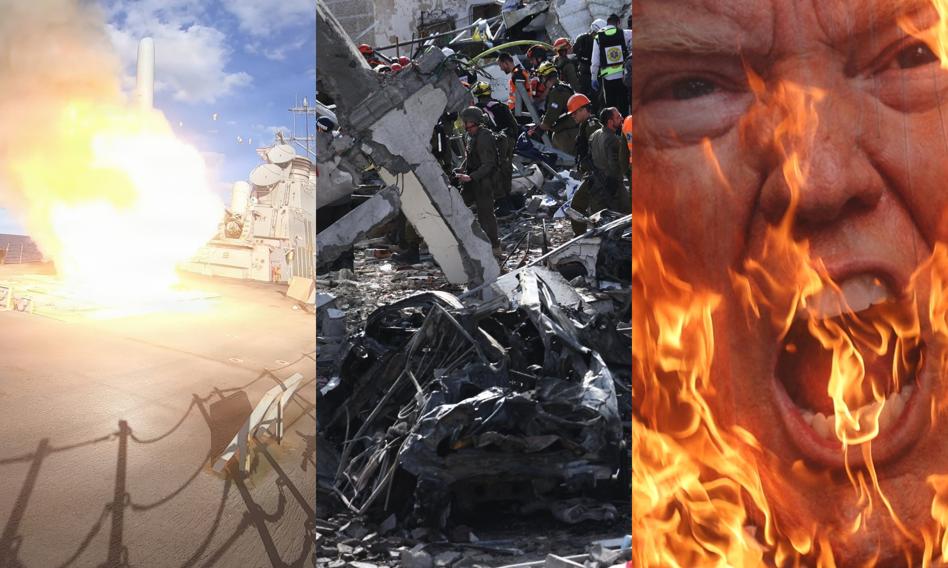
Commodity markets will react most strongly to the American-Israeli attack on Iran, PKO BP strategist Mirosław Budzicki told PAP. In his opinion, the price of Brent crude oil may jump to $78 at the beginning of the week. per barrel, and gold may return to the price from January, when it cost approx. 5.6 thousand. hole.
The US and Israel have been attacking Iran since Saturday. The attack began at a time when the main stock exchanges and commodity and currency markets are closed. However, as PKO BP bank strategist Mirosław Budzicki told PAP, the attack was already priced in to some extent before it started.
Oil in Focus: Heading towards $80?
– What happened was somewhat expected – it was talked about in the media, on Friday there was information about the quite decisive withdrawal of diplomatic personnel by many countries from the countries of that region, that planes were being moved towards the Middle East and that an entire armada was sailing there, loaded with weapons and ammunition. On Polymarket, a platform for placing bets, there was a clear belief that it was not a matter of whether an attack would happen, but when it would happen, said the economist.
Advertisement
He recalled that the market had recently, in June last year, already faced the American-Israeli attack on Iran. Back then, the reaction was relatively small, but the strength of the current attack and its goals seem to be much broader than last year. Therefore, it may last longer and its impact on the market will be stronger.
One gets the impression that the current onslaught may last a few more days, maybe a week or so, which means we have a tense week ahead of us. A year ago, the market reaction to the attack lasted only a day, now it will certainly last longer, said Mirosław Budzicki. In his opinion, this attack will have the strongest impact on the commodity markets. – The effect of last year's attack was an increase in the price of oil by over 3 percent, i.e. by approximately USD 2-3. – he added.
He emphasized that much will depend on whether Iran will try to block the Strait of Hormuz in response to the attack. And although in his opinion the blockade itself will probably not last long, the announcement of its introduction will have an impact on oil prices.
– Currently, a barrel of Brent crude oil costs less than $73. I think the increase to $75. it's the slightest movementthat we can expect, but we should rather expect a price increase around the peaks of 2023, when oil cost around $78. It is possible that after the first strong move, oil prices will go up further and we may get closer to approximately $80. per barrel – said a PKO BP economist.
Gold is a safe haven again
In his opinion, gold will also go up. The price of this precious metal on Friday was approximately PLN 5.28 thousand. hole. per ounce. Although gold has been gaining in value again in the last month, it still costs much less than at the end of January, when it reached the level of approximately PLN 5.6 thousand. hole. per ounce, after which there was a sharp decline.
I think we can expect an increase towards the peaks seen at the end of January. This movement – just like in the case of crude oil – will be much stronger at the beginning of the week, and then it will possibly continue if there is no information about a possible early start of talks with Iran. This week will be marked by rising oil and gold prices.
What about currencies and the Polish zloty?
In his opinion, the reaction on stock markets and currencies will also appear, but it will be smaller, as the attack does not have a direct impact on the economy, but only indirectly – through raw materials.
– I think so declines of 2-3 percent can be expected. at the beginning of the week. In the case of currencies, I would expect the value of the dollar to increase – currently the euro exchange rate in dollars is approximately 1.18, so I think we can expect the dollar to strengthen to 1.17, maybe to 1.16 dollars per euro – said the economist. – In the case of the zloty, a limited movement can be expected – from the current PLN 4.22 per euro to PLN 4.24, maybe possibly PLN 4.26. These are levels that should stop further weakening of the zloty, said the PKO BP expert.
The specter of global recession, or why the conflict with Iran is a “worst case scenario”
A joint attack by the US and Israel on OPEC member Iran threatens serious disruptions in oil supplies in the Middle East, which in the worst case scenario could trigger a global economic recession, writes CNBC.
The black hole of the economy is the Strait of Hormuz
He emphasized that any further changes in raw material and currency prices will depend, among others, on: on the duration of the conflict and what effects the American-Israeli attacks will have.
– The longer this attack lasts, the longer commodity prices will rise and the dollar will strengthen. This movement will not be as strong as at the beginning of the week, it will be clearly weaker, but it will continue as long as there is no information about the start of peace talks, said Mirosław Budzicki.
Other economists point to the increase in oil prices as a result of the attack on Iran in their analyses. Everyone emphasizes the negative effects of Iran's attempt to block the Strait of Hormuz. According to Bloomberg reports, at least some tankers are already stopping in front of the strait for fear of being hit by Iran.
According to an analysis by XTB, a blockade of the strait or attacks on tankers may lead to an increase in oil prices by more than USD 100. per barrel, which could mean an increase in fuel prices at the station to PLN 6.5-7 per liter.
Politico: The attack on Iran is a greater threat to the energy market than the intervention in Venezuela
The US-Israeli attack on Iran poses a greater threat to the global energy market than the US intervention in Venezuela at the beginning of this year; may cause disruptions in global oil supplies and an increase in prices to $80 per barrel, Politico said on Sunday.
Israel and the US have been attacking Iran since Saturday, and Iran responds with strikes against Israel and American bases in several countries in the region. This is the second US attack this year on a major oil-producing country; the first was against Venezuela in early January. “This time, the consequences for global markets could be much more serious,” Politico warned.
The portal recalled that Iran is a member of the Organization of the Petroleum Exporting Countries (OPEC) and controls a key point for global energy trade – the Strait of Hormuz, through which from one fifth to one third of global maritime transport of crude oil and a large part of natural gas flows every day.
“Closing the Strait of Hormuz (…) would be an unprecedented action. Former Iraqi leader Saddam Hussein tried to get Tehran to close maritime traffic during the Iran-Iraq war in the 1980s, but Iran continued to allow ships to pass through,” Politico recalled.
The American military intervention in Venezuela or the American-Israeli airstrikes on Iran's nuclear infrastructure in June last year. had a limited impact on the market, while a broader conflict in the Middle East may have more serious consequences, especially since it will last at least a few days, the portal said.
As he emphasized, oil prices had already jumped on Friday before the market closed in anticipation of the American attack, reaching $67. per barrel, i.e. by about $5. more than a month ago. According to analysts of the Barclays investment bank, quoted by Politico, the global price of Brent crude oil may reach $80.
“Political spillovers could also affect China, which buys about 90% of Iran's exports of 1.5 million barrels a day. Any major supply disruption could raise global energy costs and lead to higher gasoline prices for Americans, a situation that was largely avoided after the United States took over oil supplies from Venezuela,” the portal wrote.
As Samantha Gross from the Brookings Institute think tank noted, Iran is a larger oil producer than Venezuela, so the effects of disruptions may be more serious.
In its analysis, Reuters added that investors are concerned about the prospect of a power struggle in Iran and a prolonged regional conflict. “The first threat to markets is uncertainty about further developments in Iran, given the complexity of the country's government system, the ideological nature of the government and the strength of the Revolutionary Guard,” Reuters emphasized.
ms/pad/
The publication contains affiliate links.


