In Call of Duty, many specialists and scientists have put a lot of work into designing a system that will reward progress, build status and create the feeling that it's “silly not to take advantage” when a given offer appears.
Good news? These same mechanics can be transferred to the world of traditional businessincluding B2B portals and media, SaaS, consulting services and training. The point is not to turn customers into players, but to design the offer in such a way that it supports their path to a specific business result – and at the same time increases our ARPU (Average Revenue Per User — average revenue per user, a financial indicator showing how much money one user generates on average over a specific period of time, e.g. monthly or quarterly), retention and add-on sales.
Check also: How a small studio gained Microsoft's support and joined the Xbox Game Pass platform [WYWIAD]
Call of Duty mechanics “translated” into the language of business offers
In Call of Duty, the gameplay itself is attractive, but the real magnet is the metagame: reaching higher character levels, statistics, weapons, skins, seasons. The player feels a sense of development, sees progress and returns to “reach the next level”.
The next part below the video:
It's similar in business. Our core gameplay is the basic product: articles and reports in the medium, functions in the SaaS application, the consultation itself or training. The metagame, in turn, is everything that is happening around, e.g. the implementation program, the maturity path, subsequent stages of cooperation, unlocked as the client progresses. Instead of selling a single shot in the form of a campaign or project, we can sell a well-designed road from point A to point Bwith clear stages, rewards and measurable business results at the end.
So what should a Battle Pass for business look like? In short: sell a season, not a single product. The game's Battle Pass is a seasonal pass in which the player can see all levels and rewards in advance. You pay for progression and predictability, not for one specific item. In business we can do exactly the same thing, just under a different name. Medium could create, for example, a “Q1 Growth Pass for B2B marketers.” Instead of selling individual sponsored publications, we offer a quarterly development program, where week after week the client receives specific materials, activities and exposure, with a clearly described effect at the end. He sees the entire path in advance – from the funnel audit, through campaign templates, to participation in the industry report and summary consultation.
SaaS can design an “Implementation Pass” for 90 days. Instead of throwing the client onto the platform with the comment “here is the admin panel”, we guide him through the next steps: basic configuration, first dashboards, integrations, automations, final report. In the panel, the customer sees a progress bar and information about what level he is at now and what he will unlock next.
In consulting services or training, instead of a series of scattered projects, we can offer a seasonal transformation program. The client then does not buy one workshop, but a clear plan with an effect, e.g. shortening the implementation time, increasing the number of leads, improving conversions. The individual price may be low, but the entire season builds recurring revenue and a stronger relationship. People in B2B also buy progress and a plan, not just a module, training or feature.
Read also: Nintendo Switch 2 will win the hearts of millions of players. There's a surprise coming
Sale in a unique “packaging”
In Call of Duty, individual skins are rarely sold separately. We usually get a bundle, i.e. a specific set that includes a character, skins, animations, accessories – it is a bit more expensive than one thing, but subjectively “very profitable”.
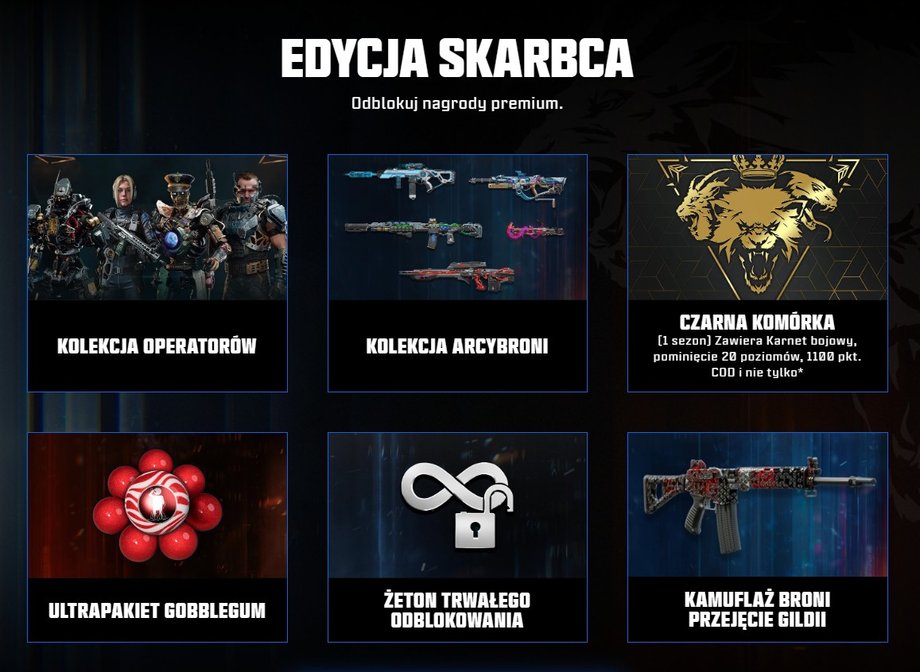
Call of Duty offers various add-ons that players like to use and there is always something fresh (that's why it's worth coming back to the game)
|
mat. press releases
It works the same way in business. The portal may have a “Premium Visibility” package, which combines an article, placement in the newsletter, a dedicated post in social media or a logo highlight in the “Partners” section. Individually, each of these activities would cost more, but in the package the price is set so that the customer has the impression of an obvious advantage.
A SaaS start-up can sell a “Growth Bundle” package, combining additional dashboards, ready-made report templates, additional onboarding or priority support. The customer can, of course, buy everything separately, but the bundle is tailored in such a way that it would be stupid not to use it if he is serious about development.
Instead of hourly billing, a service company may sell result packages, for example “Visibility Pack”, “Lead Gen Pack”, “Brand Positioning Pack”. Each of them includes a set of actions leading to a specific result.
The secret of bundli is that they organize the decision. Instead of thinking about combining a dozen or so options, the customer sees several logical sets and chooses the one that best suits his purpose.
See also: Polish games are conquering Xbox. “Every game creator has equal opportunities here” [WYWIAD]
An intermediate currency, i.e. loans instead of Polish zlotys
The game's intermediate currency has simple logic. Players buy packages of points, spend them, and usually have some “change” left, so they are more likely to buy another package. Importantly, the decision to spend money is separated in time from the decision to make a specific purchase in the store.
The same mechanism can be applied in digital business, in a fair and transparent way. Medium may introduce “Media Credits”. The client buys a pool of them in advance and then exchanges them for articles, case studies, participation in reports, additional banners or webinar appearances. The price list is public, the client creates his own mix, and once spent marketing budgets turn into points that can be used to “pay” for subsequent activities more easily. In SaaS, credits may apply to more advanced functions, e.g. additional reports, data exports, custom analyses, more API queries. The subscription provides “basic gameplay”, a loans allow the customer to flexibly choose accessories without having to negotiate the contract each time.
The psychology here is very simple. The decision “whether to spend money at all” is made once – when purchasing the package. Later, the client only uses credits, which makes it easier for him to reach for add-ons that actually help him grow faster.
Call of Duty also makes great use of seasons, events and time-limited content. Some skins are available only in a given season, some game modes are offered only for the duration of the event, rewards are only for those who join on time. An online business can work similarly. We can plan, for example, a year in seasonal or quarterly cycles and the first quarter may be devoted to performance and leads, the second to building the brand, the third to foreign expansion. Each season we offer a dedicated report, special bundle, webinar or live workshop.
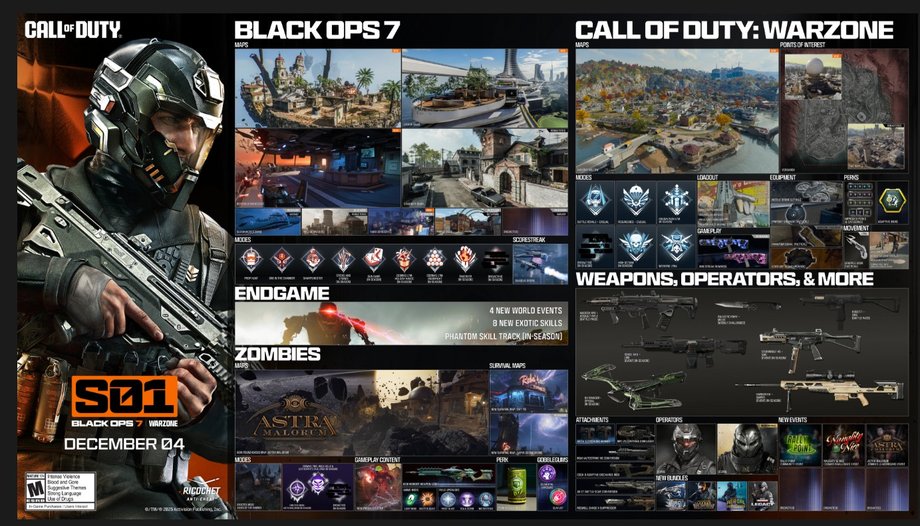
Call of Duty seasons are full of new features
|
mat. press releases
Limited availability increases concentration. If the “Growth Q1” package is only available until the end of March, the customer does not postpone the decision indefinitely. He knows that if he wants the full program, he has to get in now. In turn, we benefit natural sales peaks and a specific communication excuse (what's new in the season, what companies take part, what results were achieved in previous editions).
We can also introduce an element of light competition, e.g. a ranking of the most active companies in the program, distinctions in the report for those who complete all levels, or additional bonuses for people who complete the entire “season”. It's still serious B2B, but with a bit of natural gamification.
How to arrange it in practice
For all these mechanics to work, they must be incorporated into the existing sales funnel. The first step is to map the current customer journey. Let's consider where it comes from, what is its “basic gameplay” and at what point the space for upsell or cross-sell naturally appears today.
Then it's worth adding a clear layer of progression. We can describe the customer's maturity levels, design an implementation checklist, and create an activity score. It is important for the client to see where he is now and what he will gain if he takes the next step. This involves designing your own “Battle Pass”, a seasonal program with a clearly described end result. It doesn't have to be complicated – the most important thing is that it is transparent and consistent with our business model.
The third element is a well-thought-out intermediate currency and a bundling store. It is worth creating a simple catalog of what the customer can “buy with credits” and several packages with names referring to the effect, and not to the internal structure of the offer. It's not about twenty options, but a few strong, easy-to-understand sets.
Finally, we introduce seasonality. We plan topics for the following quarters and assign flagship packages, reports and events to them. Let's make it clear that certain things are only available in a specific season. You can think of communication as “updates” in the game – each time we tell customers what's new in the next “season”, what new opportunities there are, what results the participants of the previous edition achieved.
We don't have to build a full ecosystem right away, like in Call of Duty. First, let's choose one mechanic that is easiest to incorporate into the current model. It could be a simple quarterly Battle Pass-style program, the first pool of credits for premium customers, or three well-named bundles instead of a scattered price list. When we see how customers respond to progress, seasonality and status, we will start to look at our product differently. And it will quickly turn out that gaming solutions are not childish at all. On the contrary, they can become one of the most important growth engines in online business.
Author: Grzegorz Kubera, journalist of Business Insider Polska