Three factors will determine the outcome of Israel and the US's war with Iran


Ballistic missiles, unlike drones, are launched from launchers that are difficult to conceal (and impossible to build during war), and relatively easy to destroy, which are not only large in size, but also require time to refuel the rocket and carry out the launch procedure.
From the point of view of attack effectiveness, it is crucial to fire a relatively large number of rockets in a short time. This is the only way to prevent the missile defense systems of the US, Israel and their allies from intercepting all incoming missiles.
As military expert Dawid Kamizela notes in an interview with Onet, this requires – in addition to an appropriate number of launchers (and, of course, also missiles) – an efficient command system.
Meanwhile, the Israelis and Americans are effective not only in destroying the launchers, but also in disrupting communications. This causes the Iranians to fire missiles, but the salvos are only rarely concentrated enough to pose a challenge to anti-missile systems.
Even if Israel and the United States manage to destroy all the launchers, it is extremely unlikely that they will be able to prevent Iran from launching drones, which – unlike ballistic missiles – do not cause much damage, but can paralyze, for example, air communications in the countries bordering the Persian Gulf.
The key question is whether the Gulf countries, in the scenario of prolonged drone attacks, will pressure the US to end the war or, on the contrary, will join the war to end it faster.
A possible repeat of the Hungarian scenario?
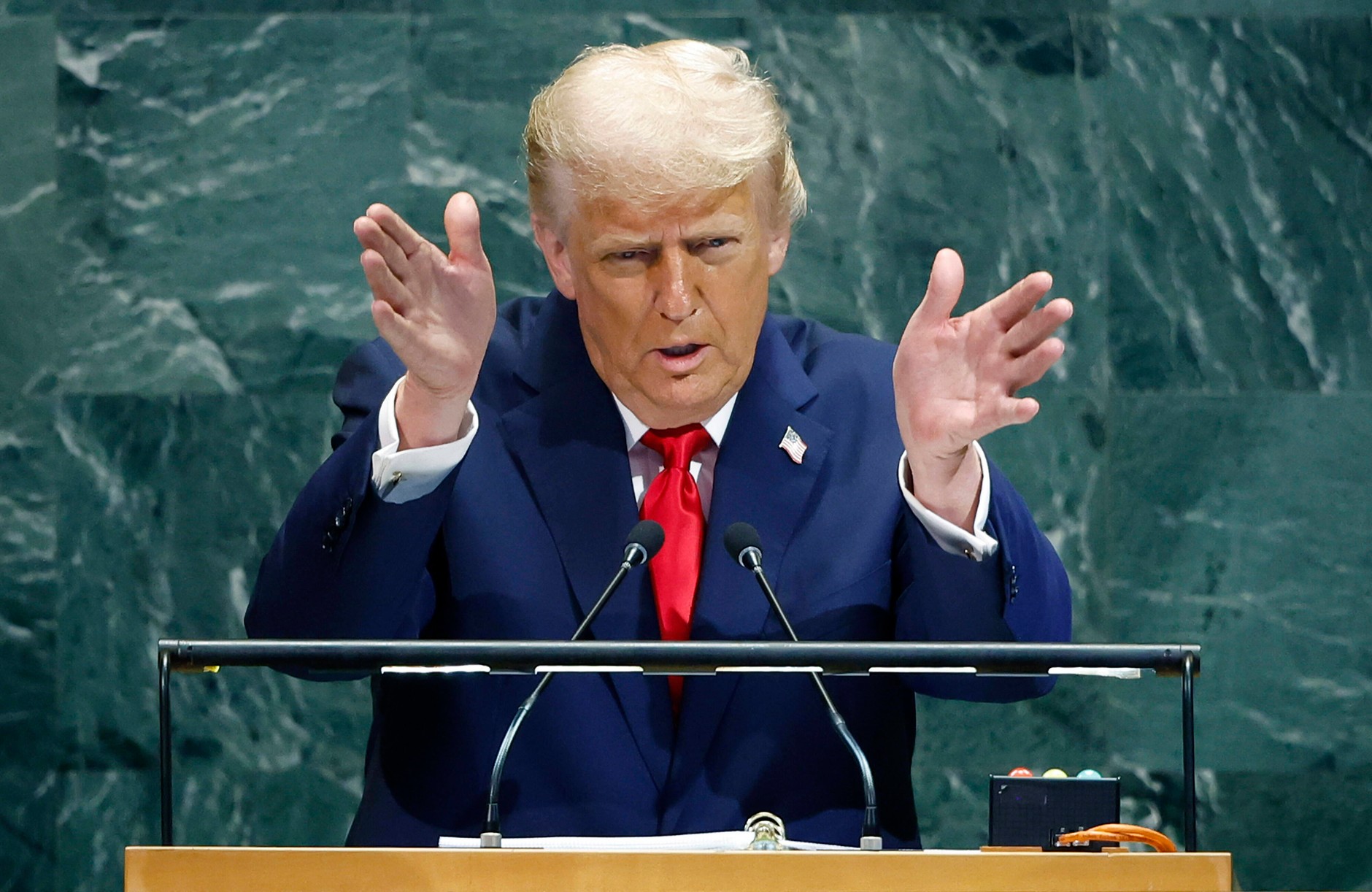
Donald Trump, president of the United States, speaks in the hall of the UN General Assembly. New York, September 23, 2025John Angelillo/UPI Photo via Newscom / PAP
Unfulfilled promises of help in Hungary meant that the country's citizens – apart from sporadic protests in defense of the Hungarian minority in Romania or against the construction of a nuclear power plant – never took to the streets on strictly political matters until 1989.
In Iran, the memory of the regime's massacre is fresh, which may mean that people want revenge. However, it is also likely that there will be paralyzing fear, which may mean that unless the regime implodes, Iranians will no longer take to the streets en masse. Especially since in the event of an attack by Israel and the US, it may give the impression of collaboration with the aggressor.
The only force that can enter into dialogue with the Americans
The second political plane on which the game takes place is the struggle of groups within the regime. From the point of view of all factions, the war is paradoxically less of a threat than capitulation in the face of American demands. As the Iranian-Swedish-Iranian activist and analyst Trita Parsi very aptly pointed out, the regime understands that while it can still survive the war, it would not be able to survive capitulation, or thus embarrassment.
It is based on less numerous than before, but still numbering in millions, hardline supporters for whom capitulation in the face of American demands would be synonymous with betrayal.
This may result in a scenario in which the Americans will dominate the air and win the war, but at the same time Iran will not lose the war and the regime will survive it.
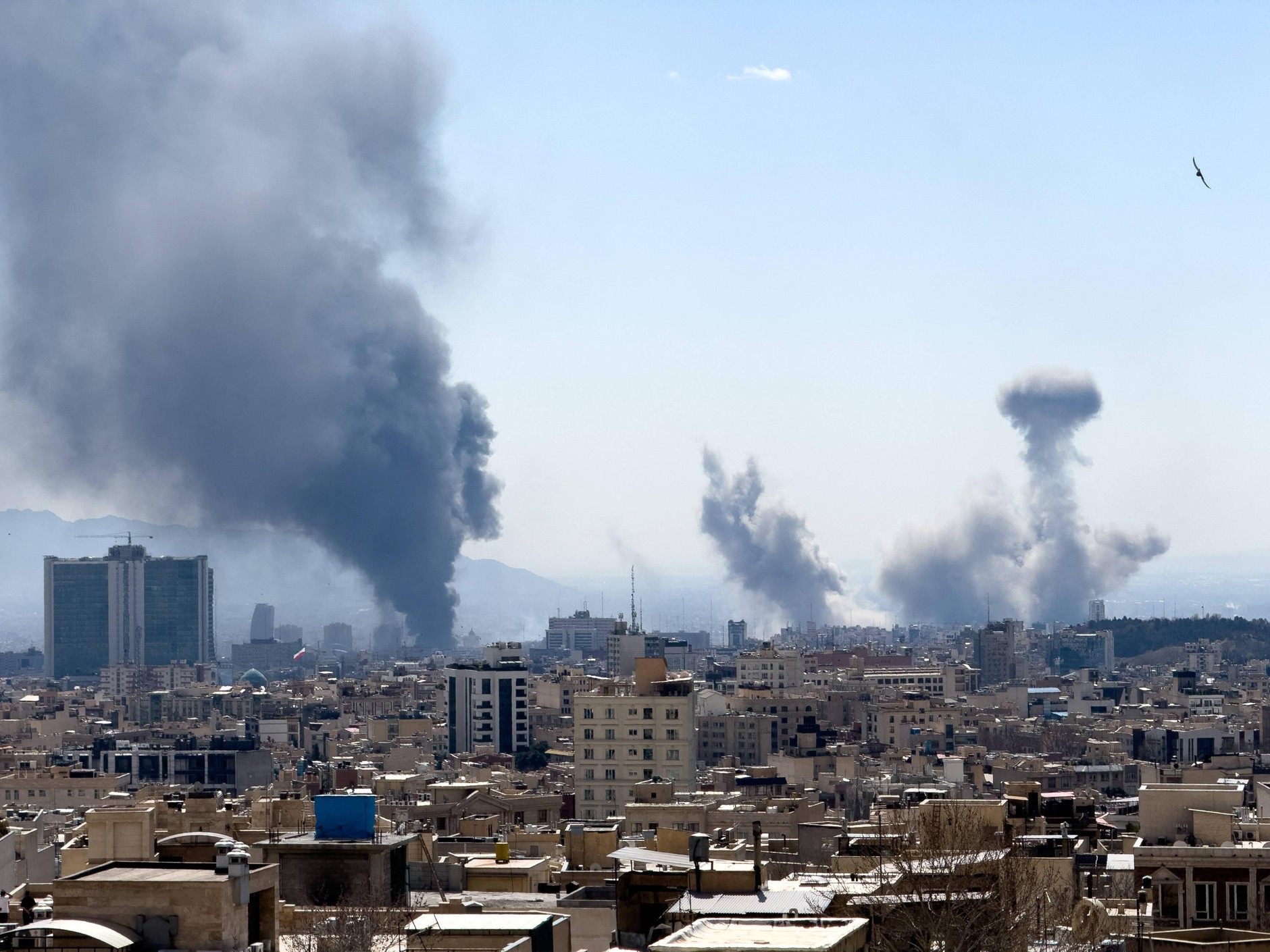
Smoke from the explosions rising over TehranMiddle East Images/ABACA / PAP
However, the decisive factor may then be the self-preservation instinct of the regime's highest officials who, seeing the effectiveness of the Americans and Israelis in killing Iranian notables, will nevertheless decide to try to enter into dialogue. However, if this were to happen, the dialogue would be initiated by those within the regime who would be sure that no one would accuse them of treason.
Then the current war would be just another, and not – as Donald Trump probably would like – the final chord of the conflict between Iran and the USA and Israel.