Experts have predicted the future of the oil market. One scenario is calming, the other is terrifying. “Too many shocks happening at once”


However, the attack on Iran – and even more so Tehran's response – poses a real risk of drawing the entire Middle East, a key region for oil production and export, into the conflict. It is possible supply disruptions that pose the greatest economic threat.
This timing gives the markets a moment to assess the situation before the stock exchanges open, although this time – according to analysts – the dust may not settle so quickly.
Every day, at least one fifth of the world's oil and LNG supplies pass through the Strait of Hormuz, or approximately 15 million barrels per day.
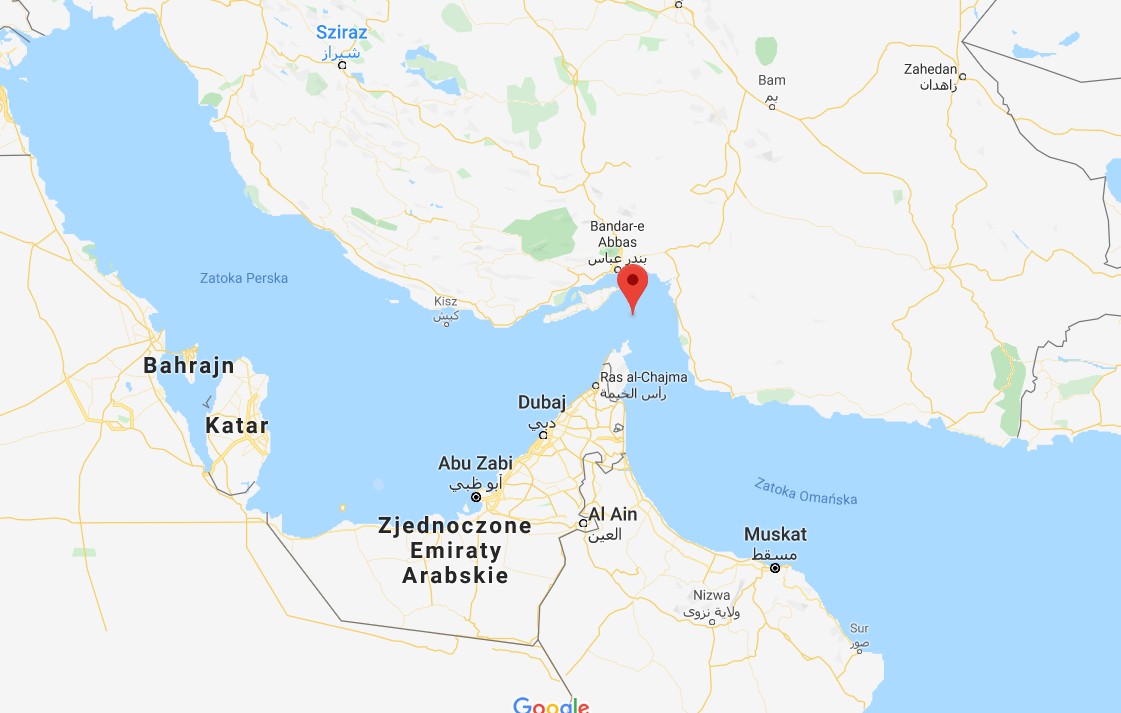
Strait of Hormuzgoogle.pl/maps
Threats to block it – although not officially confirmed by Iranian diplomacy – have already led to a situation in which approximately 150 tankers stopped outside its area. At least one ship off the coast of Oman was attacked, although the perpetrator has not been clearly identified.
The key question today is: whether the US and its allies will be able to prevent a long-term suspension of energy transport?
If exports continue and OPEC+ countries increase production, the economic impact may remain limited. But if the strait turns into a “dead zone,” oil prices could sharply accelerate inflation, make it harder for central banks to cut interest rates and undermine business confidence.
What's next for oil prices?
Council on Foreign Relations expert Edward Fishman indicates two main scenarios.
The first scenario is the most dramatic
Serious and long-term disruption of shipping through the Strait of Hormuz, the most important oil transport bottleneck in the world.
Effect? Huge price shock – oil could exceed $100. per barrel (approx. PLN 400).
Brent crude oil has already approached its seven-month high of $73. (approx. PLN 292), increasing in price by almost 12%. within a month. According to analysts, prices today are about $10. (approx. PLN 40) higher than would result from the fundamental supply and demand relations.
Rising oil prices also result in higher natural gas prices, which increases inflationary pressure – especially in Europe.
The second scenario is more likely
The strait is not closed completely, but trade in Iranian oil is stopped.
In such a case, prices could rise to approximately USD 80 per barrel (approx. PLN 320) – still high, but without a global shock.
OPEC+ has already announced an increase in production by 206,000. barrels a day in an attempt to calm markets. According to some economists, a price increase of approximately $10. (approx. PLN 40) should not significantly inhibit global economic growth.
Iran is responsible for less than 3%. global oil supply, so in itself it is not systemically key to the market.
What determines the scale of price increases?
The Economist identifies three decisive factors:
1. The scale of the war
Iran is apparently trying to draw the Persian Gulf states into the conflict by attacking not only military targets, but also ports and civilian infrastructure. Within the range of Iranian missiles are the oil fields of Saudi Arabia, the United Arab Emirates and Kuwait – huge areas that are difficult to effectively protect.
2. Possibility of transporting raw materials
The Strait of Hormuz was never completely closed — not even during the Iran-Iraq war in the 1980s.
A full blockade would particularly hit China, which buys almost all of Iran's oil and as much as 37 percent. they receive oil imported by sea via this route.
The U.S. could likely remove the physical blockade within hours, but Iran could still significantly impede shipping. Alternative transport routes have limited capacity – even with maximum use of pipelines, as much as 8-10 million barrels per day could remain off the market.
3. The future of power in Iran
The opposite scenario – power struggles between factions and maintaining a hard line – would mean regional chaos and a permanent risk premium of $8-12. (PLN 32-48) per barrel for an indefinite period.
How will more expensive oil affect individual economies?
United States
The U.S. is largely energy self-sufficient today — only 17 percent in 2024. energy came from imports (the least in 40 years).
Oil refinery in Texas (illustrative photo)Charles O'Rear/Getty Images
Historically, the price of Brent has increased by $10. (PLN 40) increases the price of a gallon of gasoline by approximately 25 cents (approx. PLN 1). Oil at $100 (PLN 400) could increase inflation in the US from 2.4%. to over 4 percent, making it difficult to reduce interest rates and slowing down the economy. Theoretically, Trump could tap strategic oil reserves — today amounting to 415 million barrels — but at the maximum release rate, they would only last about three months.
An additional effect could be a stronger dollar – historically rising oil prices strengthen the American currency by 0.5-1%. with every 10% increase in raw material prices.
China, India and all of Asia
The biggest loser from a potential lockdown would be Asian economies.
As much as 84 percent oil and 83 percent LNG flowing through the strait goes to Asian markets. In addition to China, India, Japan and South Korea are particularly vulnerable.
Oil price at $100. (PLN 400) could increase global inflation by 0.6–0.7 percentage points.
Europe
At the same time, inflation in the euro zone is currently approximately 1.7%, which is below the European Central Bank's target, which gives the ECB greater freedom to maintain its current monetary policy.
Russia
Despite the risk of losing an important ally in Tehran, the Kremlin may paradoxically be one of the main beneficiaries of the conflict.
Higher oil prices increase Russia's income and demand for its sanctioned raw material. Analysts indicate that the West may turn a blind eye to purchases of Russian oil by countries such as India if it is necessary to stabilize the global energy market.
What other economic threats does war pose?
The conflict breaks out at an extremely tense moment for financial markets.
A prolonged war in the Persian Gulf could further weaken investor confidence, limit corporate investment and reduce the tendency of central banks to ease monetary policy.
Too many shocks happening at once – Venezuela, Greenland, tariff wars and now Iran – all in two months
– summed up one of the economists.
Despite this, some analysts remain moderately optimistic. Last year showed that the global economy is surprisingly resistant even to strong geopolitical tensions.
**
The material was based on analyzes by the Financial Times and The Economist.