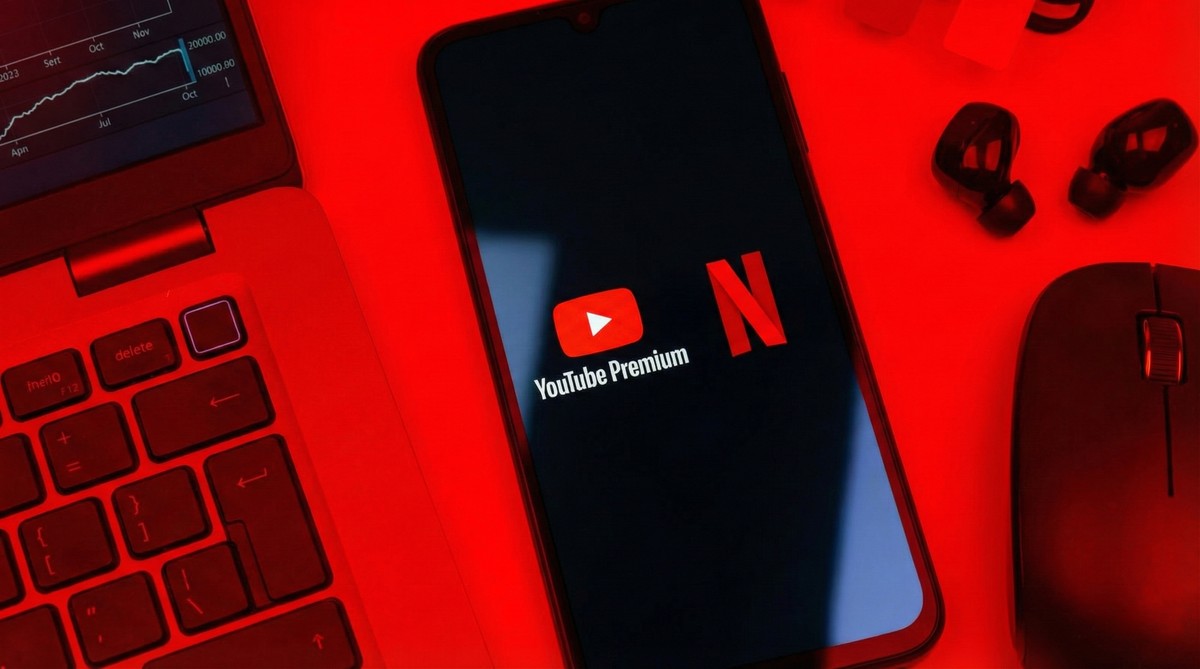
When we look cross-sectionally at the market for subscription services, there is no doubt that it got expensive. Not only in the context of services such as Netflix, Spotify or YouTube Premium, but also when we look at the price lists for access to artificial intelligence tools such as ChatGPT or Gemini. Recently, Microsoft has also raised prices in the context of Xbox and Game Pass or the Office suite, which will soon become more expensive, and PlayStation and Nintendo have also come to its aid.
The rest of the text is below the video:
Prices have been constantly rising lately, and although for a long time consumers have humbly accepted worse and worse offers, more and more often with advertising, we are reaching a certain turning point. There are so many subscriptions and they are so expensive that people can no longer afford to pay for them all. And although subscriber rotation has always been an economically wise move, few people decided to do it – because they didn't have to. And the household budget was able to bear the fixed fees. Now this is changing, and although not entirely of their own will, because the economic situation forces them to do so, they have to choose which subscription they will keep active.
In practice, this leads to a situation in which offering “anything” usually means that a given service will be the first to be dropped from the list of actively paid ones. With a potentially shrinking customer base, companies need to start thinking about this nowwhat I can offer my clients so that they stay with them even if their budget is limited. And although this is a concept that has recently seemed a bit exotic in some strategies, the easiest way to achieve this is by preparing… an attractive offer.
Of course, prices will not drop and, apart from periodic promotions, we will only pay more for all kinds of subscriptions. However, in the fight for the user's attention, more companies will most likely start adding “something extra” to individual packages in the near future. One of the first turned out to be – to everyone's surprise – Google, which announced very pro-consumer changes to YouTube Premium subscriptions.
Lite variant, the cheapest available, in Poland costing PLN 17.99 per month, will receive two very useful novelties at no additional costso far reserved only for more expensive packages. The first is the ability to download and play videos offline. The second one, perhaps even more important for many people, is the option to run and listen to materials in the background. In practice, this means that when you watch something on YouTube, you can simply turn off the screen, lock the phone, put it aside, and the material does not pause – it only plays the audio layer. So far, Premium Lite owners have been treated like free users in this matter.
This is a very welcome change, and for many people who have so far been hesitant about whether to buy Google's service or stay with it in the cheapest package, it may turn out to be crucial when making a decision.
We can expect similar treatments in the near future in other, cheaper packages offered by individual entities. Why at this price point? Because this is where we deal with the widest target group, which, once attached to a certain ecosystem, is easier to convert to higher packages over time. The so-called upselling is also much cheaper than acquiring a new user, especially one who would be willing to buy a more expensive package straight away.
We will probably see an increase in the profitability of individual cheaper packages containing advertising in the near future a short period in which users will again actually feel that it is “worth paying”. But this is not a state that will last forever – companies will again, after strengthening their position and waiting out the period of “intense competition”, when some of their opponents fall out of circulation, will be able to start giving us less and less and demanding more and more in return.
However, this is a cycle that has been present on the markets for a long time. Today, of course, it takes a slightly different form, but in reality it is certain a hybrid of the traditional Edgeworth cycle and a recently coined theory called enshittification. The difference is that at the end of this path there is not the death of the product, but a loop, and instead of price drops, we observe the introduction of cheaper packages.