Article by Mitica Docan – Published on Saturday, 28 February 2026 23:07 / Updated on Sunday, 01 March 2026 01:05
Shortly before the United States began its attacks in Iran, a distinct event with potentially devastating effects was overlooked. Like everything else in our age, it has to do with AI. And, not surprisingly, with professional sports as well.
In the stifling heat of the Australian Open, Iga Swiatek felt a pang of claustrophobia.
In Antipozi, where the rights of the individual are increasingly attacked by an omnipresent state, the organizers of the first Grand Slam tournament of the year endowed the arenas with 70 TV cameras that had a single mission. To pursue the players beyond the limits of all privacy, to where it is no longer humanly reasonable. They chased Cori Gauff, who had explicitly run off the field to break a racket – “because I didn't want to be a bad example to the kids in the stands”, they also chased Iga Swiatek and Amanda Anisimova. The Pole raged at a press conference, using harsh words: “Sometimes, I have the feeling that we are like animals in a zoo.”
Video surveillance systems at sporting events have rapidly become ubiquitous whether it's about Democrats or not. The numbers say it all. A study carried out in 2023 speaks of at least 500 TV cameras at the “Santiago Bernabeu”, 200 at Chelsea's stadium, 590 cameras at the Mercedes Benz Arena in Atlanta (an enviable feat, given that the arena has just over 40,000 seats). Athletes, fans, hamburger vendors, the river and the branch are all filmed. And the fun is just beginning.
15,000 TV cameraswere held at the World Championship in Qatar for mass surveillance
A new player in town
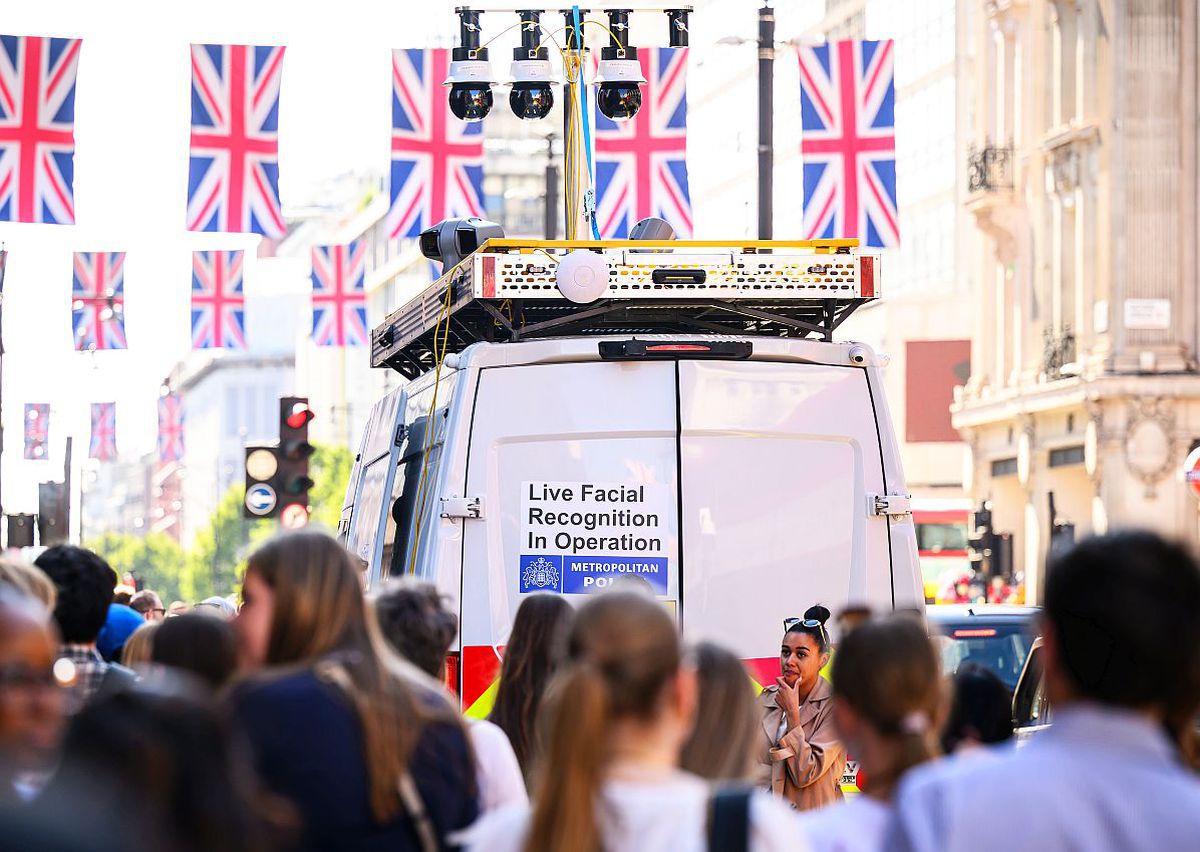
A colleague from Libertatea, who was last week at Arsenal – Tottenham, told us how all the fans were forced to enter the stadium on a route that passed under a gate equipped with several TV cameras and on which was written big: “Facial recognition”. Serie A is clapping with the Italian Government to implement the same technology. “Facial authentication technology provider” Wicket offers its services to 50 professional teams in the NFL, NBA, NHL, MLB, MLS, NWSL, WNBA and Australian Football League, according to a Sportico article. Where are you running from?
Of course, first of all, we are talking about safety. In Italy, the motivation is “the fight against racism”. Basically, the leaders of Serie A say that they deserve to annihilate the privacy of hundreds of thousands of people, fans, athletes, officials, etc. to catch several hundred scandal-mongers.
In the Premier League, Everton adopted facial recognition and tracking technology 5 days ago. “These high-tech tools allow us to prevent crime and protect the public, ensuring that law-abiding supporters are not disturbed and can simply focus on watching the match,” police said. A force that knows what it's talking about, if we take into account that the UK authorities control the largest network of surveillance cameras per capita in the world!
In Brazil, where the government has required (!) that any stadium with a capacity of more than 20,000 seats have facial recognition technology, Palmeiras boasted that the innovation helped them fill empty seats better. The club has ditched physical/online ticketing altogether and opted to collect supporters' faces through surveillance tools. This reduced the number of ticket combinations, and fans “quickly realized that everything was being done for their protection and to improve the experience at the stadium.”
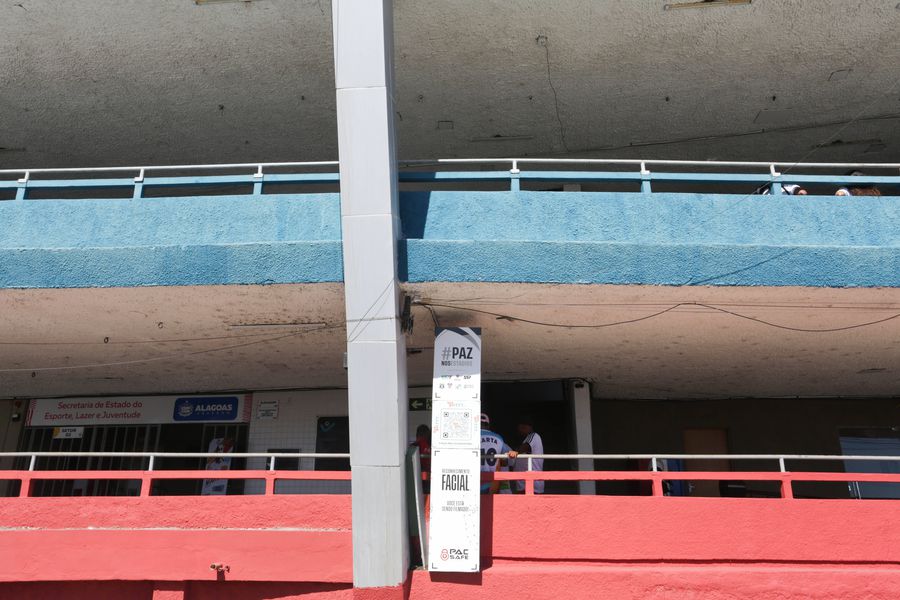
Facial recognition becomes mandatory in Brazil at stadiums with more than 20,000 seats, such as the Rei Pelé Stadium in the city of Maceió, photo: Imago
In Argentina, the same. In one of the most extensive public tracking campaigns in sports, developed in partnership with a Spanish company, eloquently named Veridas, all 85,000 fans who want to enter River Plate's stadium “are obliged to pre-register their biometric data via a smartphone, uploading a selfie and an ID, which the system later verifies by face-to-face on match days”. Faces, queues are reduced, there is no more whining, more safety. The whole story.
And what is the risk?
Anywhere, anytime, sports seem in a frenzied greed to collect biometric data. But he is not alone. Scanners have started to become ubiquitous. It fits in shops, public transport, gyms. It collects around the clock, and privacy advocates accuse it of a lack of transparency about the amount and time the data is stored. In addition, the presence of sophisticated AI models makes it possible to combine data to observe behavioral patterns and even track individuals over time.
A common example: Ionel goes to the X stadium for the match on Sunday night. He is recognized facially by the camera at the entrance, picked up by the camera of the pharmacy across the street when he leaves, also recorded by the camera on the bus and from the staircase of the block where he lives. A sophisticated AI system does this analysis instantly, and in the absence of regulation and time restrictions for data storage, this information can be sold, used for blackmail – if Ionel goes to his mistress, offered on the black market for commercial targeting, etc.
But maybe the whole scenario described sounds a bit sci-fi, doesn't it? Is it?
Step by step towards the New World
Last night, before the US bombed Iran, Donald Trump announced that the Pentagon was cutting off all collaboration with the Anthropic company, which he accused of lack of patriotism. For those who don't know, Anthropic is the company that developed Claude, a direct rival to ChatGPT with ethical claims. Shortly after Anthropic was blacklisted by the Pentagon, Open AI, the rival company run by Sam Altman, announced that it had struck a deal with the Republican government.
However, what was one of the two extremely important reasons why Anthropic refused to sign with the US Department of Defense? Exact. Mass surveillance.
The company accused authorities of wanting to use the potential of Claude — who Trump said was involved in the operations that led to the capture of Venezuelan dictator Maduro — to interpret the pantagruelian amounts of data the government collects or can easily obtain from American citizens. Anthropic told the feds that an amendment to existing legislation, a Congressional oversight, was needed, basically, to be able to use Claude in good faith and ensure basic citizen liberties. The government refused. Open AI has declared itself open to collaboration.
Epilogue
In a country with disturbing memories, where a communist political regime used ubiquitous media to destroy human dignity, we should be careful what we willingly give in our relationship with any institution. Be it public, private (a market recently asked me for my CNP to buy a light bulb!). Or a stadium. Our expectation of privacy influences the legal perspective on what privacy is. It may sound pretentious. But in a sci-fi present, we never know where convenience might take us.