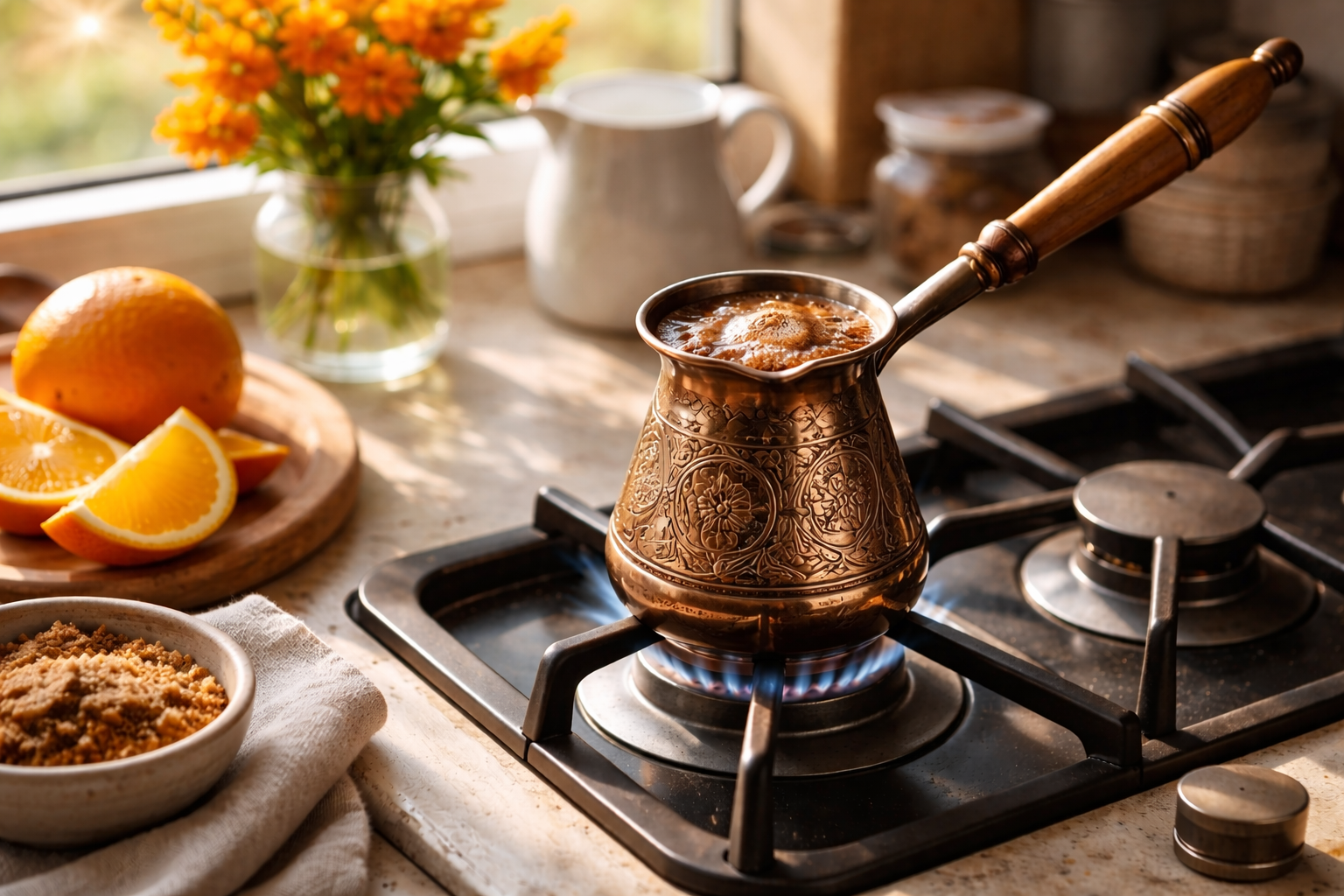
Turkish coffee (in cezve) is valued for its thickness and rich aroma. One simple trick helps make the taste brighter – just add orange zest. Citrus oils highlight the chocolate and nutty notes of Arabica, add light freshness and do not interrupt the classic character of the drink.
How to cook correctly
1–2 tsp. very finely ground coffee (almost “powdery”)
100–120 ml cold water
sugar – optional
Coffee and sugar are poured into the cezve, poured with cold water, stirred gently and placed on low heat. When the foam begins to rise, remove the cezve without bringing it to a boil. You can repeat the rise 2-3 times for a denser taste. Let the drink sit for 1-2 minutes for the grounds to settle.
Orange zest: fresh or dry?
Fresh zest. Only the orange layer of peel is removed from the orange (without the white part – it is bitter). A thin strip of 1-2 cm or a pinch of grated zest per serving is enough. Add it to dry coffee before pouring water, then the aroma will be softer and fresher.
Dry crusts. The peel is washed, zested and dried at room temperature for 2–3 days or in the oven at 50–60 °C with the door ajar. Store in an airtight jar. Before use, the crust can be lightly crushed in a mortar. Per serving – a small piece or pinch of powder. Dry zest gives a more concentrated, “warm” aroma.
It is important not to overdo it, because too much citrus will make the taste harsh.
Instead of orange peels, you can take the peels of other citrus fruits:
Mandarin – soft, sweetish aroma; good for morning coffee.
Lemon — adds bright acidity, suitable for darker roasts.
Grapefruit – slight bitterness and complex aroma; use very sparingly.
Lime — fresh sourness, best combined with medium roast coffee.
The preparation principle remains the same: use only the colored layer of peel and add a pinch to dry coffee before brewing.
Turkish coffee with orange zest is an easy way to update your favorite recipe. Try, experiment, and then every morning will charge you with pleasant energy for the whole day.