Fraud alert. The new method by which thieves convince you to give them access to your personal data over the phone

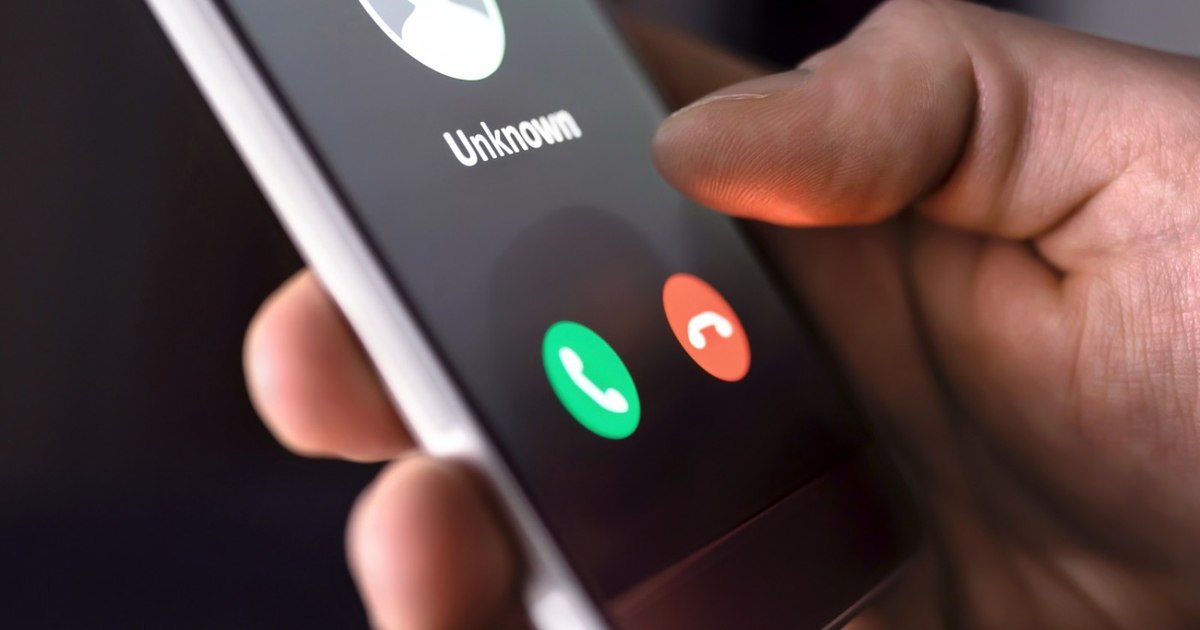
Online and phone scams are becoming more sophisticated, and more and more Romanians are reporting experiences where scammers use fake identities, clone pages and messaging apps to obtain personal data or money. Recent cases show how easily a believable scenario can be created and how important vigilance is.
Scammers are applying a new type of phone fraud. Photo by Shutterstock
One person reported an attempted fraud that begins with an apparently official phone call:
“Watch out for a trendy scam these days! It's not the one asking for money on WhatsApp.
This is what happened to me today: An unknown number called me. I answer. A man introduces himself as a representative of the Police (he gives all the details, including the address of the headquarters on Str. Regina Elisabeta) and tells me that he is dealing with a fraud case of a former employee in the banking system, who had access to the personal data of customers and who submitted a credit file in which I also participate with my signature.
After going through his text, he stopped to ask me if I understood everything so far. At that point, I asked him to clearly state his name so that I could write it down, and informed him that the conversation was being recorded (I had turned off the recording in the meantime). He hung up instantly.
The truth is, if I hadn't read a post the other day from someone who had experienced a similar scam, I may have freaked out and taken longer to figure out what was actually going on.
I wonder though, where do these guys get our personal details (full name and phone number)?“, a young woman wrote on Facebook.
Another common pattern is being bombarded with calls from abroad. Another person recounts: “For a whole week I blocked numbers that called me, especially from abroad. I answered the first call by mistake, then I rejected and blocked all of them. I couldn't hear what he was saying, because the signal was bad, and I thought it might be some kind of scheme. And I don't believe in the versions with private messages from Facebook “friends” who need help. In fact, I'm stingy in throwing money away if I don't know the problem, the person, the company clearly. Our data I think they have from the DarkNet, which gets there from banks or other institutions.“
In addition to calls and messages on behalf of “friends“, SMS phishing attempts are also circulating. “Another type of fraud concerns an SMS by which you are asked to choose the locker where your parcel will be delivered. In the SMS there is a link that if you access it you see a web page that has all the indications that it is from FanCurier, only that whatever button you click the same window appears where you have to enter your personal data”wrote another participant in the discussion.
Fraud, increasingly present on social networks
These individual experiences are also confirmed by official data. According to the latest report published by Revolut, launched in Bucharest on February 26, 2026, fraud is increasingly present in private messaging applications and on social networks.
The report shows that, globally, Meta platforms generate 44% of scams reported to Revolut in 2025. At the same time, fraud originating from Telegram is on the rise: cases have increased by 233%, and this platform now accounts for 21% of all reported scams.
Furthermore, 58% of job scams globally originated on Telegram, a sign that encrypted messaging apps are increasingly being used for complex schemes. The report also indicates a six-fold year-over-year increase in fraud originating on TikTok.
In Romania, the situation reflects the same trends. In 2025, 20% of reported scams came from Facebook, and all Meta platforms combined generated nearly half of all social media fraud. Telegram ranked second, with 19%.
The most widespread type of fraud at the local level is related to online shopping, which represents 60% of all reported cases. This is followed by scams related to jobs (15%) and those related to investments (7%). Globally, job fraud has tripled in a single year and now accounts for 22% of the total.
The report also cites a study by Juniper Research, according to which social media platforms generated around €4.4 billion in fraudulent advertising revenue targeting European users in 2025 alone.
The conclusion is clear: frauds are no longer isolated incidents, but part of a large phenomenon, well organized and quickly adapted to new technologies. Scammers use personal data obtained from security breaches, compromised databases or public information, build believable scenarios and rely on emotional reactions – fear, urgency, promises of quick profit or seemingly legitimate deliveries.
In this context, the most effective protection remains prudence: directly verifying institutions or companies through official channels, avoiding accessing links received via SMS or private messages, and refusing to provide personal or banking data following unexpected calls.
Legal advice: how Romanians can protect themselves
A legal expert explained to “Adevărul” what Romanians can do to protect themselves against the avalanche of fraud attempts. “Online frauds are no longer isolated incidents, but an increasingly frequent phenomenon, affecting both individuals and companies,” lawyer Elena Grecu, representative of a law firm with the same name, told “Adevărul”. According to her, from a legal point of view, the quick reaction of the victim is essential, because the first hours can make the difference between limiting the damage and losing money for good.
“Proper documentation and prompt reporting to the authorities and the bank significantly increase the chances of recovery and identification of the perpetrators,” she said, listing the main steps potential victims should take:
-
immediately stop all communication with the fraudster and stop providing personal or banking data
-
save all evidence: conversations, emails, screenshots, payment orders, links and profiles used in fraud
-
to urgently contact the bank to block the card, dispute the transaction and initiate the procedure for recovering the amounts
-
file a criminal complaint with the Police for fraud or computer fraud, attaching all available evidence
-
report the fraudulent account or ad to the platform where the incident occurred (marketplace, social network, website) to prevent other victims
-
to formulate, if necessary, reports to the competent authorities in the field of finance or cyber security
-
to request legal advice for the establishment as a civil party in the criminal case and the recovery of the damage
“I think more care needs to be added to any online communication. The website address says more than you think. Your first stop should be your browser's address bar. If the link starts with “https://” and is accompanied by a lock icon, it means that your information travels encrypted, away from prying eyes. But also read the domain name very carefully — criminals build fake pages with names almost identical to those of famous platforms, changing a single letter or slipping in an extra character, enough to go unnoticed at a quick glance”she explained.
On the other hand, she says, the credibility of an online store is tested before you take the card out of your wallet. Any serious platform openly displays its identification data: a working phone number, a verifiable physical address, the company's tax code and an email address. Their absence is a signal of concern. A Google search with the site name alongside terms like “scam” or “negative experiences” can quickly show you if other buyers have had unpleasant surprises. Be equally wary of prices: when a brand-name item is listed at a fraction of its usual cost, it's not a good deal – it's a trap. And text full of linguistic awkwardness, machine-translated or presented in an amateurish interface should raise immediate questions.
The moment of payment is the most sensitive of the entire process, points out the specialist: When you enter your bank details, your bank should automatically intervene with an additional level of confirmation – either a code sent to the phone, or an approval in the mobile application, or a fingerprint or facial recognition. “This procedure, known as 3D Secure, is practically a shield against unauthorized transactions. If a site takes the information without any additional verification step, it is better to abandon the order. Trusted platforms work with established payment processing providers – Netopia, EuPlătesc, Stripe, PayPal. Any request for direct bank transfer or payment through obscure channels should prompt you to close the page immediately“, warns Grecu.
The way you manage your card is extremely important. Cyber security experts suggest opening a separate account, dedicated exclusively to virtual purchases, with limited funds – or using a temporary digital card. “Never agree to store bank details on commercial platforms: if their systems are compromised, the stored information is among the first to be exposed. As for wireless networks in public spaces – coffee shops, train stations, airports – avoid any financial transactions while connected to them, as such connections can easily be
exploited by people with bad intentions”, said the expert.