On February 28, 1754, the historian, philologist, translator and poet Gheorghe Șincai was born, and in 1785 Horea and Cloșca, two of the leaders of the 1785 Uprising in Transylvania, were executed by being broken on the wheel. Also, in 1922 the politician Radu Câmpeanu was born.
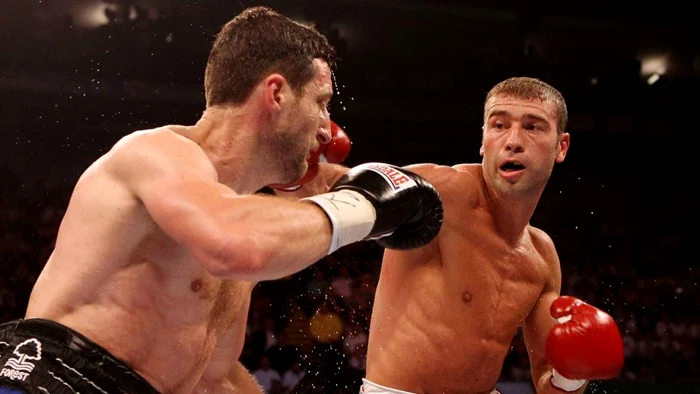
February 28: The day boxer Lucian Bute, former IBF world champion, was born. PHOTO: Archive
1754: The leading representative of the Ardelene School, Gheorghe Şincai, was born
Born in the town of Râciu de Câmpie, the historian and philologist Gheorghe Şincai studied at the Reformed College in Târgu-Mureș, later in Cluj, Bistrița, Blaj, Vienna and Rome.
Gheorghe Șincai was passionate about Romanian history, being interested in the Latin origin of the Romanian people and language. In Vienna and Rome, he studied alongside the philologist Samuil Micu, with whom he would write the first printed grammar of the Romanian language, “Elementa linguae daco-romanae sive valachicae”. His most important historical work is “Chronicle of the Romanians and several nations”.
The historian and philologist Gheorghe Şincai died on November 2, 1816, in Sinea, near Kosice, in present-day Slovakia.
1785: Horea and Cloșca were executed by hanging on a wheel in Alba Iulia
238 years ago, in Alba Iulia, on the Hill of Forks, Horea and Cloșca, two of the leaders of the Transylvanian Revolt of 1784, were executed by breaking them on the wheel. Crisan had hanged himself in prison.
In order to catch Horea, the nobles put a reward of 300 guldens on his head. By treachery, on December 27, 1784, by the forester Anton Melzer from Abrud, Horea and Cloșca were caught in the forest of Scorușet in the Gilău Mountains, and on January 30, 1785, Crișan was also taken prisoner, who was sold by nine peasants from Cărpeniș.
The execution by breaking on the wheel took place after a predetermined ritual. The one who was executed first was Cloșca who received 20 blows, while Horea was present. Later, Horea followed, who was given four blows that crushed his legs, then the executioner Grancea Rakoczi from Alba Iulia, crushed his chest and after another eight or nine blows he died.
1907 – Romanian peasants openly start fighting against the landlords during the Peasants' Uprising of 1907
On February 28, 1907, Romanian peasants openly started fighting against the landlords during the Peasant Revolt of 1907. Peasant bands occupy the Iloaiei bridge and Tîrgu Frumos in Iasi county. The peasant uprising of 1907, starting from the north of Moldova, reached Oltenia, encompassing all of Romania. Several properties of the landlords were destroyed, and numerous tenants were killed or injured.
The conservative government (Conservative Party) could not cope with the situation, so Dimitrie Sturdza's liberals took over power. The liberals did what the conservatives couldn't bring themselves to do, which was to use the army and cannons against the peasants. It was a real tragedy, around 11,000 to 12,000 people were killed, an unconfirmed figure because a complete report of the victims was never made.
1922: The politician Radu Câmpeanu was born
Born in Bucharest, the politician and founder of the National Liberal Party (PNL) Radu Anton Câmpeanu was head of the Liberal Youth before the Second World War. He graduated from the Faculty of Law and Economic Sciences in Bucharest.
After the war, Câmpeanu took part in the anti-communist demonstrations of February 24-28, 1945. During the period 1947-1956 he was a political prisoner.
After his release from detention, he emigrated to France with his wife Monica Papadopol and their son Barbu. In 1990, he returned to the country and participated in the re-establishment of the PNL whose president he was between 1990 and 1993, being elected senator in the 1990-1992 legislature in the municipality of Bucharest.
Between February and May 1990, he was vice-president of the Provisional Council of the National Union (CPUN). Between November 2004 and December 2008, he was a senator from Bucharest, from the PNL-PD Alliance.
Radu Anton Câmpeanu died on October 19, 2016.
1954: Actor Doru Ana was born
The famous theater and film actor Doru Ana was born on February 28, 1954, in Bucharest, and died on October 10/11, 2022. He graduated from the Capital Theater and Cinematography Institute, class of 1980.
He played roles in successful Romanian series and films, such as: “Adela” (2021), “Fructul oprit” (2018), “La drum cu dad” (2016), “Ultima zi” (2016), “Shadows” (2014), “Carmen” (2013), “Japanese Dog” (2013), “După hills” (2012), “Bet with life” (2011), “Adalbert's Dream” (2011), “The Other Irina” (2009), “Medal of Honor” (2009), “The Silent Wedding” (2008), “Currency Exchange” (2008), “The Death of Mr. Lăzărescu” (2005), “Hacker” (2004), “Occident” (2002), “Goods and Money” (2001), “Terminus paradis” (1998), “Somewhere in the East” (1991) and “Freshman Spring” (1985).
His theatrical activity took place on the stages of Bulandra, Comedie, National, Creangă theaters, or in numerous theaters in the country, in Brașov, Sibiu or Ploiesti.
1980: Romanian boxer Lucian Bute was born
Born in Pechea commune, Galati county, Lucian Bute was the IBF super middleweight world champion for almost 5 years, between 2007 and 2012. During this period, the boxer defended his belt nine times.
As an amateur, in 1999, the boxer won the bronze medal at the World Championship in Houston and the gold medal in 2001 at the Francophonie Games.
In 2003, he became a professional boxer, signing a contract with the Canadian club Interbox. In 2007, Bute won the match with Sakio Bika, qualifying for the final for the IBF title, offered by the International Boxing Federation. In the same year, Bute defeated Alejandro Berrio, becoming the third professional Romanian boxer to win the title of world champion.
In 2012, Lucian Bute obtained Canadian citizenship. The boxer ended his career with 37 fights of which 32 won (25 by KO) and five lost.
1997 – King Mihai returned from exile in Romania, being the first time since 1989 when the arrival of the sovereign is accepted by all political formations. He took back his Romanian passport
King Mihai I of Romania was the last sovereign of Romania, reigning in two terms: between 1927–1930 and 1940–1947. On August 23, 1944, he played a decisive role in the return of arms against Nazi Germany, an act that shortened the war on the Eastern Front and brought Romania closer to the Allies. After the gradual establishment of the communist regime, its political influence was increasingly limited, in the context of pressures exerted by the Soviet Union and the communist-dominated government.
On December 30, 1947, King Michael was forced to abdicate, at gunpoint, and Romania was proclaimed a people's republic. He was soon forced to leave the country, beginning a long exile that lasted over four decades. He lived mainly in Switzerland and Great Britain, being prevented for a long time from returning to Romania. Only after the fall of the communist regime, in 1989, was he allowed to gradually return to the country, becoming a respected figure in Romania's recent history.
2022: The Bucharest Parliament adopted a statement condemning Russia's aggression against Ukraine
On February 28, the Parliament in Bucharest adopted a statement condemning Russia's aggression against Ukraine, demanding the withdrawal of all Russian troops and highlighting the support “strong for the sovereignty and territorial integrity of Ukraine and for its legitimate aspirations for integration into NATO and the EU“.
339 votes were registered “for”, one “against” and two abstentions.