KrasRussian Railways has increased the transportation of non-ferrous metals in containers from Abakan to China in 2025


27 February 14:41
In 2025, Krasnian Railways multiplied the transportation of non-ferrous metals in containers from the Abakan station (Republic of Khakassia) to the People's Republic of China. Almost 4.6 thousand TEU containers were loaded for export, which is 15 times higher than in 2024.
Positive dynamics were achieved thanks to the modernization of the Terminal and Logistics Center (TLC) of JSC Russian Railways at Abakan station.
To meet the growing demand for transportation of regional export products by rail in an eastern direction, a specialized site was built at the TLC for processing large-capacity containers and forming express container trains.
The entire route from Abakan station to the land border crossing Zabaikalsk – Manchuria, the length of which is more than 3 thousand kilometers, is covered by such trains in 5-6 days.
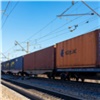
In general, at the end of 2025, the number of loaded containers sent from Khakassia by rail in all types of traffic amounted to 20.9 thousand TEU. This is 30% more than the 2024 result. In the total volume of container shipments, transportation of non-ferrous metals (aluminum) exceeded 70%.
It should be noted that containerization of cargo flows is an important direction in the development of logistics services on the Krasnoyarsk Railway. The demand for container transportation in the Republic of Khakassia is growing.
Along with the products of non-ferrous metallurgy enterprises, grain, lumber, chemicals, and coal are transported by rail in universal containers.
The terminal and logistics center of JSC Russian Railways at Abakan station (Republic of Khakassia) is a specialized unit that provides comprehensive transport and logistics services of the holding, including modern services in the container transportation segment.
Accelerated container trains are being formed at TLC sites: they allow products to be delivered faster and on a “just-in-time” basis. The shipper has the opportunity to more effectively plan logistics, rationally use resources, and optimize transportation costs.
Related links: