Ela Crăciun: “Social media sells a permanent state of control. It seems that everyone else is safe, calm, happy. In reality, they are the exact opposite!”

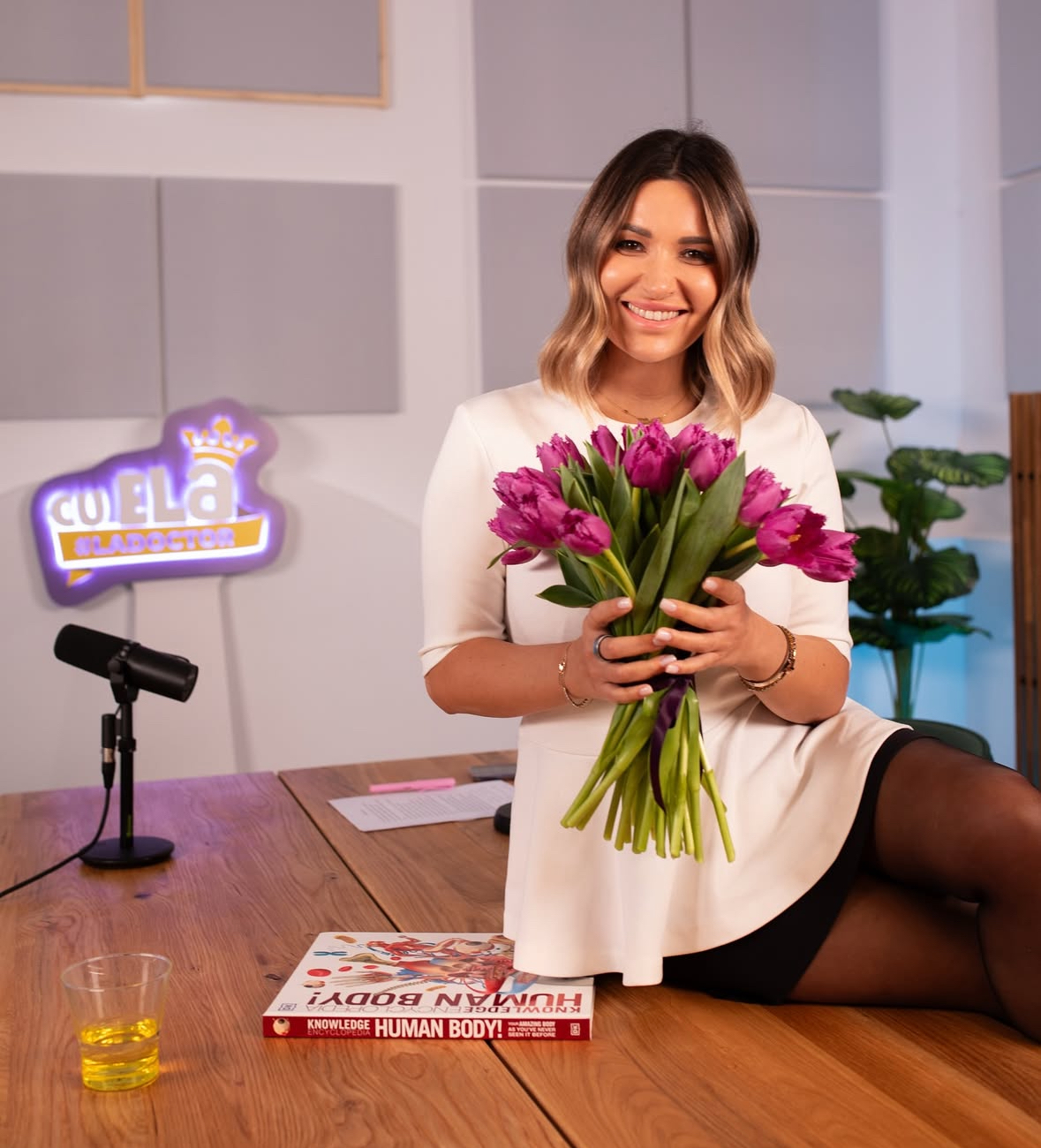
Ela Crăciun is one of the most visible presences in Romanian social media, a content creator with a solid community built in years of constant exposure, dialogue and commitment. It has turned the online into a space for conversation about family, the body, vulnerability and balance, but beyond the coherent picture in the feed there is a story of boundaries, pressure and carefully weighed choices.
Even though online Ela seems very relaxed, she also often talks about fatigue, doubt, and the moments when the pressure to be “present” becomes oppressive. She is the mother of three children. The tens of thousands of followers on Instagram did not come overnight, but while she was also busy with her career: Ela Crăciun became known especially as a blogger, being a producer and TV presenter, with a focus on parenting, lifestyle and family.
In the interview below he explains the fine line between authenticity and strategy and openly admits that online is a stage, not an intimate diary. Authenticity doesn't mean total exposure, it means honesty. Strategy is not a mask, but a protection.
If you feel that you are tired of comparing your life with the carefully edited versions of others, we are waiting for you at the Refericirea Conference, 4th edition, on March 21, at ARCUB Bucharest, for a necessary conversation about the difference between what is seen and what life really is. Along with Ela Crăciun, Dr. Vlad Stroescu, psychiatrist specialist, Iulia Barca, psychologist and psychotherapist, and Dr. Andreea Moroianu, dermatovenerology specialist, will take the stage. It will be a day about pressure, balance, health and reality told without filters. Tickets are available HEREand places are limited.
The message given by Ela Crăciun is all the more relevant in a context where the border between reality and digital performance has blurred dangerously. Social media sells the idea of permanent control and a clean, orderly, safe life. In reality, says Ela, most people are tired, worn out, vulnerable. The difference between what is seen and what is thus becomes an essential theme for our emotional health.
Hotnews: Social media has made you famous, but what part of you has always remained invisible to the public?
Ela Crăciun: The tiring part. Who is no longer in the mood to explain, to motivate, to be an example. People see an active, involved, omnipresent man, but they don't see how much emotional consumption that entails. I don't see the days when you have nothing left to say, but you still have to be “there”. I don't see the doubts, the fears, the moments when you wonder if it still makes sense or if you've given too much of yourself. I think that exactly my human, imperfect part, which is not always coherent or strong and which, paradoxically, is the most real, has remained invisible.
Where does authenticity end and strategy begin when building content online?
Authenticity doesn't mean saying everything, all the time. This is a very big confusion. Authenticity is not lying. Strategy comes when you choose which part of you takes place in a public space and which part remains protected. I don't feel like I'm playing a role, but I'm aware that online is not an intimate diary. It's a scene. And on any stage you need structure, rhythm, breaks. Authenticity is who you are, strategy is how you choose to show that without losing yourself.
What is the biggest illusion that social media unapologetically sells?
That everyone knows what she's doing with her life. That others are safe, calm, happy. Social media sells a permanent state of control, and the reality is the exact opposite: most people are confused, tired, searching. This illusion creates enormous pressure and a constant feeling of inadequacy, especially for those who look on the outside and think they are the only ones feeling lost.
Have you ever felt the pressure to look good even when you weren't good at all?
Yes, and I think it would be hypocritical to say otherwise. There's real pressure not to “ruin the vibe”, not to disappoint, not to bring down the energy of the feed. The problem is that life doesn't work in filters. I had moments when I was vulnerable, tired or sad, but the outside had to look “ok”. Over time I learned to stop. Or to disappear a little, not to imitate the good. I think it's healthier not to post than to lie.
Do you think people still differentiate between reality and online performance, or have the two permanently blended?
For many they got mixed up. And that's dangerous. When you start to think that life has to look like online, there is frustration, comparison, the feeling that you are not enough. Online is mostly a performance: sometimes beautiful, sometimes toxic. The reality is much messier. I think we need, as a society, to relearn the difference between what is seen and what is.
What responsibility do you feel to your community when you talk about life, body, relationships, success?
I feel a great responsibility not to sell illusions. Not to promote the idea that there are quick fixes, perfect bodies without effort, relationships without work, or success without failures. People don't need yet another “ideal” story, but the truth told with decency. If I can do anything, it's to normalize the imperfection, the process, the small steps. I believe that sincerity, said calmly, is more valuable than any exaggerated motivational message.
What was the moment when you felt that social media was taking more from you than it was giving you?
When I realized I was paying more attention to what I was going to post than what I was actually living. When real moments were starting to be filtered by “does this go online?”. That's when I knew I had to draw a line. Social media should be a tool, not a filter through which you live your life.
What's never seen in a “perfect” post, but makes all the difference in real life?
Internal conversations are not visible. You can't see the fears, the negotiations with you, the evenings where you wonder if you're on the right track. The compromises and waivers are not visible. Real life is not about beautiful frames, it's about what you do when no one is watching. Everything is built there.
How do you relate to validation? Do likes still have power over you or have you learned to disarm them?
They had power, I don't deny that. It is impossible to be completely immune. But I learned that external validation is unstable. Today it's gone tomorrow. If you build your self-esteem on likes, you will always be vulnerable. Today, my peace of mind is more important to me than the immediate reaction of the public.
What effect does daily consumption of filtered content have on self-esteem, especially for women?
It is extremely harmful. It creates the feeling that you are not doing enough, that you are not looking good enough, that you are not “there”. Women are already under enormous pressure related to body, age, roles. Social media amplifies this. That's why I think it's vital to be more careful about what we consume and how much we consume. Not everything that is popular is healthy.
If you could reset people's relationship with social media, what would be the first rule?
Don't compare yourself to something you don't know deeply. To understand that what they see is a selection, not a complete reality. And to remember often that their life does not have to be “content”.
What would you say to those who compare their everyday lives to their “Instagram” lives?
I would tell them that their life, with all its imperfections, is far more valuable than a pretty picture. That there's nothing wrong with having ordinary days, real bodies, complicated relationships. And that the real success is not looking good online, but feeling good when the phone is closed.
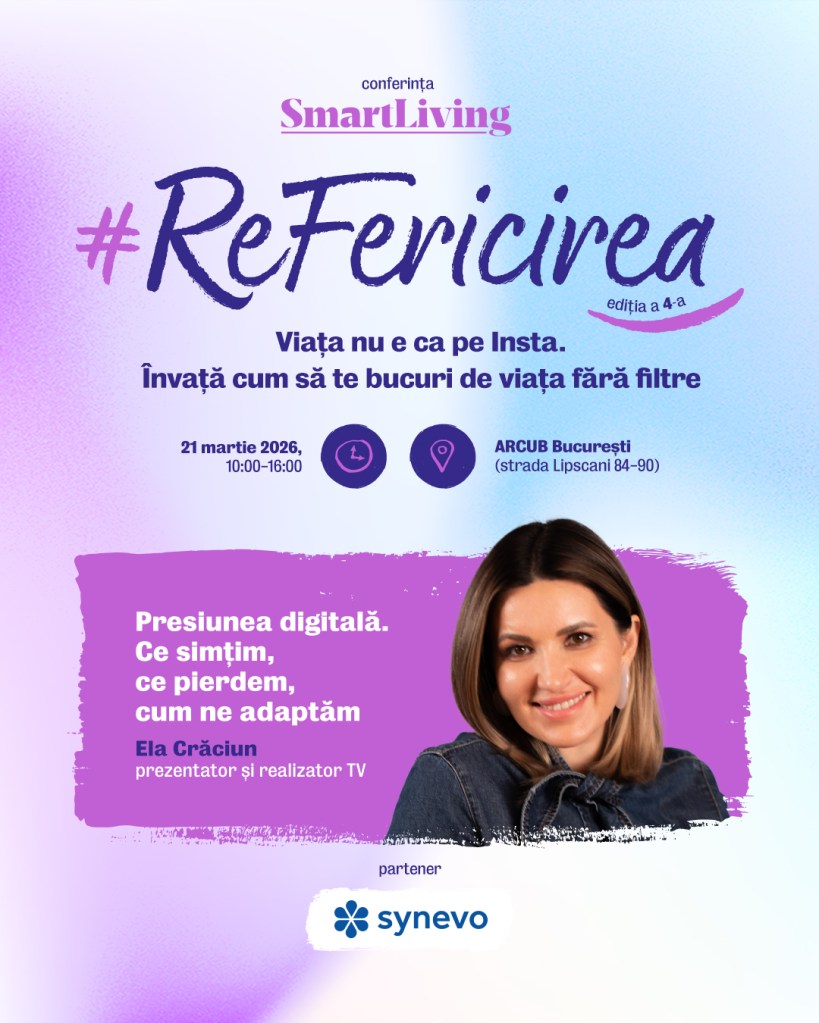
The ReFericirea Conference, 4th edition. Life is not like Insta
The ReFericirea conference is an event for those who feel they no longer want a perfect life for social media, but one lived with more peace, clarity and normality. A space for calm conversation, understood by all, about things that concern us all. You can buy tickets from HERE.
Speakers at the Refericirea Conference, 4th edition
Dr. Vlad Stroescu, primary psychiatrist
Dr. Vlad Stroescu has clinical experience in the treatment of anxiety disorders, depression and burnout. He is known to the general public for his balanced interventions in the media space, where he explains the connection between stress, lifestyle and mental health in a way that everyone can understand. His approach is firmly anchored in science, without unnecessary dramatization, which has turned him into one of the credible voices of contemporary Romanian psychiatry.
Iulia Barca, psychologist and psychotherapist
Iulia Barca specializes in anxiety, emotional regulation and adaptation processes to major life changes. In his practice, he combines scientifically validated interventions with concrete tools, applicable in everyday life. She is appreciated for the clarity and structure with which she approaches themes such as fear, resilience and rebuilding personal balance.
Dr. Andreea Moroianu, dermavenerology specialist
Andreea Moroianu has experience in medical and aesthetic dermatology. It is known for promoting a correct care, adapted to each skin type. In public appearances he talks about the impact of stress, pollution and lifestyle on the skin, bringing explanations based on evidence, not trends.
Ela Crăciun, filmmaker and TV presenter
Ela Crăciun is one of the best-known content creators in the area of parenting and lifestyle in Romania. He has built a large community through his authenticity and direct approach to topics related to family, career and work-life balance. She is an author and a constant presence online, where she talks openly about the realities behind the perfect social media image.
AGENDA
10.00-10.30 Welcome coffee
10.30 – 11.30 Dr. Vlad Stroescu, psychiatrist specialist – Health means peace. (How stress affects your tests, what sleep has to do with immunity, how to recognize the signs of body overload and what you can immediately change in your routine)
11.30—12.30 Iulia Barca, psychologist and psychotherapist. – When life changes. How we find our stability (On adaptation, the inevitable fear behind big or small changes, and how we can rebuild our balance using real resources)
12.30 – 12.45 Coffee break
12.45-13.45 Dr. Andreea Moroianu, dermatovenerology specialist – Beauty without pressure. Care that does not exhaust you (What does the right care mean in a time when the skin is pressed by stress, lack of sleep, pollution and unrealistic ideals)
13.45 – 14.15 Lunch break
14.15 – 15.15 Ela Crăciun, TV presenter and producer – Digital pressure. What we feel, what we lose, how we adapt (About the fear of not keeping up, about the anxiety that we will be “outdone”, about the constant comparisons and the feeling that at any time something can happen that changes the rules of the game)