From clear support to a cold game of interests. This is how the American strategy towards Ukraine changed during the four years of the war [ANALIZA]


Just before the invasion, the American media, citing numerous sources in the White House, intelligence and Pentagon, warned that Russia was preparing for full-scale military operations. These disturbing reports were received with skepticism.
When the war began, Moscow continued to publicly claim that nothing extraordinary was happening and that it was merely a “special military operation.” However, the American public and the political establishment clearly perceived the commencement of hostilities as a full-scale invasion. Critics and skeptics had to admit that they had underestimated the seriousness of the threat.
It is rare for American political forces to show unity on foreign policy. Support for Ukraine has become one of such rare cases. In the first days of the war, President Joe Biden condemned Russia's actions while declaring that American troops would not participate in hostilities.
This statement seemed strategically shortsighted: it could have strengthened Moscow's belief that there would be no direct US intervention and increased the scope for further escalation of the conflict.
Washington officials did not always choose the right words to describe their position. One American diplomat in Kiev said that “Russia must suffer a strategic defeat.” Later, press officers from the State Department and the White House had to explain the meaning of this phrase more than once. President Joe Biden, Secretary of State Antony Blinken and other administration officials then emphasized that by going to war, Russia had already suffered a strategic defeat, given its losses, sanctions and international isolation.
The American interpretation was not about defeating Russia as a state, but about preventing it from achieving its goals in Ukraine. However, Russian propaganda only heard what it wanted to hear.
Broadly speaking, Biden's position came down to the attitude of “supporting Ukraine as long as necessary”. In practice, this meant unprecedented military and humanitarian aid, as well as American leadership in creating an international coalition supporting Kiev. The most visible manifestation of such coordination was the Ramstein series of meetings. Congress passed a number of laws regarding aid to Ukraine and, according to various estimates, allocated over $180 billion for this purpose. (PLN 644 256 million).
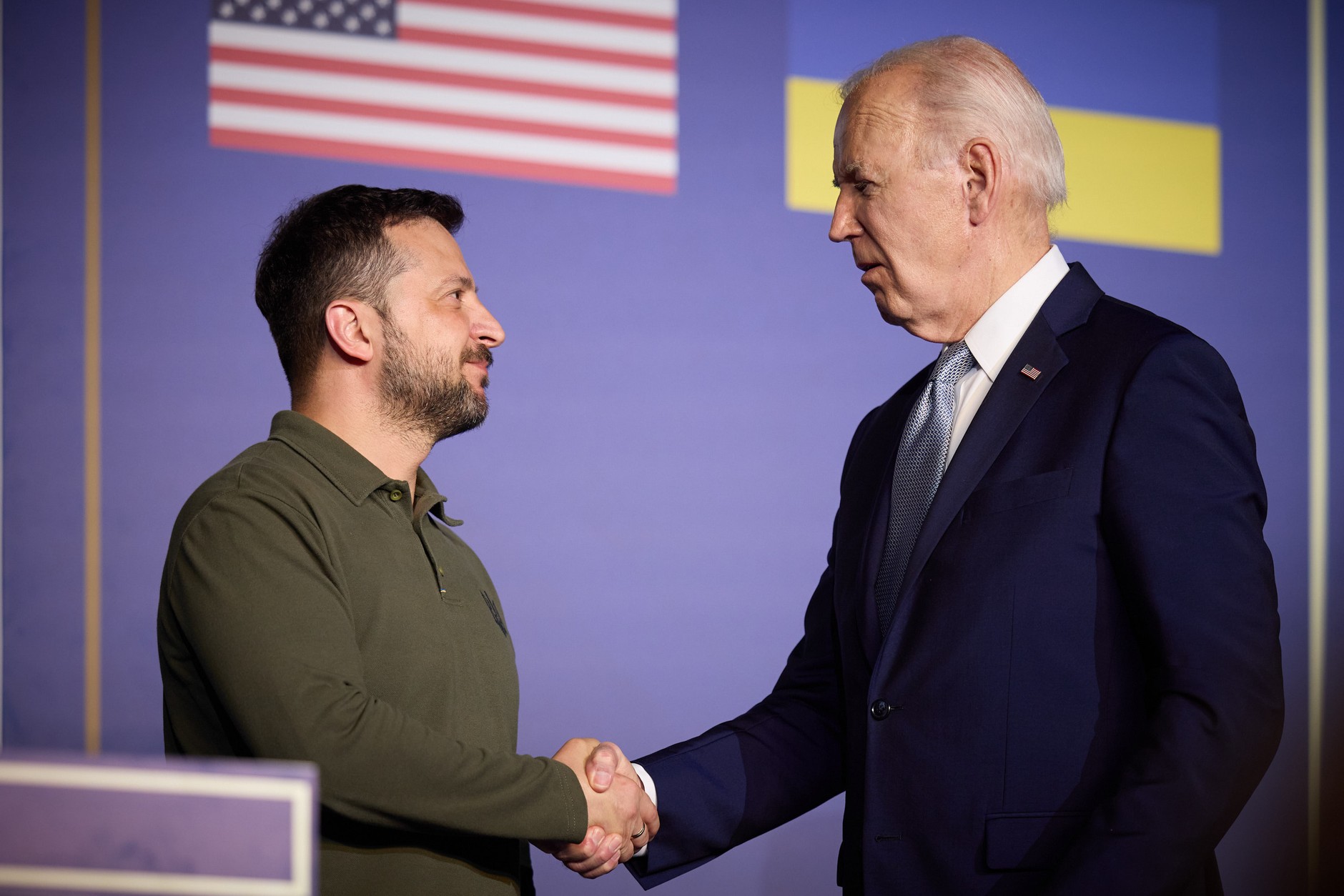
Volodymyr Zelensky and Joe Biden during a joint press conference on the sidelines of the G7 summit in Savelletri, Italy, June 13, 2024.Ukrainian Presidency / Handout/Anadolu via Getty Images / Getty Images
The Ukrainian issue has also become an important factor in the domestic policy of the United States. Nearly every influential congressman spoke out in support of Kiev, and Congress regularly approved new aid packages.
Some Republican senators had doubts about the transparency of spending, which is why some decisions were delayed due to demands for stronger auditing. Nevertheless, the White House, Democrats and most Republicans have long maintained a consensus that Ukraine should be helped.
With the start of the 2024 presidential campaign. this consensus began to dissolve. The Republican favorite was Donald Trump, who was skeptical about the multi-billion aid packages for Kiev from the very beginning. It was unprecedented that Trump, without holding any official position, used his political influence to stop the adoption of another package. As a result, an additional package worth approximately USD 24 billion. (PLN 85,901 million), proposed by the Biden administration in 2024, has not been approved by Congress.
Trump's emergence heralded a significant shift in American policy, although few could say with certainty at the time what direction it would take. While still president-elect, before his inauguration, Trump met with Ukrainian President Volodymyr Zelensky in informal meetings. He no longer repeated Biden's formula of support “as much as needed”, but left room for cautious optimism.
On the Ukrainian issue, Trump consistently repeats at least two theses.
The first: “this is Biden's war, and it would not have happened under Trump.” Rather, it is a political slogan related to his refusal to admit defeat in the 2020 elections.
Second: “the war must end.” However, it almost never specifies under what conditions an agreement should be reached. In his rhetoric, the war in Ukraine is one of the regional conflicts that he intends to personally end.
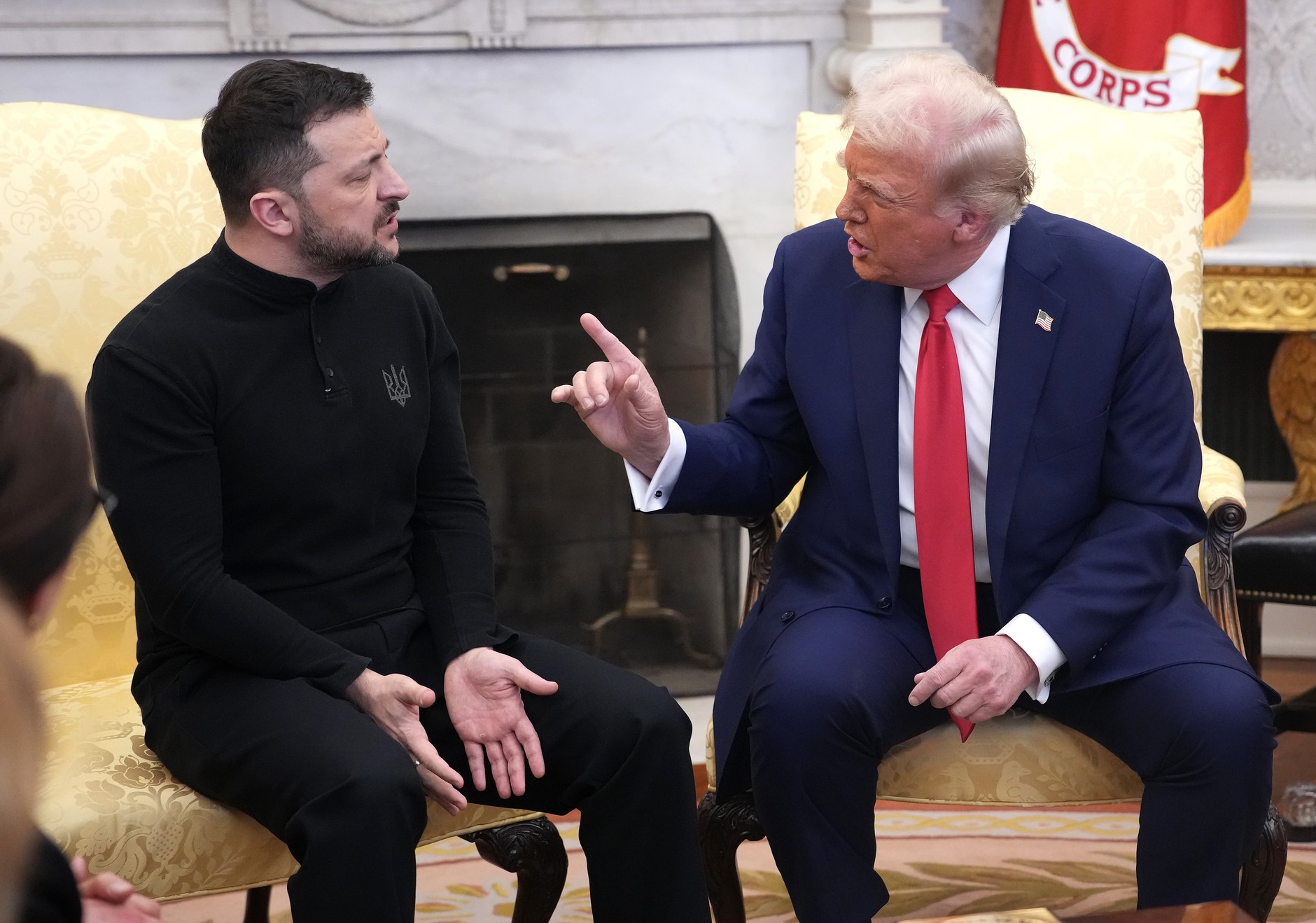
Volodymyr Zelensky and Donald Trump in the Oval Office of the White House, Washington, February 28, 2025.Andrew Harnik/Getty Images/Getty Images
It may sound a bit pathetic, but Trump actually managed to break the deadlock in the peace process. He has identified two tracks – US relations with Ukraine and US relations with Russia – and is acting on each of them separately. In both directions, Trump promotes agreements on strategically important minerals and seeks to secure favorable contracts for American companies. He sees the weak points of both sides well and shows readiness to put pressure on both Moscow and Kiev.
End the war by any means
People in Russia often wonder how Trump's generally benevolent rhetoric toward Putin lines up with tough U.S. actions against Moscow's allies, from Venezuela to Iran, and sanctions pressure on India over its purchases of Russian oil. Therefore, Trump cannot be considered a clear ally of Russia: he has repeatedly sharply criticized Putin. The same applies to Ukraine.
The Trump administration has repeatedly declared its intention to include Europe in the peace process, which Moscow categorically disagrees with. Moreover, the Russian side is trying to convince Trump that it is European allies that are hindering the resolution of the conflict. For its part, Europe tried to present a different position, and the main player influencing Trump was NATO Secretary General Mark Rutte.
The obvious problem remains China. Beijing publicly takes a reserved stance on the war in Ukraine, though in practice, it cooperates closely with Russia. One of Trump's key concerns is further rapprochement between Moscow and Beijing. However, solving this issue is much more difficult than offering Russia more attractive options.
As the fifth year of the war began, the parties entered into another round of negotiations. The very fact of their continuation is important, but for now there are no concrete prospects. It looks like that Trump still has no clear plan to resolve the conflictbut his intention to see it through is beyond doubt.