Trump is turning the world table over. This one issue will determine his presidency


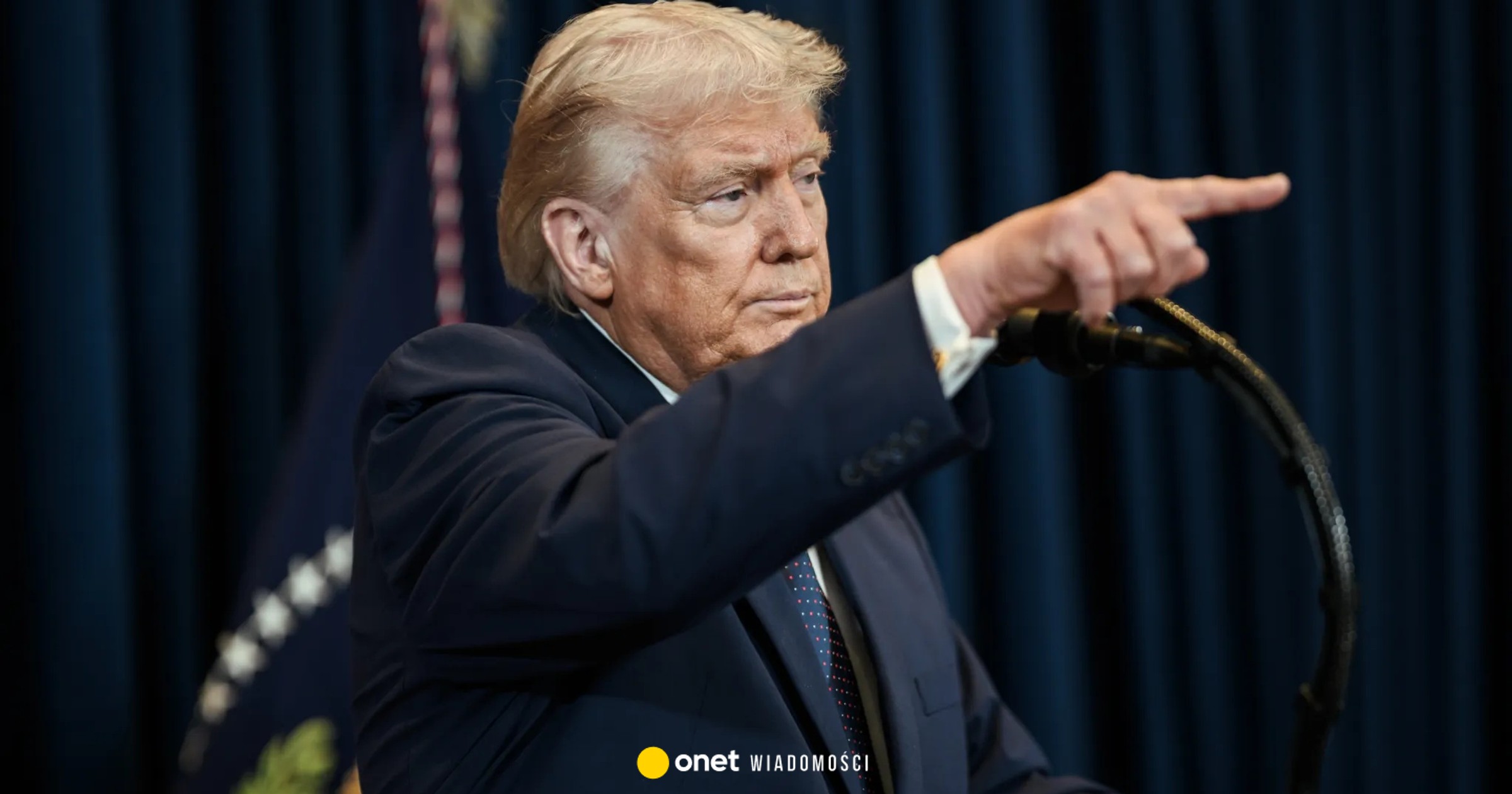
“Ownership is very important,” Trump said of the planned takeover of the Danish island. Then he emphasizes his words:
According to Trump, if in doubt, he will have to decide between remaining in NATO or joining Greenland.
Trump's obsession with the world's largest island has many causes. One of the most frequently mentioned by his supporters is: Greenland's enormous strategic importance in the North Atlantic.
Experts have been raising this topic for years and point out one key factor.
They are particularly important in the context of intensifying competition between world powers climate change. The prospect of melting ice around the North Pole has sparked worldwide interest in both trade routes and resource exploitation. Russia has been expanding its military bases in the region for years and making increasingly aggressive territorial claims.
The article continues below the video
China also wants to take part in these activities. They declared themselves an Arctic country and presented the concept of the “Polar Silk Road”. Beijing, together with Moscow, is developing the northern sea route along the Russian coast, which shortens trade routes between China and Europe by 40%. Cargo ships there can be much larger than the maximum size that can accommodate the Suez Canal.
In July 2023, the Arctic shipping corridor was officially opened along the Russian coast. In the following years, China and Russia developed regulations on navigation, freight transport planning and, in the future, year-round container services.
Last fall, the first Chinese company launched an express container service that connects the Chinese port of Ningbo-Zhoushan with the UK, the Netherlands, Germany and Poland. However, so far this service is only offered in the warmer half of the year.
The West has significantly neglected the issue of security in the Arctic in recent decades. Russia has a huge military advantage there. Meanwhile, the North Atlantic would be “one of the key fighting areas in the Russian-European war,” writes Italian military expert Thomas Theiner.

Nuuk, the capital of Greenland (illustrative photo)Keith Levit/Design Pics Editorial/Universal Images Group via Getty Images, Design Pics Editorial / Contributor / Getty Images
Military planners during the Cold War assumed that the Soviet Union's Northern Fleet stationed in Murmansk would try to break through to the south and then defeat the so-called GIUK Isthmus between Greenland, Iceland and Great Britain and attack American ships transporting weapons, ammunition and soldiers to Europe.
According to Theiner, NATO had an impressive military force at the time, including about 250 submarines and warships, and more than 200 naval aircraft in the North Atlantic to repel the Russians.
But while the Russians have rebuilt their fleet, which was significantly reduced after the end of the Cold War, Europe, after decades of cuts, currently does not have enough ships and planes to keep the Russians at bay. This also applies to Great Britain, a former maritime power, which took over most of the tasks related to securing the GIUK Isthmus during the Cold War, but is now only a shadow of its former power.
The Trump administration is furious that Europeans are no longer able to contribute to securing the GIUK Isthmus. And not only against the threat from Russia, but also against China.
Americans fear that in the event of a war over Taiwan, the Chinese may penetrate the Arctic and the GIUK Isthmus to threaten the eastern coast of America with their submarines. The United States would then have to leave the naval forces needed to fight for Taiwan in the Atlantic to pursue the Chinese vessels.
“The lack of defense investment by the UK, Canada, France, Germany, the Netherlands, etc., and the resulting shortage of ships and aircraft, will force the US Navy to devote most of its ships and aircraft to patrolling the GIUK Isthmus, which will directly impact its ability to fight China,” Theiner writes.
For Americans, Greenland is crucial not only to protect Europe from Russian attack, but also to protect the American continent. “From Washington's point of view, Greenland is a strategic asset,” writes Justina Budginaite-Froehly of the Atlantic Council think tank. “Its location is important in the context of monitoring Russian – and soon potentially also Chinese – submarines entering the Atlantic.”
“Europe failed to recognize the importance of the island”
Early warning and missile monitoring radars deployed in Greenland are directly connected to the US territorial defense system. “In addition, Greenland is now becoming a key communication hub for satellite control, space monitoring and satellite surveillance,” says Budginaite-Froehly.
Greenland's geography allows for the creation of satellite ground stations and infrastructure ensuring secure communication, which are now crucial in the face of the ability of hostile states to develop space weapons and cyberspace.
Within the American military structure, the island no longer belongs to the European Command, but to the Northern Command. “This reflects the island's growing importance in the emerging competition between great powers in the Arctic,” Budginaite-Froehly said.
However, Andreas Osthagen from the American think tank Arctic Institute based in Washington warns that the Trump administration overestimates the importance of Greenland for Arctic security. “The Arctic Ocean, which makes up about half of the Arctic, is six times larger than the Mediterranean Sea,” writes Osthagen. “Greenland is therefore only a small and not very important part of the larger Arctic geopolitical picture.”
The island is not even located on the currently used shipping route through the Arctic; for example, Norwegian Kirkenes is much closer. According to Osthagen, Norway and Alaska are more important to contain the threat from Russia and China.
Greenland, however, is a symptom of how much Europe and NATO have neglected the changed security situation in the Arctic so far.
— Europe's problem is not that Washington sees Greenland as a strategic asset. Rather, it is that Europe has largely failed to recognize the importance of this island, says security expert Budginaite-Froehly. “For decades, Greenland has been treated as a politically sensitive topic rather than a strategic priority.”
Only now has the West begun to notice the threats. “In an era of new power competition, a territory that is weakly defended, softly ruled and externally dependent is an invitation to exert pressure, regardless of its legal status,” says Budginaite-Froehly.
Europeans realized very late that they had to do something to alleviate Americans' security concerns. So they are currently investing in satellite communications infrastructure in Greenland to reduce their dependence on Norway's Svalbard and increase their resilience in the Arctic. Denmark has increased its defense spending in the Arctic and is considering deploying new forces in Greenland.
Apparently, Europeans also want to increase NATO's defense capabilities in the Arctic. During a closed meeting in Brussels, alliance ambassadors agreed that the organization should strengthen its position in the Arctic. It is considering using intelligence capabilities to better monitor the area, increasing Arctic defense spending, moving more military equipment to the region, and conducting more military exercises in the area.
However, it is doubtful whether this will help persuade Trump to make concessions on Greenland. Especially since, in the near future, Europe's reduced armed forces will not be sufficient to really adequately respond to the new threat situation in the Arctic.
However, the occupation of the island by the Americans could ultimately lead to the collapse of NATO, because Greenland is the territory of Denmark, which is also a member of the alliance. And this would weaken the U.S.'s ability to compete with other powers in the long term.