INTERVIEW. “Clan-Based Organization”. The reform in which all governments broke their teeth. What will Bolojan do?

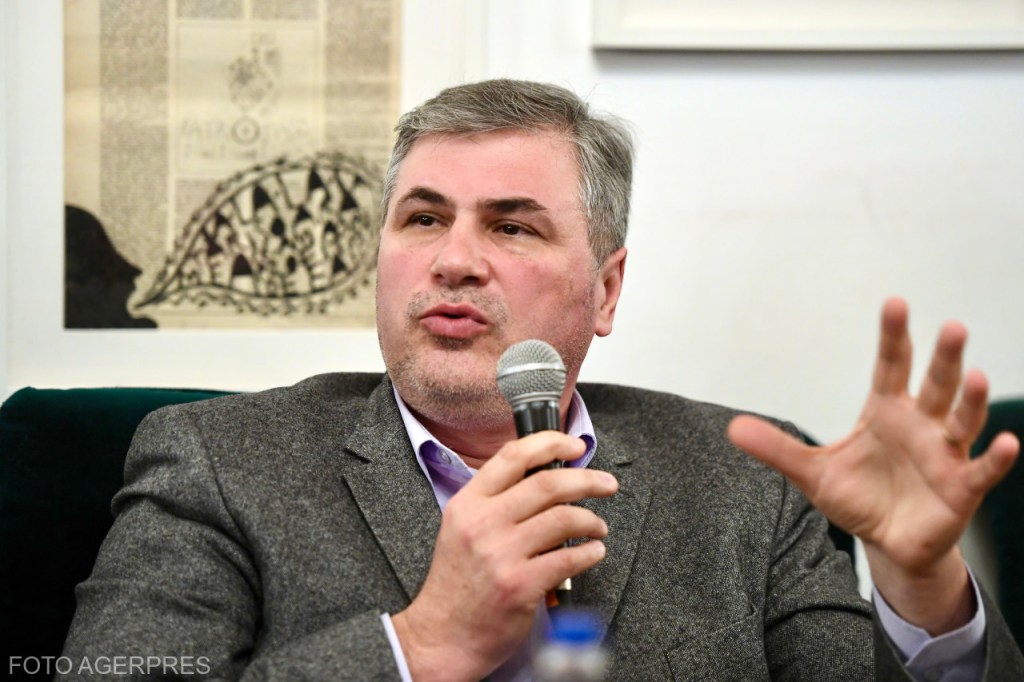
“There are dozens of communes that have less than 500 inhabitants and more than 1,200 with less than 2,000 inhabitants. In the overwhelming majority of them, they cannot support themselves from their own funds,” says historian Dorin Dobrincu, who studied the issue of administrative organization reform for a long time, in an interview for the HotNews audience.
- “Administrative reform” is a dry term, difficult to discuss, but the day-to-day future of 19 million Romanians may depend on it. HotNews is publishing an interview today that tries, in simple terms, to illuminate some of the discussion.
- The regionalization of Romania would not mean the abolition of the counties and the creation of structures superior to them that would coordinate “strategic issues”, claims Dorin Dobrincu.
- A possible landmark is the Polish one. This is a multilevel administrative-territorial system: voivodeship (the equivalent of the region), powiate (intermediate level between the region and municipalities or communes), and communes (urban or rural).
Historian Dorin Dobrincu is one of the coordinators of the work “Regionalization. Towards a model of good governance of Romania”. He claims that a true reform in local administration does not only mean cutting expenses, as Prime Minister Ilie Bolojan is doing, but also other measures such as merging municipalities or rethinking the duties of county councils. “I admit that it is not easy to change a rigid system dominated by clan interests,” the historian says.
Although we kept inventing cities, the urban population remained the same, in terms of share
– Mr. Dobrincu, how did we end up with cities in Romania with 6,000 inhabitants, such as, for example, Tălmaciu from Sibiu county?
– Dorin Dobrincu: Romania has statistically inflated the urbanization, but it has not managed to really urbanize the localities recently introduced in this category, nor some of the older cities. It's like taking a village, putting a nameplate on it that says “Town”. You would raise some taxes and pretend that from tomorrow there is automatically infrastructure, non-agricultural jobs, better public services, transport, culture, utilities, economic dynamism. It is a veritable administrative Potemkiniad.
Regarding cities, they must have a high population density and be the place where social, cultural and economic activities, especially non-agricultural, take place. The law states that a city should have, “as a rule”, a minimum of 5,000 inhabitants.
In the years 1990-2000, due to the desire to increase the level of urbanization, even strictly statistically, a significant number of communes were transformed into cities.
Even so, the urban population of Romania was at the last census (2021) of 52.2%, and the rural population of 47.8%. In practice, we have remained quite close to the level of 1989. Regarding urbanization, we are among the last countries in the European Union, which has an average of about 75%.
Some cities want to become a commune again
I recall an interesting phenomenon, namely the desire of the administration and the population of certain cities, which obtained this status two decades ago, to return to the status of a commune. The reasons are of a financial nature.
The respective localities would either have no benefits as a result of the urbanization, which would be more on paper, or they would be too small, moreover, the taxes would be much higher. A case was registered, of the town of Băneasa, Constanța county, which was declared a town in 2004 and which in 2008 returned to the status of a commune.
Metro losses are covered from the pocket of the entire country
– Bucharest has always had certain benefits, compared to the rest of the towns: public transport among the cheapest in the country, heating as well. Are these anomalies or are they logical, considering that Bucharest contributes the most to Romania's economy?
– The facilities granted to Bucharest, in contrast to the rest of the country, are not logical, but rather privileges, since, as we have seen, many of the advantages it benefits from are supported not only with local resources, but also with money from the central budget. It is the well-known case of the metro, which is administered by the Ministry of Transport, and the financial holes – permanent – are covered by everyone's money.
“The monocentric economic model is not healthy for Romania”
– At the moment we have a Capital and a county Ilfov which practically concentrates a large part of Romania's economy, where the incomes are much higher than in the other counties. What are the roots of this situation?
– The capital has benefited from all the political regimes the country has known. The concentration of power, the centralism that dominated the internal policies of the Romanian state, the numerous institutions that have their headquarters in Bucharest, the agglomeration of many people with money, mostly their source being in the rest of the country, gave birth to many opportunities, attracting more and more residents.
It is clear that Bucharest's economy today produces a lot of Romania's GDP. However, I do not think that this monocentric economic model is healthy for Romania, on the contrary.
Disproportionate public investments in Bucharest are visible. And it's not just about the subway and highways, where the priority of the Capital was considered by many, again, as something taken for granted. This has also been seen in the administrative, cultural or sports infrastructure.
“Many sectors of Bucharest and the new Ilfov county were captured by political-economic clans”
To give an example, in the last decade several stadiums have been built with public money, while there are whole regions where none have been built. As is known, public investment most often attracts and favors private investment.
In the Bucharest-Ilfov area there are great business interests, real estate, waste processing, etc. Networks of political and economic influence, not to mention mafias, have been established over time. Successively, many sectors of Bucharest and the new Ilfov county were captured by political-economic clans.
The aforementioned administrative structures are well controlled, like others throughout the country, often to the limit of the law, by political and business groups. These groups have a worryingly large influence on Romanian politics, including on where and how public investments are made, on how money from the national budget or from local budgets is distributed.
“One of the problems of the administration in Romania is its clan-based organization”
– We have a prime minister who talks about the reform in local administration, which mainly involves job cuts, following the model of the cuts he applied in Oradea. Do you think this is the best solution?
– It is well known that in general there is an over-dimensioning of schemes in local government. Incidentally, the same thing can be seen in the central administration, where there are numerous institutions with oversized staff or that deal with many unnecessary things, missing their purpose. And for this reason, a reform of local administration is needed.
One of the problems of the administration in Romania is its organization to a large extent on a clan basis, like the big parties.
In many town halls, county or devolved councils you find members of extended families and close people, who occupy various positions and check the local administrations.
How did we end up mimicking politics in Romania: the town halls are left as a legacy
There are other things that seriously affect local government, such as the election of mayors in a single round, the result of the agreement of more than a decade ago between the mainstream parties.
Moreover, the inheritance of the position of mayor in the family is also recorded, from the communes, for example, in Mihai Eminescu, Botoșani county, to the Capital, the case of sector 5. We are dealing with a mimicry of politics in Romania, and not only in small and medium-sized communities.
“Do not spend more than you produce and eliminate waste”
The current prime minister has a long experience at the head of a town hall, then a County Council. The side with the need to reduce public spending or at least keep it under control seems to understand it. It is essential not to spend more than you produce and to eliminate waste.
We need not only spending cuts – and this has sometimes been done without deep analysis, affecting essential sectors – but also other measures. The prime minister has shown that he understands some of them, such as the reform of the public apparatus and pension systems, including the elimination of special ones, above all those of magistrates.
Others, however, seem not to be in the prime minister's attention, either due to misunderstanding or because there is too much resistance within the parties and in the administration. I admit that it is not easy to change a rigid system dominated by clan interests.
“There are dozens of municipalities that have less than 500 inhabitants”
– What would a reorganization of the local administration in Romania entail?
– At the moment, Romania has 3,228 administrative-territorial units (UAT). Of these, 320 are cities (including 103 municipalities, including Bucharest, which has a special status), and 2,862 are municipalities.
Regarding the communes, more than 1,200 of them have less than 2,000 inhabitants. There are also several dozen communes that have less than 500 inhabitants, and there is even a case (Bătrâna, Hunedoara county), always cited, that has less than 100 inhabitants.
In the overwhelming majority, the communes cannot support themselves from their own funds, as it is necessary to transfer some amounts from the state budget. Administrative reform involves a discussion of revenue and expenditure, but it involves more than that.
First of all, a merger of the communes would be needed. For this, it is necessary to identify the best solutions at the local level. Apart from reducing expenses and eliminating positions created only to reward political clients, there would be a need to increase administrative capacity, to ensure the needs that local communities have, health, education and culture, communications.
Many of the rural localities are disadvantaged by their geographical position, being far from major roads and cities. This explains the sharp depopulation, so that administrative measures must be carefully thought out, so as not to hit people who are already disadvantaged.
In the following days, HotNews publishes the second part of the interview with Dorin Dobrincu about the burning topic: administrative reform.