The war in Ukraine four years on – the balance sheet of the first stage of a confrontation that has only just begun


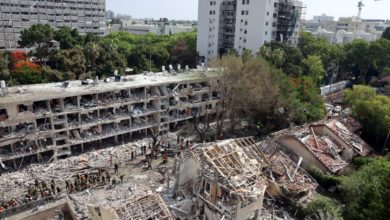
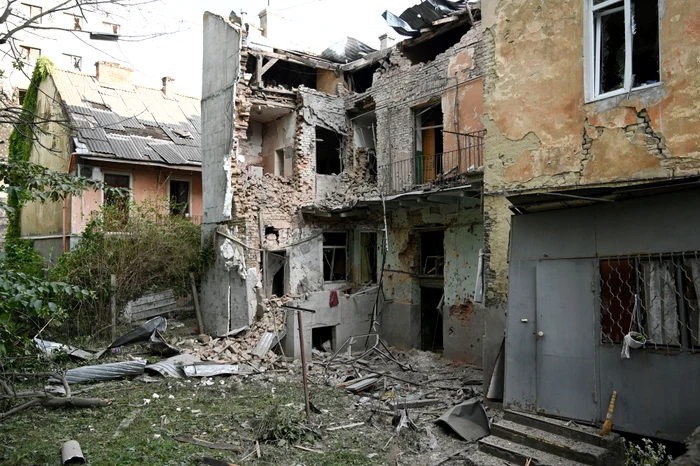
Today marks four years since the beginning of the aggression of the Russian Federation on Ukraine. No one would have initially bet on such a duration, and the end of this war is not yet on the horizon. What seemed unimaginable and absolutely spectacular at the dawn of February 24, 2022, today hardly arouses any emotion. Every day, civilians and soldiers lose their lives, in an absurd way. The number of victims can no longer be counted, and the final tally is still far away.
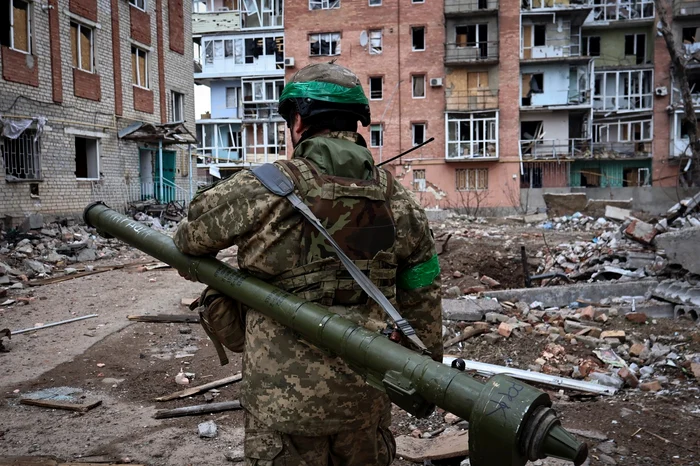
PHOTO Profimedia
Politically, there is not much chance for peace in the near future. The Russian Federation thought that by destroying Ukraine's energy system, it would cause a conciliatory attitude to the peace negotiations – this did not happen. The Russian Federation believed that US withdrawal from Ukraine would lead to the collapse of Ukraine on the battlefield – this did not happen either.
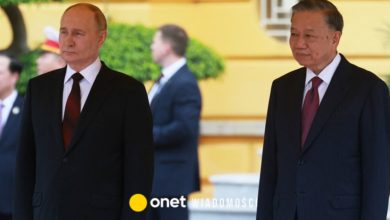
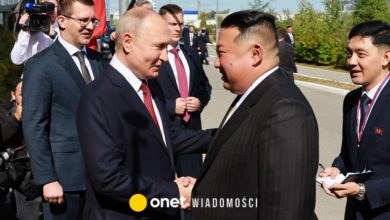
This war has very different connotations for both sides. For Ukraine, it is a continuation of a war that started in 2014 in Donbas. For the Russian Federation, it is a continuation of a permanent conflict with the West, which began with the breakup of the Soviet Union, a conflict viewed identically by the states that aligned themselves against Ukraine – the Chinese Republic, Iran, North Korea.
The war was designed to last very little, possibly a few hours, like the operation to extract Maduro from Venezuela, but due to the inability of the Kremlin leaders to have a correct representation of reality, it is still going on today.
It started as a war of maneuver but began to look more and more like a war of attrition, although the two categories ended up intertwining in Ukraine. For 4 years, the Ukrainian maneuver alternated with the Russian one, and the stages of attrition became practically infinite. We are dealing with a war of adaptation and mutual extermination, since both sides have a maximal goal – the victory of one is the total defeat of the other and vice versa.
PHOTO Shutterstock
It is difficult to decipher what Ukraine's goal is at present, but it is becoming clear that the recovery of the entire territory of the country can no longer be achieved – at least not by military means. Ukraine's goal now is to harass the Russian armed forces by inflicting casualties that would make the war unsustainable. Ukraine is also trying to annihilate the production capabilities of the Russian Federation used in the war effort. It is difficult to quantify whether this strategy has borne fruit, but it is clear that it has put and is putting the Russian war machine in difficulty. On the other hand, the Russian strategy is to destroy Ukraine's energy system in order to generate a capitulation by reversing the opinion of the Ukrainian citizens towards the leadership in Kyiv. One of the objectives of the “special military operation” was to “denazify” Ukraine – that is, to abandon a political regime based on democracy and replace it with an autocratic regime, favorable to Moscow – on the model of Belarus. Each of the parties believes that these strategies will bring an advantage, in such a way that it will be possible to sit down at the negotiation table, but not as at present – to waste time, without proposing serious solutions – but to reach a peace agreement in the terms desired by one side or the other.
2025 was not exactly a bad year for Ukraine which managed to keep Russian troops away from the main towns of Donbas. The siege of Pokrovsk failed, and the situation reached a relative balance. Russian forces cannot use this important logistical hub to launch new offensives, and Ukrainian forces cannot restore some absolutely necessary logistical links. The Russian offensive stagnated in 2025 but seems to be gaining new momentum in 2026. On the other hand, Ukrainian forces managed maneuver strikes in some secondary portions of the front.
The dynamics of the war in Ukraine are remarkable. There are times when one side gains an advantage, and immediately the other side recovers and even raises to gain an advantage in turn. Ukraine gained an edge in drones, the Russian Federation quickly caught up with the production of fiberglass drones, and now the balance has been restored. Neither side had decisive air supremacy. There were times when the Ukrainian air defense was close to collapse but always ingenious solutions were found to recover this handicap. In the conditions of this constantly disappearing and reappearing balance, the question naturally arises: which side will benefit from the passage of time? If at the beginning a clear answer could be given, now, 4 years after the invasion, time seems to stand still and not create any kind of advantages, neither for the Russian Federation nor for Ukraine. Paradoxically, a protracted war is the only option for both sides to achieve their goals.
Ukraine received massive support in the first part of the war in terms of military equipment and intelligence. With the coming to power of the Trump Administration, this benefit disappeared, but it was quickly replaced with similar advantages from European partners. This is one of the great achievements of the war so far – Ukraine did not collapse with the US abandonment – which cannot be said to have been total but certainly the new strategy in Washington was and is to prevent Ukraine from having an advantage in terms of intelligenceto force peace negotiations that would end the war on any terms.
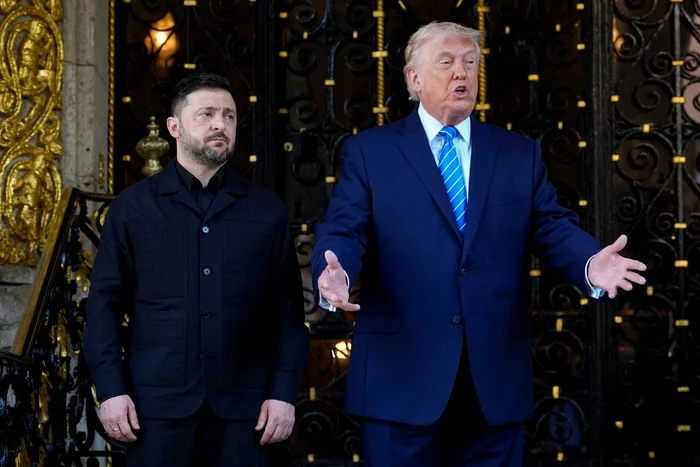
PHOTO Profimedia
The Russian Federation suffered completely unexpected defeats at the beginning of the war. The resistance of the Ukrainians was completely underestimated. The losses suffered by the Russian army were very high, with all the legacy of resilience it has shown in the course of history. Ukraine managed to carry out two successful maneuver operations almost simultaneously, in the Kherson and Kharkiv regions at the end of 2022, but since then no such operations have taken place. Typical of the war in Ukraine became the 10-month-long Bahmut siege or the Pokrovsk siege – in full swing.
The so-called Ukrainian counter-offensive in 2023 was a disaster – without proper preparation in advance, based on offensive operations in points of the front that were no surprise for the opponent, without adequate equipment for the maximally defined purpose. Paradoxically, precisely the evolution of the war and the technological balance reached on the front made this Ukrainian counteroffensive not to have catastrophic results. General Zalujnîi wrote and publicly declared: until there is a breakthrough
technology of one side or another, will not leave the equation of relative balance on the front. One by one, the UAV, fiberglass, maritime, Flamingo, and Oreșnik drones marked technological advances that were immediately annihilated by the opposing side. Technological innovation became decisive not for victory, but for maintaining one status quosometimes very hard won. Gradually, both armies began to face identical problems: ammunition, military personnel, mobilization, ability to command at the upper echelon and to execute at the lower echelon. On the battlefield artillery remained decisive but neither side seems to have or have had a decisive advantage in the matter. Ukraine has tested new ways of fighting, such as AI or robots, but these are all on a much too small scale to make a difference. For its part, the Russian Federation innovated by repeating old battle strategies on the front. I have noticed the ironies of the Russian armed forces using horses or motorcycles but forget that this strategy of “everything that can be useful to the advance can and must be used” took Russian troops from Moscow directly to Berlin in 1944-1945.
If at the beginning in this war the speed of reaction and movement mattered a lot, nowadays we have reached the situation where we are witnessing the repetition of some cycles. Military forces adapt, make in-depth assessments of the situation on the ground, wait, strategically withdraw only to return for a short period of time. The Russian Federation benefits from the support of China, North Korea and Iran. Ukraine benefits from the support of Western partners (less the USA). Each side tries to maximize the advantages of such alliances. The war in Ukraine began as a war between the two countries and has evolved into a highly complicated form of multi-dimensional confrontation within multiple alliances.
AFP PHOTO
Both armed forces rely on enemy jamming, electronic warfare has reached very high heights. The roads are covered with anti-drone nets, so that Ukraine received an extremely valuable gift from France – nets used by Normandy fishermen. When one side gains temporary drone superiority, it rarely translates into an eventual breakthrough and consistent lead.
Russian forces advanced a total of 3,106 square kilometers in 2025, compared to 2,607 square kilometers in 2024. Relative to the size of Ukrainian territory, these territorial gains are insignificant. It will be a long time before all of Donbas is captured, which is why Putin is insisting that this region be ceded without a fight as a precondition for peace.
The big problem that Ukraine is currently facing is not so much the lack of soldiers in its ranks – which has become chronic – but especially the increase in the number of Russian soldiers in the front area. If 4 years ago, the Russian Federation relied on 900,000 soldiers, today this number stands at 1.3 million. The number of those killed on the front recently exceeded the number of those enlisted in a month, which raises serious problems for the Russian side as well – either reduce losses or enlist more soldiers. On the front, the Russians also rely on large contingents of North Koreans or military (more or less) volunteers from third countries. Ukraine also relies on volunteers from third countries, the numbers used by both sides being difficult to estimate.
The major challenge for 2026 remains, as I stated, finding that technological advance that is impossible for the adversary to recover. So far, this has only happened for very limited periods of time. Will AI matter in 2026 for either side? Ukraine currently relies on manually operated drones. Will Ukraine succeed in implementing AI in the use of drones to redeploy the military who operate them to other frontline tasks? Hard to predict.
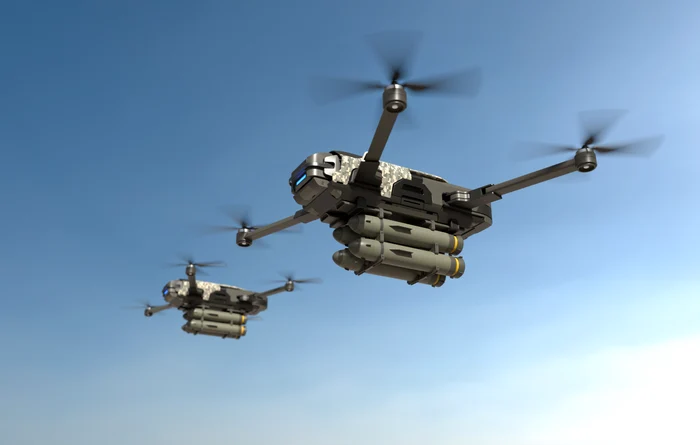
PHOTO Shutterstock
2026 will mark another episode of the war in Ukraine, the continuation of the expansion of the conflict and over the ships of the “ghost fleet” of the Russian Federation. In turn, the Russian Federation will intensify the hybrid war on European states. Ukraine has succeeded in blocking the Russian Federation's access to Starlink – will this achievement turn into a tactical advantage on the battlefield? Again, hard to predict.
It is very difficult to finally accept a simple truth – this war is not about territory. The Russian Federation wants the complete annihilation of Ukraine, from a military point of view but above all from a political point of view. This maximum objective will not be achieved in 2026. It is difficult to predict how long this war will last, but one thing is certain: we are dealing with the first war in which the alignment of states completely opposed to the model of liberal democracy practiced in the West is visible. Probably, in this era that opens new political and military alignments, the experience of the war in Ukraine will matter a lot. Precisely for this reason, the stakes of this war are far too high to be understood at a cursory level of analysis, much less to find the remedy. The crisis that led to this conflict is significant, and it results from the systematic arming of states opposed to the West over the past decade. February 24, 2022 opened a new, very violent chapter of a confrontation that has actually never stopped in the last hundreds of years.