
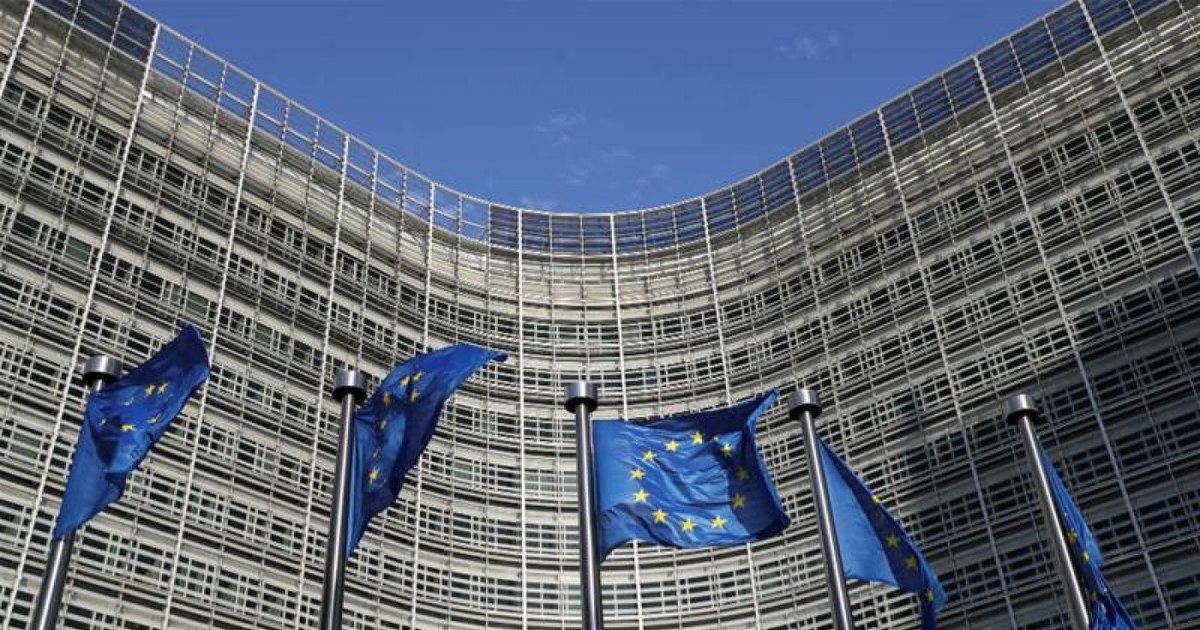
Kiev no longer has room for maneuver – in Brussels, all the conditions that Ukraine must meet in order to become a member state of the European Union were put on paper, punctually. And even in the scenario of an accelerated accession, the criteria will not disappear.
Headquarters of the European Commission/PHOTO: EPA/EFE
In 2026, Ukraine received from the European Commission and the Council of the EU a set of documents with a detailed list of reforms necessary for accession. These are not general recommendations, but numbered, clearly defined criteria on the basis of which Brussels will make the official assessment – first internally, then publicly. And the positive qualification must be obtained at every point, without exception.
The numbering of each criterion may seem like a bureaucratic detail, but in reality it marks an essential moment: the process of monitoring Ukraine's progress has become technical, systematic and impossible to avoid.
The actual negotiations were launched in December 2025 and target, for the time being, three of the six clusters: “Fundamentals”, “Internal Market” and “External Relations”. For the other three areas, the criteria are still being finalized, in collaboration with the member states.
The most sensitive, however, remains the first cluster – “Fundamentals”. Some of the requirements in this chapter must be met before joining, even in the earliest possible scenario.
The list is extensive and aims at structural reforms: strengthening the independence and integrity of the judicial system, increasing the quality of the judicial act, reforming the legal profession, strengthening the responsibility of law enforcement institutions.
Ukraine must extend NABU's powers over all public positions with a high risk of corruption, give the Anti-Corruption Prosecutor's Office the right to open cases against deputies without the prior approval of the Prosecutor General, clarify the powers of law enforcement institutions, reform the Security Service and the Bureau for Economic Security. A separate chapter concerns the guarantee of human rights and the restoration of the full functioning of democratic institutions after the end of the state of war.
Once the European Union has established a clear set of criteria and started monitoring them, there is no more room for ambiguity. All institutions know what they have to do. And, according to analysts, the Parliament risks becoming the weak link in the reform process, if the legislative pace does not keep up with the commitments assumed.
Zelensky asks for an accession date
In parallel, President Volodymyr Zelenskiy publicly demanded the establishment of a concrete date for Ukraine's accession to the EU – the year 2027. In an interview with The Financial Times, the leader from Kiev directly stated: “I want a date. I demand this.” He warned that future generations should not be allowed to face, for decades, Russian-imposed political roadblocks to Ukraine's European integration.
“I want a date. I'm asking for it. Let's not allow the next leaders or the next generation to face a situation where Russia blocks Ukraine's EU membership for 50 years.”
The statements come in a complicated context marked by negotiations on ending the war and disagreements over security guarantees and territorial control. According to the international press, the Western partners are analyzing mechanisms to accelerate the accession process, but for now they are avoiding advancing a final deadline.
Meanwhile, the European Commission notes that progress on anti-corruption reforms remains “limited”. And this could become the main obstacle. Because, beyond the political will expressed at the declarative level, the road to the European Union inevitably passes through real, applied and demonstrated reforms.


