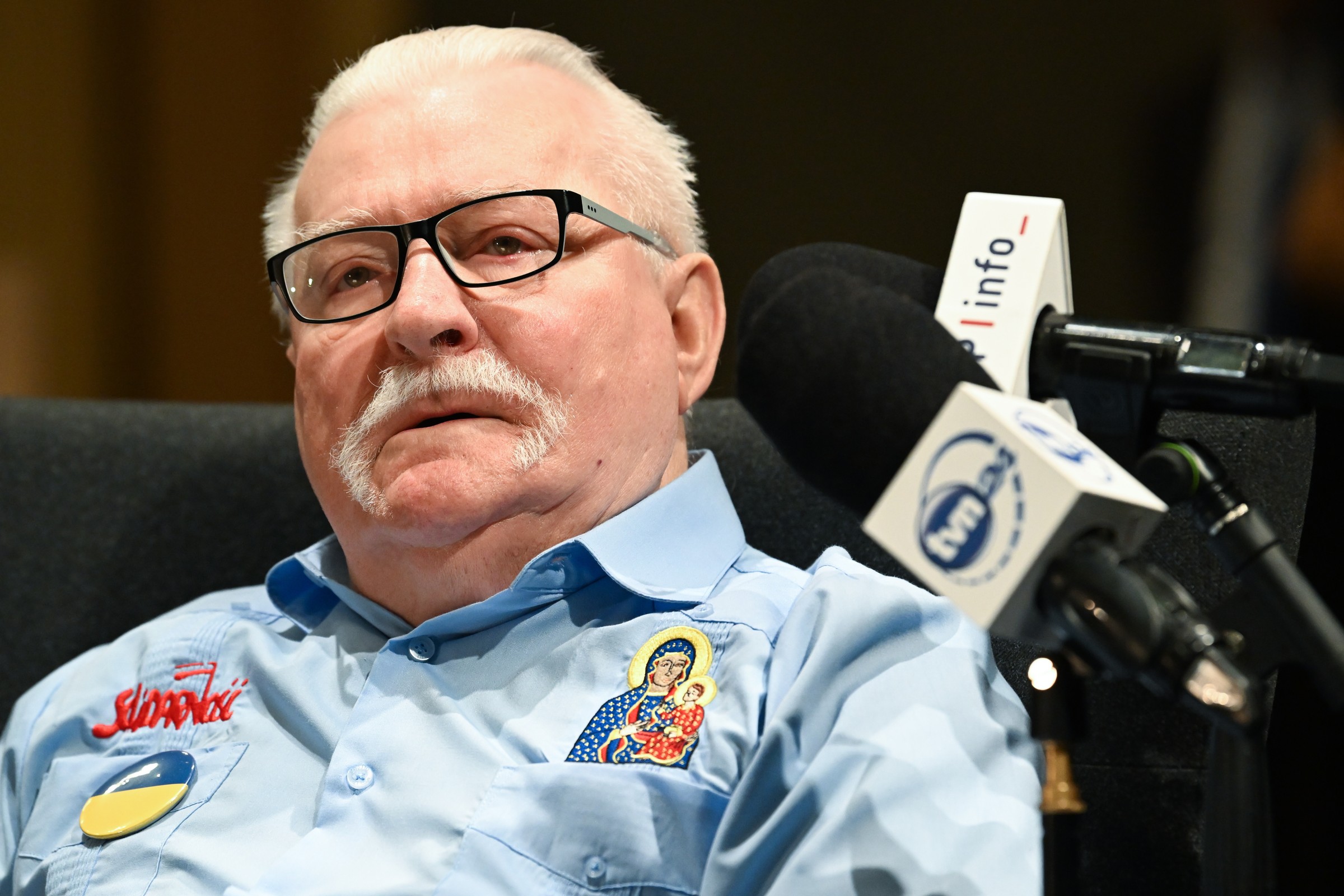
It is possible that Trump is an “extraordinarily intelligent, responsible politician” who “knows that if the United States joins the anti-Putin chorus, Putin will have no other choice and will have to use nuclear weapons,” Wałęsa said. “It's a very Russian and very intelligent game. Don't push Putin to use nuclear weapons, play a friend,” he added.
What did Lech Wałęsa say about Donald Trump?
How does Wałęsa evaluate Trump's strategy towards Russia?
Why does Wałęsa feel remorse towards Ukraine?
What does Wałęsa think about the future of Russia?
“If he is a traitor, he does not deserve the Nobel Prize”
By doing this, Trump – according to Wałęsa – is gaining time and forcing “Europe to organize against Putin, without the United States. Because if the United States enters the game, there will be a nuclear war.”
“So you can look at this matter in two ways (…) a traitor or an extremely intelligent person. I still don't know it myself,” he said.
Wałęsa, who received the Nobel Peace Prize in 1983, noted, however, that in the latter case, Trump would deserve the Nobel Peace Prize. “But if he is a traitor, he doesn't deserve it. So we have to wait because it's too early to tell,” he emphasized.
Wałęsa emphasized that we need to help Ukraine with all our strength. As he confessed, he has “remorse of conscience” towards Ukraine, because when he was president, he wanted Poland and Ukraine to join the European Union and NATO together. For fear that this idea would frustrate Polish membership, he decided to keep it secret and reveal it after his re-election. But “I lost the presidential election and everything went to waste. I should have acted earlier,” he said.
The former president warned that if Russia conquers Ukraine, “we will be able to learn Chinese and Russian” and the US will “definitely lose.” However, if Russia manages to defeat it, “in 10 years it will rise again and our grandchildren will have to fight it again.”
According to Wałęsa, “Russian aggressiveness” has its roots in the lack of democracy in this country, whose “authorities have for centuries cultivated the idea that Russia is threatened by an external enemy.” “Russia's problem is not Putin or Stalin, but a bad political system,” he concluded.