Billionaires like Peter Thiel protect their children precisely from the technology produced by Silicon Valley

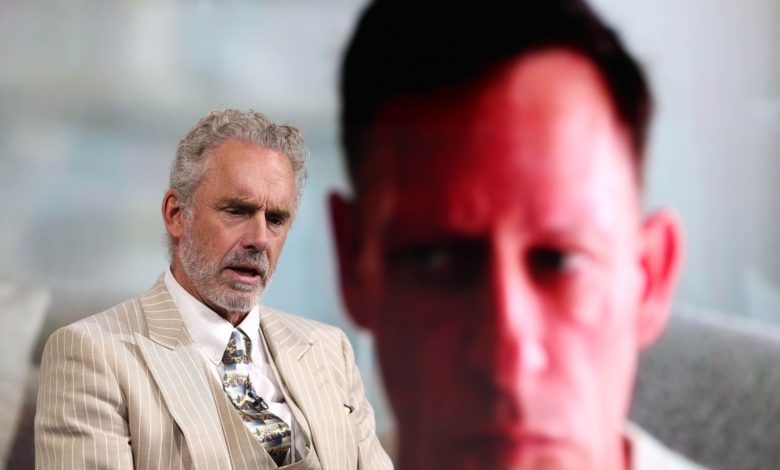
Despite having built a world increasingly centered on the screens of electronic devices, billionaire tech leaders are keeping their own children away from the technology they contributed to or popularized through their services and products, writes Fortune. The publication recalls that Steve Jobs told The New York Times back in 2010 that, as for his own children, they had never used an iPad and that “we limit how much technology our children use at home.”
Since then, the tendency of Silicon Valley billionaires to keep their families away from technology has become even more pronounced, in part due to the growing popularity of social media and short-form video content such as that shared on TikTok or Instagram.
Excessive device use by children has become more common in recent years as busy parents turn to screens to get some peace. The trend has accelerated so much that some young children accustomed to extended periods of time spent in front of screens are being dubbed “iPad kids.” On average, US children ages 8 to 18 spend 7.5 hours a day actively using or looking at screens, according to the American Academy of Child and Adolescent Psychiatry.
Steve Chan, one of the founders of YouTube, said last year in a conference held at the Stanford Graduate School of Business that he would not want his own children to consume only short-lived content. He emphasized that when children watch video content, it should be longer than 15 minutes.
“Shorter content equates to less attention span,” he said.
Peter Thiel and Bill Gates are among the tech billionaires who have limited their children's access to screens
His comments came after serial entrepreneur and billionaire investor Peter Thiel revealed at the Aspen Ideas Festival last year that he was among tech leaders pushing for strict limits on screens.
Thiel, one of Facebook's early backers, said he only allows his two young children to use screens for an hour and a half a week, a revelation that drew surprise from the public.
Other tech CEOs, including Microsoft's Bill Gates, Snap's Evan Spiegel and Tesla's Elon Musk and “X,” have also spoken out about limiting their children's access to devices. Gates said he did not give his children smartphones before the age of 14 and completely banned phones at the dinner table.
Evan Spiegel, a director at Snap, said in 2018 that he limits his child to the same 1.5 hours a week spent in front of the screen as Thiel. And Musk, who bought the social network Twitter in 2022 and later renamed it “X”, said it “might have been a mistake” not to set any rules about social media use for his children.
Even the head of TikTok said that he does not let his children on his own platform
Shou Zi Chew, the chief executive of TikTok, had also stated that his own children are too young to use the very platform he runs. But he backtracked on his statements in 2023, saying that if they lived in the US and had access to the platform's strict settings protections for users under 13, he would allow them to use the app.
He claimed that even an 8-year-old could use the platform under the under-13 experience, which, among other safeguards, includes verified content, no publishing access and no ads.
Scientific research proves them right. A 2025 study of nearly 100,000 people found that use of short-form video content was consistently associated with poorer cognitive performance and a decline in many aspects of mental health among both young and older social media users.
Fortune magazine recalls the comments of these tech executives and entrepreneurs as the backlash against social media grows worldwide.
As young people spend more and more time online, the backlash against social media – and especially against its use by minors – seems to be
Last year, Australia and Malaysia became the first countries to ban teenagers under 16 from using social media. And a growing number of European countries, including France, Spain and the UK, have either expressed their intention to adopt similar laws or are considering bills to do so.