Can we really trust that a company that infuses artificial intelligence into every corner of our digital lives cares about protecting our data? Or is it more about not knowing anything for as long as possible?
Recent bug reports in Microsoft Copilot – an artificial intelligence assistant integrated with the Microsoft 365 package – show how serious the consequences can be when AI starts operating on our most secret data without full user control. This issue was highlighted by international media, including the BBC, and quickly became one of the most important topics regarding AI privacy and security.
Artificial Intelligence Instead of Protection – How Did the Leak Happen?
In January 2026, it turned out that Copilot Chat – an AI chat feature available in applications such as Outlook, Word and Teams – was incorrectly processing emails marked as “confidential” or protected by data labels that were supposed to prevent their analysis by stand-alone tools. Instead, the AI not only read these messages from the Sent and Drafts folders, but also generated summaries of them in response to user queries.
- Read also: Do you upload various materials to free AI at work? It's a big risk
Microsoft has confirmed the bug and started rolling out a fix. The company emphasized that this was not an “unauthorized disclosure” of data to third parties, and the system did not provide access to content to which the user was not authorized. Nevertheless, cases in which the AI tool operated on confidential emails raised a wave of concerns among security experts and IT administrators.
Why is this dangerous?
In theory, tools like Copilot are intended to act as intelligent assistants, making everyday tasks easier – summarizing emails, drafting responses, organizing information from documents. However, in practice, this means that AI must have access to huge amounts of user data, often including information covered by commercial, medical, legal or strategic secrets.
If an AI assistant can read even data marked as confidential, this creates a real risk not only of privacy breaches, but also of legal conflicts and violations of compliance with regulations that apply to industries such as finance or healthcare. In business practice, summaries themselves can reveal key elements of contracts, negotiation strategies or audit results – content that should absolutely not be analyzed outside strict human control.
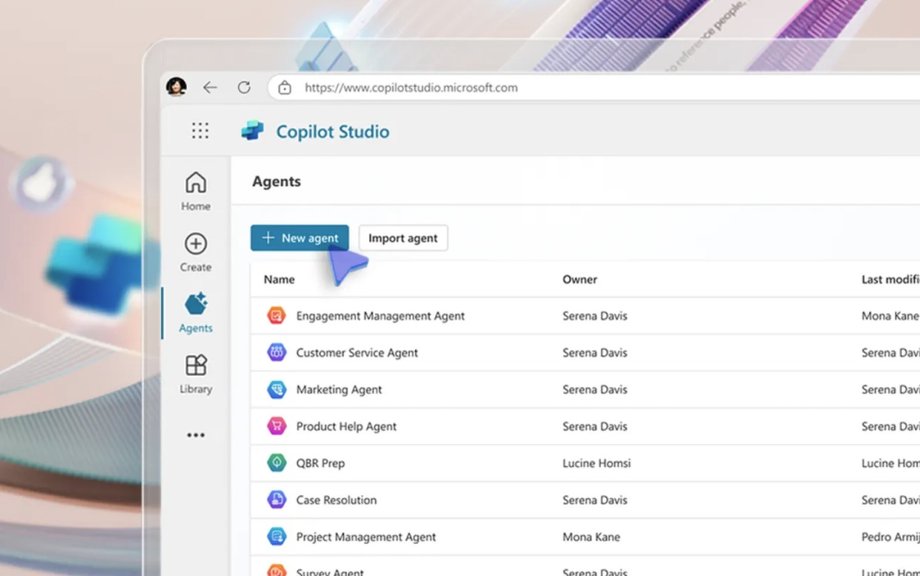
Copilot Studio is a platform for building your own AI agents
|
This is just one example where integrating AI into critical infrastructure can lead to unforeseen access control violations, and there are many other ways in which such systems can process data or be used for attacks (stolen logins and passwords) or blackmail (stolen secrets).
Where is the crux of the problem?
The paradox of the situation is that Microsoft would probably prefer to avoid public discussion of this bug rather than its existence. Instead of demonstrating that the technology can truly isolate sensitive data from AI access, the company issued a “code error” message and implemented a fix while minimizing its impact to users and business customers.
- Read also: There is no such thing as a private conversation with AI. We are preparing a disaster for ourselves
In the light of these events, it is worth asking how much Microsoft really cares about the maximum security of private information, and how much it cares about ensuring that such incidents remain as little noticed by users as possible. From a business perspective, it is much easier to communicate to users the general rules “do not provide confidential information in requests” than to completely rebuild the entire system so that confidential messages are never actually accessible to the AI, even by mistake.
Maybe it's easier to simply prompt the AI with the instruction “do not share confidential information in comments” than to thoroughly patch the entire system, ensuring that confidential emails are actually out of the tool's reach. After all, in an era where companies like Microsoft are cramming their AI assistants everywhere – from word processors to instant messaging – it's becoming increasingly difficult to conduct confidential business in an AI-free environment.
Artificial intelligence and the private work environment
This incident is further proof that if your priority is to protect your most sensitive data, it is best to write, open and view such things in an environment without artificial intelligence. More and more companies like Microsoft are integrating AI assistants in every possible area – from office applications to email to operating systems – making it difficult to separate everyday work tools from the technologies that analyze your data. What is supposed to make life easier can also pose serious challenges to privacy and information security.
- Read also: AI knows your files better than you do. Here are five steps to avoid mishaps
Right now, with all the benefits of smart tools, it's worth remembering: any technology that has “access” to your data can potentially do something to it that you didn't intend. And until technology manufacturers set security and privacy boundaries clearly above the desire to implement new features, the best protection remains caution and limiting sensitive activities to systems that do not analyze them using AI.