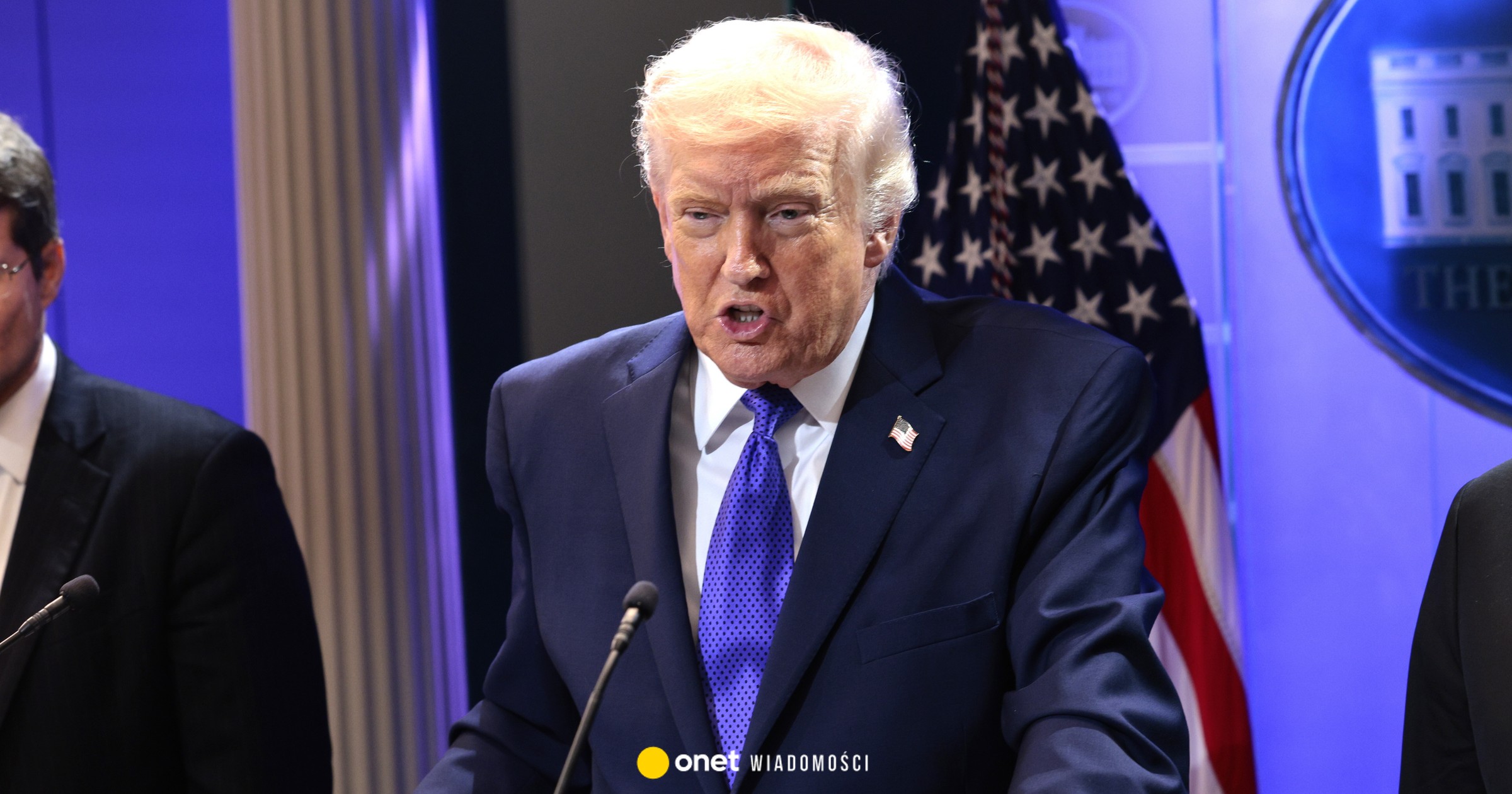
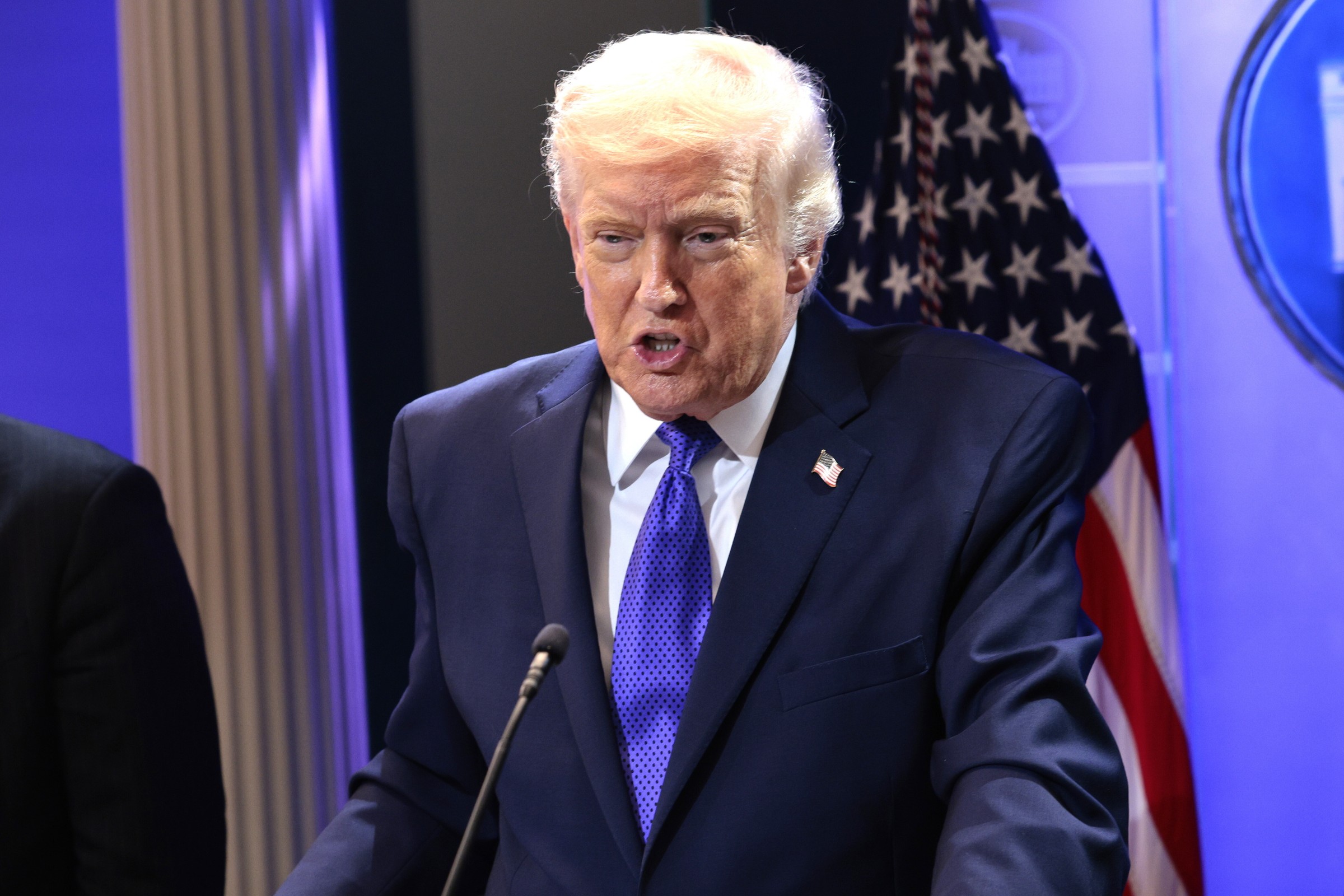
The US Supreme Court on Friday dealt a major blow to the centerpiece of President Donald Trump's foreign and economic policy by invalidating tariffs imposed under the International Emergency Economic Powers Act (IEEPA). The most controversial import taxes were abolished, including 10%. minimum duty on goods from almost all countries, 15%. customs duties on EU goods, as well as punitive tariffs imposed on China, Canada, Mexico and Brazil.
What tariffs did Donald Trump impose?
Why might Trump's new tariffs be illegal?
What are the consequences of the Supreme Court's ruling?
How long will it take for the courts to invalidate the new tariffs?
Donald Trump furious after the Supreme Court ruling. Expert translator
However, the American president's claims are questioned by Gary Clyde Hufbauer, an economist from the Peterson Institute for International Economics (PIIE). As he assessed in a commentary for PAP, the Supreme Court's judgment significantly narrows the president's room for maneuver regarding customs policy, and the new tariffs will probably also be challenged and considered illegal.
Hufbauer noted that the Court's ruling has consequences far beyond the IEEPA Act itself. He emphasized that the court, relying on the important questions doctrine and the non-delegation doctrine — the principle that Congress can delegate its powers to the executive branch only in limited and express ways — held that the statute's ambiguous language could not be “stretched” to give the president the power to impose taxes in peacetime.
— The Supreme Court's majority opinion in the IEEPA case severely limits the executive branch's use of tariffs as an important revenue-generating tool in the absence of Congressional authorization, the expert noted. The ruling suggests that Trump will face an uphill battle if he invokes other statutes — Sections 338, 122, 232 and 301 — as instruments to generate significant tariff revenues rather than as tools to respond to specific foreign practices, Hufbauer writes.
In other words, the expert argues, the verdict not only overturned the IEEPA tariffs, but created a precedent that may undermine the entire architecture of the Trump administration's tariff policy and the use of tariffs as a favorite tool to put pressure on countries. In his opinion, this applies to Section 122, which is the basis for new global tariffs of 10%.
The economist pointed out that this provision is a much more limited instrument than Trump's statements suggest. The provision allows for the imposition of a temporary import surcharge – not exceeding 15%. — only in strictly defined cases: a large and serious deficit in the US balance of payments, a threat of a sharp depreciation of the dollar or cooperation with other countries to correct international payment imbalances. The tariffs could last no more than 150 days unless Congress extends the deadline, which is unlikely amid growing Republican resistance to Trump's trade policies.
Expert: It may take a year before the courts also invalidate the new tariffs
According to Hufbauer, we are not dealing with any of the conditions listed in the act.
— The balance of payments deficit as defined in 1974 was not the same as the trade deficit in goods that was at the heart of Trump's concerns, the economist emphasized. He added that there are no signs of “an imminent and significant depreciation of the dollar” — especially since Treasury Secretary Scott Bessent declares a strong dollar policy as a goal and achievement of the administration. Finally, there is no ongoing cooperation with other countries on correcting “international payments imbalances”.
However, Hufbauer predicts it will take some time — possibly a year or more — for the courts to rule on the case and invalidate the new tariffs as well.
The new tariffs announced by Trump on Friday are the only ones that he can, in theory, impose immediately. The remaining alternatives require formal proceedings by the Ministry of Commerce, which usually take months.
Section 232 of the Trade Expansion Act of 1962 authorizes the president to impose tariffs on imports that threaten the national security of the United States. On this basis, Trump imposed a 50% cut. tariffs on steel and aluminum, arguing that dependence on foreign suppliers of these raw materials weakens the industrial base necessary for defense. But critics — including many U.S. allies — charged that the concept of “national security” had been stretched to include mere protection of the internal market.
Another alternative is Section 301 of the 1974 Trade Act, which allows the president to take retaliatory measures against countries that engage in unfair trade practices, such as intellectual property theft, forced technology transfer, or discriminatory market access barriers. Typically, proceedings under these regulations concern specific countries or areas of the economy and take months. The courts have also previously ruled that the president's powers in this matter are broad, but not unlimited and must have specific justification. Hufbauer suggested that after the IEEPA judgment, courts will more closely examine whether such duties actually serve to counteract specific foreign practices or whether they have become a de facto instrument of fiscal policy.