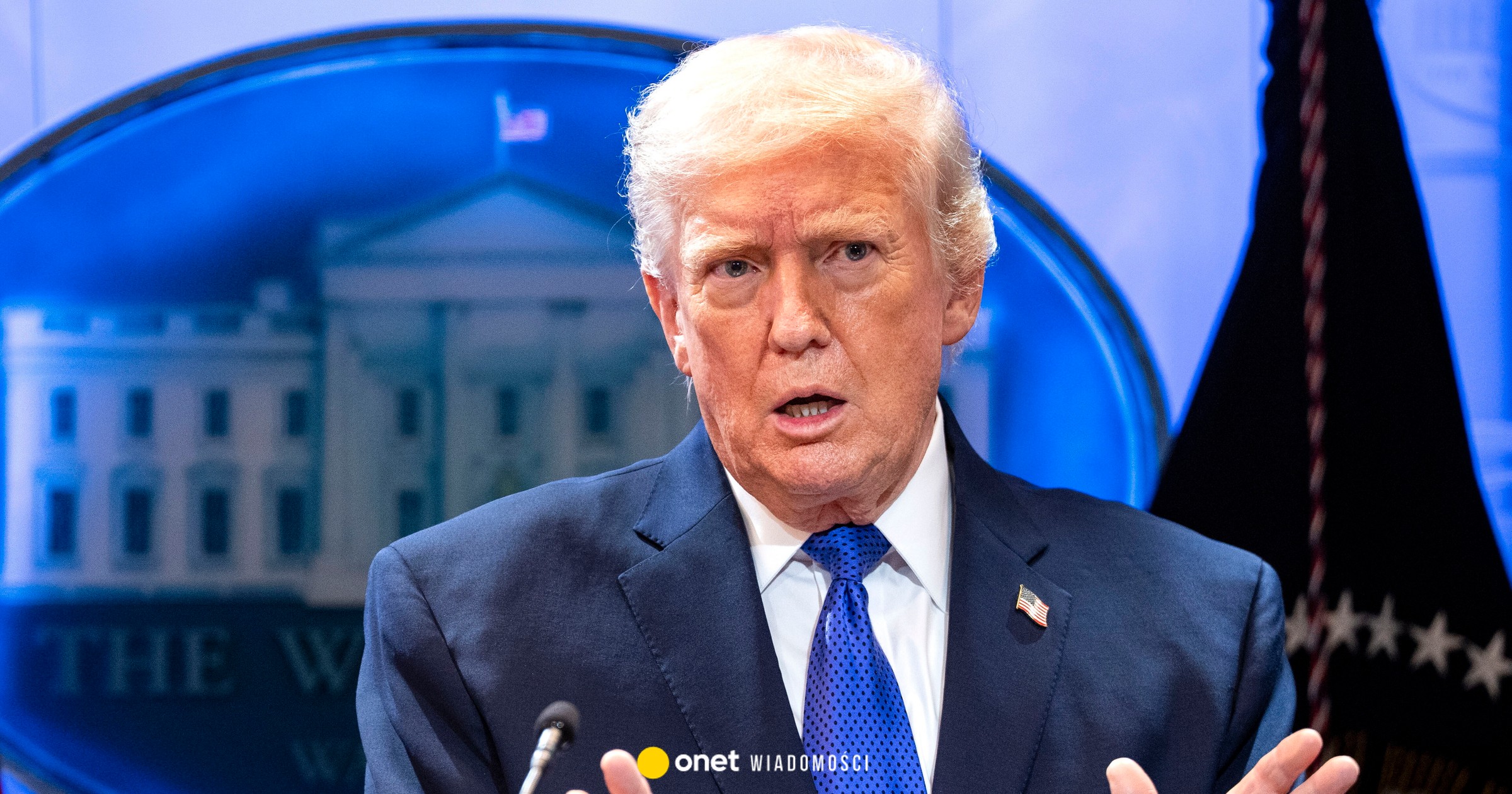
“Trump is losing his favorite negotiating tool, which he presented as a way to achieve peace and money,” the American newspaper titled its text.
What tariffs were invalidated by the US Supreme Court?
How did Donald Trump react to the court's ruling?
What does the Supreme Court's decision mean for Trump's foreign policy?
What were the consequences of the tariff imposed on goods from China?
In the opinion of “WP”, the Supreme Court's decision weakens Trump's ability to “put pressure on world leaders and transform the world order” during his second term in the White House.
The daily recalled that tariffs were Trump's favorite negotiating tool, which he used to put pressure on South American countries, as well as in disputes regarding, among others, Greenland, the Gaza Strip and relations with the EU and China.
Another American newspaper, the Wall Street Journal, noted in an editorial comment that “it is difficult to overestimate the importance of the Supreme Court's decision for law and the economy”, calling it “a real tariff Emancipation Day” (in reference to the term Emancipation Day used by Trump when he introduced his tariffs on April 2, 2025).
“If Trump won, future presidents could use emergency powers to bypass Congress and impose tariffs without major restrictions,” the newspaper added.
The New York Times, in turn, emphasized that it is not known how the US tariff shock will affect international trade, prices, jobs and economic growth in various countries around the world. “So far, the global economy has shown resistance to the political and economic turmoil caused by Trump,” the daily noted.
A landmark judgment of the US Supreme Court
The US Supreme Court dealt a major blow to the centerpiece of Trump's foreign and economic policy on Friday by invalidating tariffs imposed under the International Emergency Economic Powers Act (IEEPA). The most controversial import taxes were abolished, including 10%. minimum duty on goods from almost all countries, 15%. customs duties on EU goods, as well as punitive tariffs imposed on China, Canada, Mexico and Brazil.