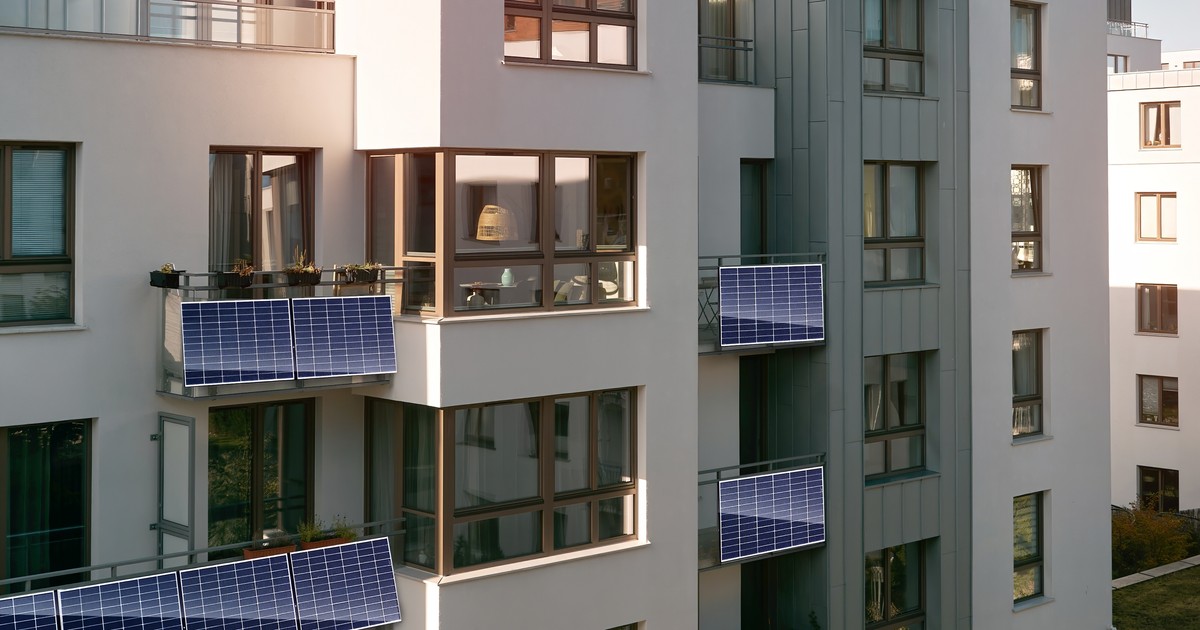
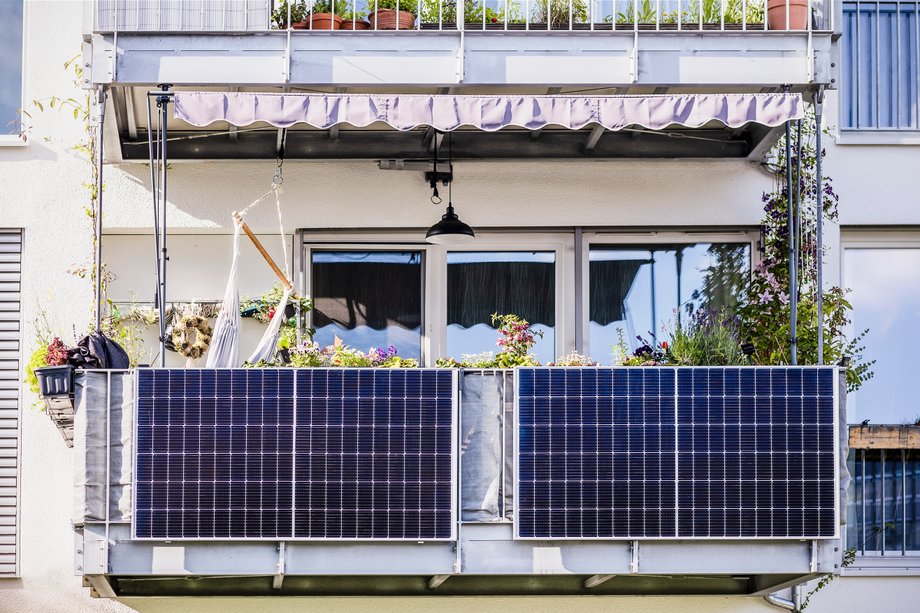
To become a prosumer, i.e. a person who simultaneously produces and consumes energy, you do not have to live in a single-family house outside the city and have a lot of spare cash. Photovoltaic panels intended for personal use, which, according to the latest data, already have 1.6 million people in Poland, can also be installed on the balcony of an apartment in a block of flats.
The rest of the article is below the video:
Just like classic home photovoltaics, PV panels on balconies can tempt you with savings on electricity bills. The installations are, of course, smaller and less powerful than those mounted on roofs, but they are also able to provide relief for the wallet.
Read also: Is it worth building a balcony power plant? He used it for 35 months and provided the calculations
Balcony photovoltaics. Who is the “luckiest”?
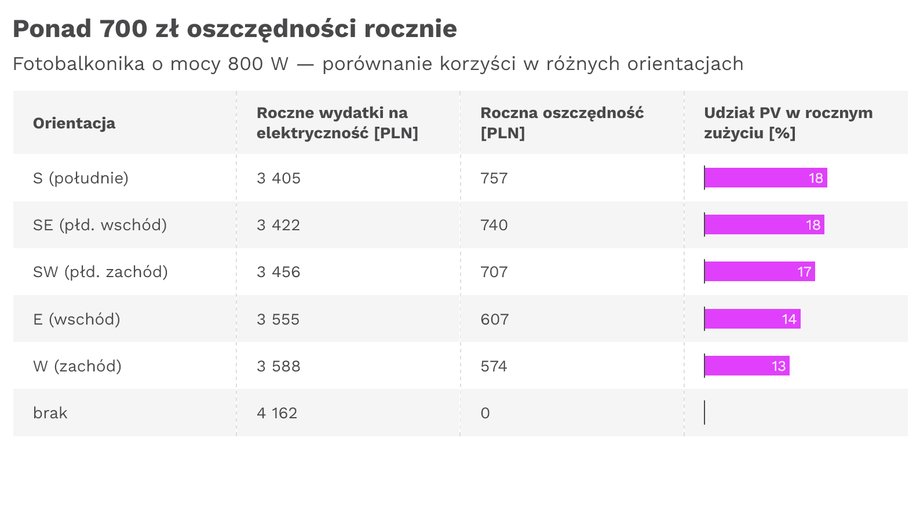
A study by the Instrat Foundation shows that a model apartment with a demand of approximately 3,100 kWh per year, a single-zone (fixed) electricity tariff and 800 W panels (which can be fitted on a balcony measuring 2.5 by 3 meters) can save over PLN 700 per year.
Possible savings with balcony photovoltaics
|
Instrat Foundation / Instrat Foundation
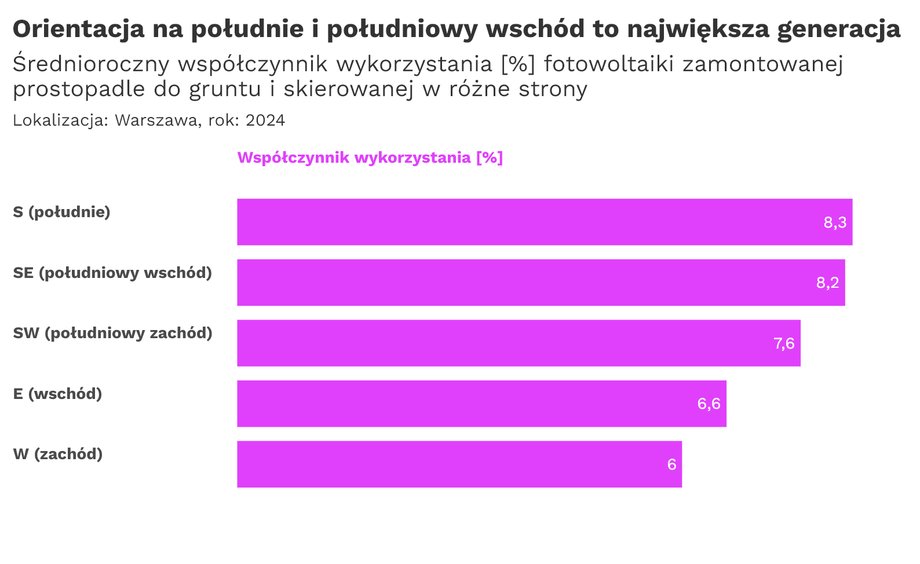
As for efficiency, a lot depends on the arrangement of the panels. Instrat's analysis shows that it is most profitable to direct them towards the south, where there is the greatest sunlight.
“The lucky ones include owners of balconies facing south, south-east and south-west. The mentioned orientations ensure the highest annual production and savings of PLN 757-740 in the G11 tariff,” says the think-thank.
The use of a balcony installation depending on its location
|
Instrat Foundation / Instrat Foundation
Photovoltaics on the balcony. How much is?
Balcony photovoltaics may also be attractive because it has become affordable. — In recent years, photovoltaic panels have become significantly cheaper. The average balcony installation has approximately 800 W of power; taking into account assembly costs, it may cost approximately PLN 2.5 thousand today. PLN or even a little less – explains Kajetan Nowak, an energy modeling expert from the Instrat Foundation, who estimated the possible benefits of this solution.
– People who previously had no way to become prosumers can now join this group at low costs – he adds.
How to install balcony photovoltaics? Consent is needed
The most difficult step for a person deciding to install balcony photovoltaics is obtaining consent from the building's administration, which not only may not grant it, but also has the right to do it without giving reasons.
— Some communities and housing cooperatives are reluctant to have panels on their balconies for aesthetic reasons. Balcony photovoltaics change the appearance of buildings, which makes the situation difficult, e.g. in buildings included in the register of monuments. However, some panels available on the market are designed to be less conspicuous, says Nowak.
balcony photovoltaics
|
Mariana Serdynska
Apart from this type of arguments, an obstacle may also be the “resistance of matter” impregnated with the substance. — Sometimes the justification for refusing consent is simply “no, because no”, especially since cooperatives are not obliged to explain the reasons. – regrets the expert.
Photovoltaics on the balcony. What about surplus energy?
Theoretically, the balcony installation does not need to be connected to the network – it is enough to connect it to the socket in the apartment so that it can power it, Kajetan Nowak points out that only contact with the distribution system operator (i.e. the supplier of energy from the network) and the installation of a bidirectional meter will allow for the transfer of surplus energy and avoid problems with their settlement.
– Our modeling shows that in the case of 800 W panels, the unused surpluses over their own energy consumption are only over 30 KWh per year, which is not much, but it is not worth wasting them, but using them for later settlement with the operator, just like prosumers do with roof photovoltaics – he explains.
With proper installation and appropriate conditions, excluding possible obstacles such as trees or the proximity of other buildings, a balcony photovoltaic micro-installation with a power of 800 W would be able to satisfy approximately 18%. annual electricity demand of an average apartment in a block of flats. — Photovoltaics can then pay for itself in about four years – says Kajetan Nowak.

Model production of a balcony photovoltaic micro-installation divided by month
|
Instrat Foundation / Instrat Foundation
Since we are talking about cheap solutions – in fact, for almost every budget – according to Kajetan Nowak, there is no need to introduce subsidy programs supporting the purchase of balcony photovoltaics. “Market competitiveness is enough in this case,” he says.
Balcony photovoltaics. Setting matters
Balcony photovoltaics also has its limitations. These include the positioning of the panels themselves – most often vertical, and not horizontal or inclined as in the case of larger installations mounted on house roofs or in gardens.
— In the vertical position available on balconies, PV modules will produce significantly less energy than with optimal southern exposure on the roof or next to the building – warns Bogdan Szymański, president of the Trend Institute and vice-president of the Association of the Photovoltaic and Energy Storage Industry.
However, it turns out that vertical positioning also has its advantages. – The installation will operate with lower efficiency, but more evenly and proportionally throughout the months of the year. Users can therefore benefit more from their current energy consumption for their own needs without giving up too much energy to the grid – Szymański explains further.
Energy storage with dynamic tariff
Can home electricity bills be reduced in other ways? Bogdan Szymański suggests that instead of balcony photovoltaics, it is worth considering installing an independent energy storage facility and connecting it to a dynamic or zone tariff.
Read also: How to reduce energy prices? “We need to encourage the market to compete” [WYWIAD]
— The storage can be charged at low energy prices during hours of high RES production and “reach” for the energy stored in it during those hours when the market becomes more expensive. In apartments in blocks of flats, where electricity consumption is by definition rather low, it may often be more profitable than producing your own PV modules on the balcony. However, such a solution would require appropriate changes in the law, says the expert.