A theater performance with deaf actors, after a text written by the director of the “Adolescence” series, opens the discussion about inclusion in the theater: “We don't lack talent, but the confidence to be seen”


“Beyond Silence” is a theater performance, based on a text written by Jack Thorne, the creator of the phenomenon series Adolescenceabout a deaf couple who lose their child. Isolated not only from the world, but also from each other, the two try to find themselves through gestures, touch and physical presence, remembering the moments that brought them together. The cast of the play also includes two deaf actors. HotNews conducted an interview with the director of the show, Laurențiu Rusescu, and with the actress Diana Timari, the deaf interpreter of the main character.
- The play was performed in Romania between January 29 and 31 at ARCUB, and the following representatives will be announced in the following period.
- “I want the world to change its mentality and understand that deaf people can do anything: they can act on the stage of a theater, they can be artists,” Diana Timari explains to the HotNews audience. The interview was conducted by email.
- Jack Thorne is one of the most acclaimed contemporary British playwrights and screenwriters. He gained international recognition with the play “Harry Potter and the Cursed Child”, for which he received the Tony Award for “Best Play” as well as the Olivier Award for Best New Play. The miniseries “Adolescence” brought him the “Golden Globe”.
“Beyond the Silence” brings to the stage a profound story of loss, intimacy and reconnection, told from the perspective of a deaf couple.
The cast, consisting of deaf and hearing actors, and the stage language built from gesture and physical presence transform the theater into a barrier-free space, equally accessible to deaf and hearing audiences.
The director Laurențiu Rusescu and the actress Diana Timari, the deaf interpreter of the main character, explained the artistic and human stake of this project, about theater as a form of real inclusion and about what it means to listen beyond sound.
The hardest moment in the play
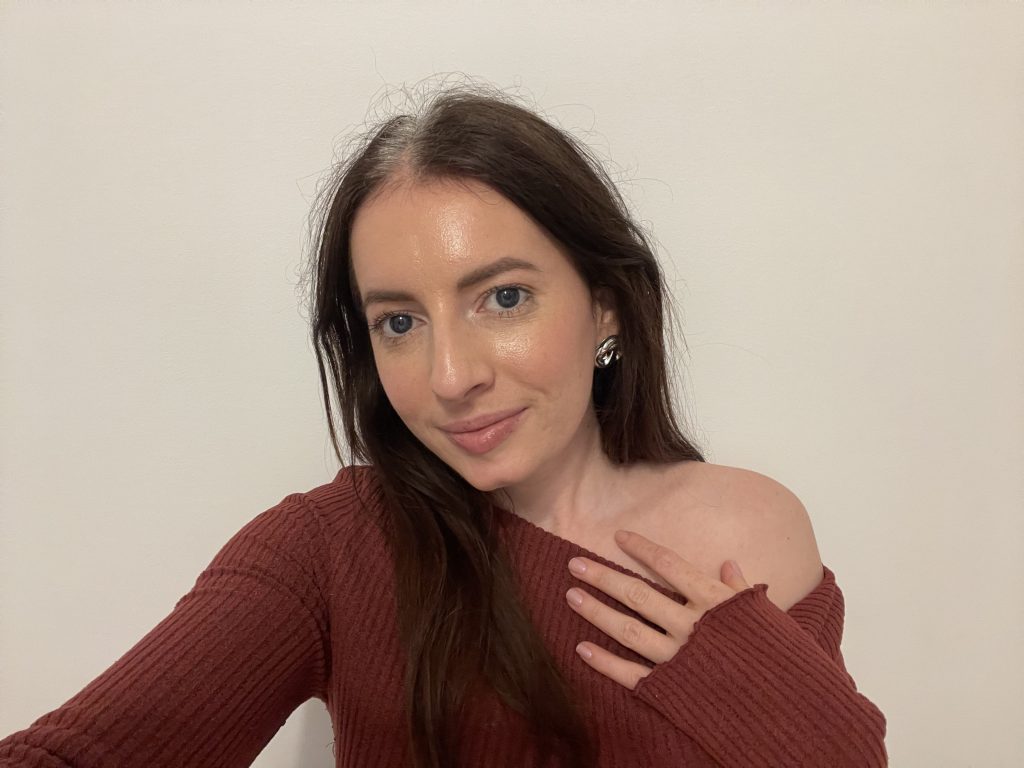
Diana Timari, the deaf actress who plays the main role, indicates that the most difficult was to play the moments of losing a child. “It's a very deep and intense pain. I needed to use all my energy and emotions to convey this pain to the audience. I gave everything I could in these scenes. Instead, remembering the beginning of love is very beautiful and funny. It's about finding love. Here I felt more in control of myself in playing the role.”
About Jack Thorne, Laurentiu Rusescu says that he admired him as a screenwriter, but the text of the play exceeded his expectations from the first pages. “The opening scene is memorable, and from there the text constantly increases in intensity. The alternation between hard and fragile situations becomes more and more effective, in an extremely direct, precise language, without unnecessary artifices,” adds the director.
He chose to stage this text because it “hits you emotionally, but at the same time leaves you space to hear yourself, to feel your own reactions. It's a rare combination of poetry and realism, of fragility and cruelty. I had the feeling that it was written in a moment of great inner openness, from a deeply decanted life experience.”
A play performed in many countries by deaf actors
Diana Timari says that she built her character by understanding and feeling the story: “Jack Thorne's text is known and performed by deaf actors in other countries. I felt seen as an artist and I am very grateful for this chance.”
The original title of the piece is “The Solid Life of Sugar Water”, “an intriguing and paradoxical title, but impossible to translate literally without losing its meaning”. Laurentiu Rusescu says that he looked for an equivalent that would preserve this paradox: something that should be solid, but is made of a substance that dissolves, and “Beyond Silence” seemed to him to gather, in a few words, the essence of the text: “it talks about isolation, about the impossibility of communication, but above all about what exists beyond expressions, beyond looks and gestures. About the suffering lived in silence, in solitude, without being able to shared, but also about what cannot be expressed in words”.
That “silence” doesn't just mean deafness, but trauma, helplessness, emotional blockage, the director claims. “And 'beyond' promises an emotional space, not an explanation. For me, it's not a betrayal of the original title, but a necessary cultural adaptation.”
He also says that in the original UK version, there is a part where Phil tries to learn sign language and fails, and Alice, being hard of hearing, hears with the aid of the device and can speak.
“I felt the need to go further and accentuate this separation – between the pair in a moment of balance and the rest of the world – to make it more radical.” When he was preparing the show, he read Oliver Sacks' book, “Seeing Voices”, which opened up completely new perspectives. “It helped me understand the history of Sign Language, its richness, but above all the obligation to respect it as a language in itself, not as a simple communication tool. The text was basically translated twice: once from English to Romanian and the second time from Romanian to Romanian Sign Language. It was an extremely careful process, because any nuance lost in one translation is amplified in the other,” says Laurențiu.
“Communication is part of our essence as a species”
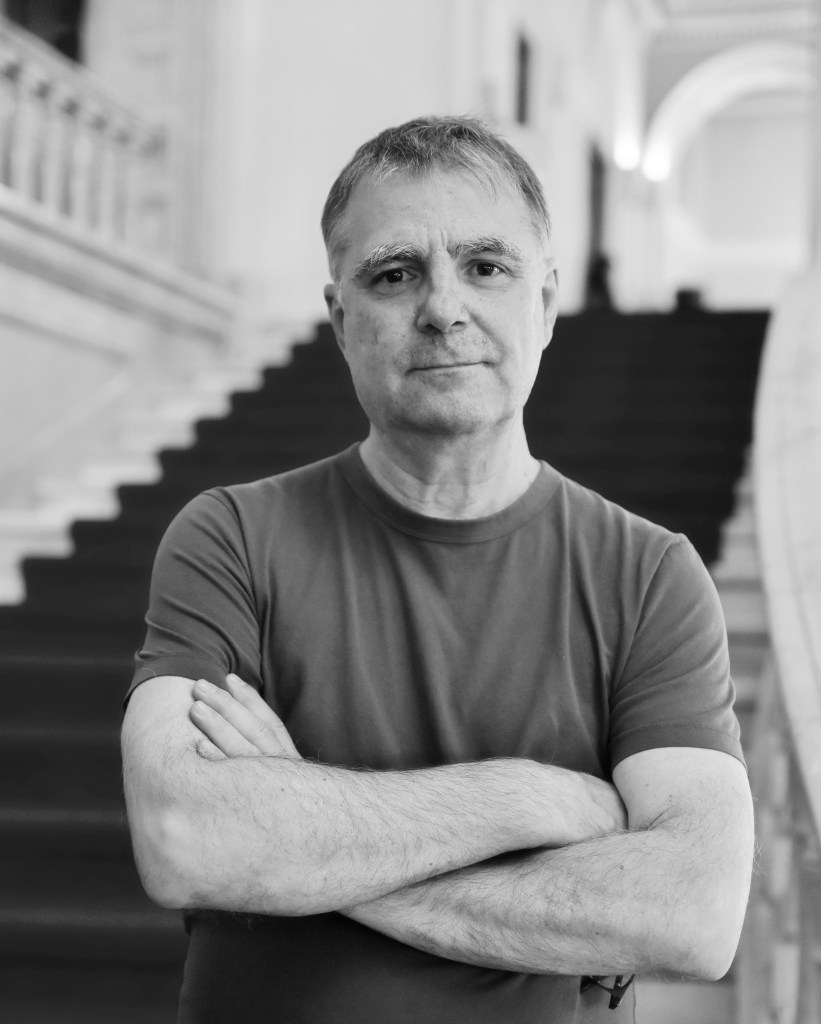
From working with deaf actors, the director says he discovered that the need for communication is essential and, like water, always finds a way.
“Communication is part of our essence as a species. We have evolved because of it, from concrete, vital things to abstract concepts and complex emotions. Anyone has experienced the feeling of not being heard at least once. Deaf people experience this daily.”
He also emphasizes that sign language requires strictly frontal communication. “What seems to have influenced the character as well: the deaf are direct, clear, determined in their expression. The signs do not have a double meaning, as often happens in the spoken language. One thing that later changed my directorial conception was the fact that the actors must always face the audience and cannot hold anything in their hands when communicating. It seems simple, but it took time to adapt.”
At first glance, you might think that you are facing a show about the deaf community, but Laurentiu Rusescu says that universality is one of the great qualities of this play.
“Romanian Sign Language”
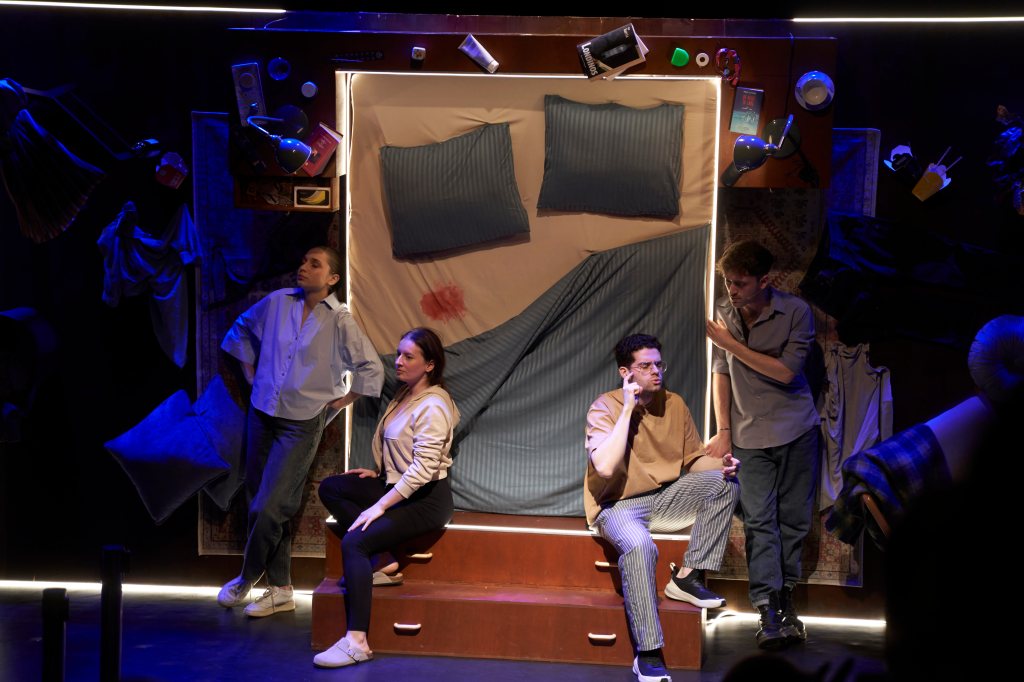
The audience's reaction to a show in which sign language becomes central was a surprising one. “It is Romanian Sign Language, abbreviated LSR (no – different from the sign language of other countries).
It is not just a language, a rudimentary form of communication, but a full-fledged language. And the audience's reaction was one of fascination. The formula used in the show creates, at the end, the feeling that you almost understand this language too”, says Laurentiu, who also adds that the show can be watched in several ways: focusing on the deaf actors, the hearing ones or the relationship between them.
“The ideal is to let them all exist simultaneously. Any exclusive perspective impoverishes the experience. So the reaction to Sign Language was a mixture of wonder and familiarity. At the end, everyone clapped the way deaf people clap, waving their hands.”
And Diana Timari believes that it was a very powerful experience for the hearing audience to see sign language on stage. “I felt that they looked at us with openness and that we were a source of inspiration for them.”
Faced with the risk of the “social theater” label, the director starts from a critical reaction to the unsuccessful precedents, which “limited themselves to ticking only the “social” component and forgot the theater”, thus generating a negative connotation.
Precisely to avoid this, the approach he chose was the opposite: “Theater is social by definition: it addresses people, brings them together, discusses problems and sometimes provides an outlet in moments of crisis. I went the other way, focusing exclusively on making a good theater show: with emotion, poetry, technical rigor, a show that does not bore.”
He also adds that people should not come to such shows out of a sense of obligation or guilt, but because the show works. “And in the end, many of those who came without high expectations were honestly surprised by the theatrical experience, the story and the play of the deaf actors, not being any less than their professional partners.”
“I want the world to change its mindset about the deaf”
However, Diana claims that being a deaf actress in Romania means fighting to be seen as an artist and indicates that she was rejected from some acting classes because of her deafness. “I wanted to go to acting school, but I feel one of the biggest difficulties is accessibility. With actors, I can focus and learn at the same pace as other students. Without actors, I miss a lot of the development process and always fall behind,” confesses Diana.
“I want the world to change its mindset and understand that deaf people can do anything. Deaf people can play on stage in a theater, they can be artists. Deaf artists can work equally, create and develop without always being behind. We don't lack talent, we lack access, confidence and being seen,” adds Diana.
The actress is also of the opinion that this show can end up opening more doors. “Inclusive performances are possible and have value. For me, 'Beyond Silence' is an example for the world and for hearing audiences, because there were two characters on stage played by deaf actors and two by hearing actors.”
It is an extremely valuable moment, where the entire audience can understand the message, across communication barriers. I really want all theaters to adopt this model, where deaf and hearing people play together on stage, as a real example of inclusion and normality, to discover the potential of deaf artists. I think this show can change mindsets and open the possibility for theaters to believe in inclusion and work with deaf artists in other projects. At the same time, it can inspire other deaf people to believe that they can follow their dreams, whatever they dream,” she says.
The title of the final song is “To Conquer Pain with Love”, and Laurentiu Rusescu says that this idea is exactly what he would like the audience to take with them when they leave.
“It condenses the essence of the text and works as both a conclusion and an exhortation to life. Sometimes, you can't come out of great pain without feeling something else very strongly. Only such intense emotion can dull the trauma enough to allow you to breathe again. And love is a stronger feeling than any other. It is, perhaps, the universal panacea. If people leave the room a little more willing to be vulnerable, then the show has done its job.”
Diana concludes by saying that this role gave her more courage. “It helped me show the world my potential and boost my confidence a lot. I feel like I've overcome my fears and come out stronger, both as a person and as an artist. I'm open and ready to receive new opportunities.”